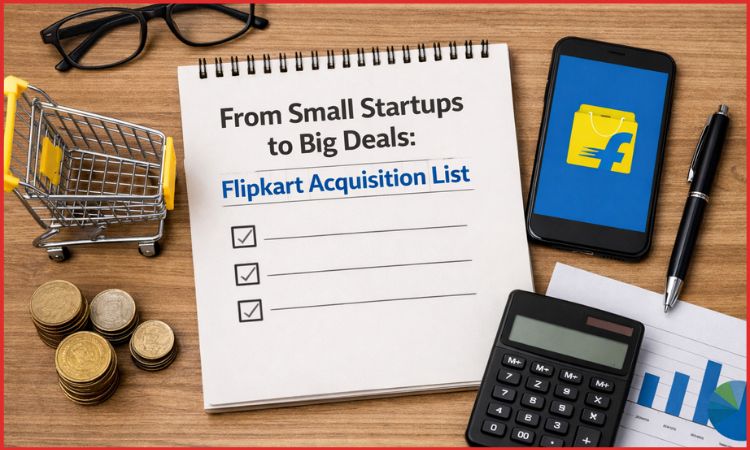
Flipkart did not become one of the largest e-commerce companies in India overnight. One of the primary factors of its expansion is its smart decisions, such as the acquisition of other firms.
Flipkart opted to acquire firms that were already performing well in specific regions rather than beginning from scratch. And honestly, most people only notice the big deals, not the pattern behind them.
A closer look will show that most of these acquisitions were meant to fill certain gaps, such as fashion, payments, or logistics, which enabled Flipkart to develop in a more organized and efficient manner.
Why Flipkart Acquires Companies
There is always a reason behind every acquisition Flipkart makes. In most cases, it is about saving time, entering a new category faster or reducing competition before it grows too big. Getting up and running with systems like logistics or payments from scratch can take years, but an acquisition simplifies the process.
The fact is, all of Flipkart’s mergers and acquisitions are about enhancing delivery systems, new categories, technology (and staying in a lead over competition). This method enables the business to grow without any obstacles.
Example
Imagine you run an online business & want faster delivery, so you acquire a company that already has the setup. This helps you scale quickly without wasting time.
Flipkart Acquisition List (Quick Overview)
Here is a simple overview of the Flipkart acquisition history & it shows how the company expanded into different areas over time.
| Company | Year | Category | Purpose |
| Myntra | 2014 | Fashion | Enter the fashion market |
| Jabong | 2016 | Fashion | Reduce competition |
| PhonePe | 2016 | Fintech | Build a payment system |
| Ekart | 2009 (Internal) | Logistics | Improve delivery |
| Cleartrip | 2021 | Travel | Expand services |
| LetsShave | 2022 | D2C / Grooming brand (reported acquisition) | Enter personal care |
| Yaantra | 2022 | Recommerce | Offer refurbished products |
This table gives a quick idea, but understanding each company helps you see the bigger picture clearly.
Myntra
The acquisition of Myntra was one of the most important things Flipkart did to expand. Instead of starting from nothing, they took advantage of relationships they had with the existing brands that the customers already trusted. This made the alteration function smoother.
This transaction is said to have been worth approximately $300 million, and it was one of the first big investments Flipkart made in category growth.
Instead of merging everything, Myntra was allowed to operate separately. This enabled it to retain its identity as well as utilize the Flipkart ecosystem.
Example
We can imagine a college student shopping for clothes. They are more fashion and trend-oriented individuals, and therefore, they will click to buy at Myntra.
This simplifies the process of browsing and increases its relevance in comparison with a general platform, contributing to a better user experience and satisfaction in general.
Jabong

After Myntra, Flipkart included Jabong to strengthen its position in the fashion market. Although both platforms were similar, the aim was to minimize competition and earn a bigger share of customers.
This is a common strategy followed by startups acquired by Flipkart, and the company aims at eliminating competition early.
This move helped Flipkart consolidate its presence in online fashion retail at a time when competition was increasing rapidly.
Example
Suppose there are two similar stores within the same region that sell the same kind of products. One replaces the other – its customer base suddenly increases. At the same time, a rival vanishes from the street. It results in fewer choices for buyers, but now more traffic is passing through a single door.
In the long term, this contributes to the improved control of the market and the existence of strong brands.
PhonePe
PhonePe is one of the smartest Flipkart startup acquisitions. Flipkart entered digital payments by acquiring a smaller company & building PhonePe on top of it. Today, it has become one of the leading UPI platforms in India.
PhonePe currently processes an enormous amount of transactions every month, turning it into an important component of the Indian digital payments ecosystem.
Payments play a key role in keeping users connected to a platform. A smooth payment experience improves overall user satisfaction & engagement.
Example
A user shops online and pays using PhonePe. Over time, they start using it for daily payments like bills & recharges.
This creates a habit & makes the platform more useful, which increases engagement.
Ekart
Ekart is a major part of the Flipkart subsidiaries list. It manages delivery processes, improving the client experience by guaranteeing quicker and more dependable delivery.
Flipkart quickly understood that delivery is a major aspect of customer satisfaction, and therefore, it established its own logistics network to have greater control over the entire process.
Example
Whenever things come quickly and easily, trust in the site increases. You are more likely to trust the platform again. Regular delivery fosters trust, which eventually leads to regular business and client loyalty.
Cleartrip
Flipkart expanded into travel by acquiring Cleartrip. This lets the business go beyond traditional e-commerce and offer services like booking flights and hotels.
This move marked Flipkart’s expansion into service-based categories, not just product-based commerce.
It also shows that Flipkart possesses several businesses which are a part of a larger system that helps users stay interested in various services.
Example
A customer seeking offers on Flipkart may also reserve a hotel or a flight on the same platform. This saves time and the overall experience is made easier as one does not have to switch among apps.
LetsShave
LetsShave is a direct-to-consumer brand and with this acquisition‚ Flipkart moved one step closer to owning brands‚ rather than just selling them․ This means Flipkart have a lot more say in how much things cost‚ how good they are‚ and how customers like buying them․
Among Flipkart’s recent purchases of smaller companies, this one shows a change to developing their own brands. Rather than only being a platform for others, Flipkart can now offer its own lines of goods and get a better profit, all while maintaining the same standard of quality.
Example
Flipkart does not have to sell third-party grooming products; it can advertise its own brand, such as LetsShave. This assists in regulating pricing and ensuring the consistent quality, as well as in gaining customer trust and stimulating the desire to buy again in the long term.
Yaantra
Yaantra operates in refurbished electronics, which is a growing category. This acquisition helped Flipkart reach customers looking for affordable devices without compromising too much on quality.
It also strengthens the Flipkart subsidiaries list which allows Flipkart to serve both premium & budget customers. Moreover, refurbished goods contribute to sustainability by reducing electronic waste.
Example
A student who cannot afford a new phone can get a refurbished phone at a cheaper cost. When the device has a warranty and is tested well, it is a good choice and will allow Flipkart to access a larger number of low end customers.
What Flipkart Strategy Shows
Looking at all of Flipkart’s acquisition history, it’s easy to see what they’re doing. They don’t try to create everything from scratch; they buy companies to fix specific issues.
This shows that Flipkart is not only growing, but developing a whole ecosystem in which shopping, payments, and logistics cooperate.
Most companies owned by Flipkart do one particular thing, eg, fashion, handling payments, deliveries, or travel. When you put them all together, they all work to give you a better experience.
Conclusion
Flipkart’s acquisition journey isn’t just about buying businesses; it’s also about growing in a smart and effective way. Flipkart has grown into new areas by buying other companies and making its main services better.
The company didn’t just focus on growth; it also worked on fixing real problems and making the user experience better‚ which is why this strategy works and will continue to work for a long time․
FAQs
1. What is Flipkart Acquisition?
Flipkart’s acquisition is an idea that the company has to acquire other businesses in order to be able to offer more services with improved operations.
2. What are the key startups that Flipkart acquired?
Flipkart has acquired several valuable startups, including Myntra, Jabong, PhonePe, and Cleartrip.
3. What are the companies that are owned by Flipkart?
Flipkart owns some significant companies such as Myntra, PhonePe, Ekart, and Cleartrip.
4. What are some of the companies included in the list of Flipkart subsidiaries?
The list of companies, which Flipkart has as its subsidiaries, includes fashion, logistics, payments, travel, and so on.
5. Why does Flipkart focus on mergers & acquisitions?
Flipkart focuses on mergers & acquisitions as it enables it to grow at a faster pace, reduce competition and venture into new markets with little effort.