With nearly 40% market share and over 2.2 million vehicles sold annually, Maruti Suzuki India Ltd. stands as the undisputed leader of India’s passenger vehicle market. Since its establishment, the company has set benchmarks in production, sales, market share, and consumer trust.
This article covers Maruti Suzuki’s journey from a growing business to India’s largest carmaker, its market leadership, company performance, strategies, challenges, and future outlook.
Maruti Suzuki Background
Maruti Suzuki India Ltd. began operations in 1983 as a joint venture between the Government of India and Suzuki Motor Corporation of Japan. The launch of the iconic Maruti 800 marked a turning point for the Indian automobile industry, making car ownership accessible to the middle class for the first time.
Over the decades, Maruti Suzuki evolved from a small-car specialist into a full-scale automobile company offering hatchbacks, sedans, utility vehicles, and compact SUVs. Its ability to adapt to changing consumer preferences while maintaining affordability has been central to its long-term success.
Today, Maruti Suzuki operates multiple manufacturing plants across India and remains a backbone of the nation’s automotive manufacturing ecosystem.
Company Highlights
- Company Name: Maruti Suzuki India Ltd.
- Founded in: 1983
- Headquarters: New Delhi, India
- Parent: Suzuki Motor Corporation
- Revenue (FY2024-25): ₹1.45 trillion (Maruti Suzuki)
- Profit (FY2024-25): ₹139.55 billion (Maruti Suzuki)
- Vehicle Sold in FY2024-25: 2,234,266 units (Maruti Suzuki)
- Exports in 2025: Approx 395,000 passenger vehicles (The Economic Times)
Maruti Suzuki History

Source: The Statesman
Maruti Suzuki, previously known as Maruti Udyog Limited, was established in February 1981 as a joint venture between the Indian Government and the Suzuki Motor Corporation of Japan. The growth of Maruti Suzuki over four decades mirrors India’s economic liberalisation and the expansion of the consumer class. Today, the company is the most valuable automobile company in India.
- 1980s to 90s: Established dominance with small and affordable cars. Popular among the middle class.
- 2000s: Expanded the model portfolio and increased the production capacity.
- 2010s: Combined leadership with mixed compact cars and early utility vehicles.
- 2020s: Growth in the supply chain globally, an increase in exports, and the adoption of new technologies.
Timeline:
| Year | Model Launch |
| 1983 | Launch of the Maruti 800 |
| 1984 | Introduction of the Maruti Van |
| 1985 | Launch of the off-roader Gypsy |
| 1989 | Introduction of Maruti 1000 |
| 1993 | Launch of the Zen |
| 1994 | Achieved the one million vehicle production milestone |
| 1999 | Introduction of the WagonR |
| 2000 | Became the first Indian car company to launch a customer service call centre |
| 2001 | Established the pre-owned car market with Maruti True Value |
| 2005 | Introduction of the Swift model |
| 2000s | Established green initiatives with the introduction of CNG cars |
| 2023 | Achieved a cumulative sales of 25 million cars in India |
Maruti Suzuki Manufacturing and Network
Maruti Suzuki operates 3 plants with an annual capacity of approx 2.35 million and plans to reach 4 million by FY31 through expansions in Kharkhoda (Haryana) and Gujarat. The company boasts 2,987 Arena and 495 Nexa outlets across India.
Additionally, it has Maruti TrueValue for used cars. Exports hit a record high, which supports H1 FY2025-26 sales of 1.078 million units.
Maruti Suzuki Market Leadership
Maruti Suzuki has commanded a substantial share of India’s passenger vehicle market. Despite fluctuations due to competition, its position remains dominant in the market. These figures highlight the company’s sustained leadership in a fiercely competitive industry.
- Maruti Suzuki India Limited accounted for approx 40.25% of the domestic passenger vehicle market based on retail sales in FY2024-25. (ETCFO)
- As of October 2025, the market share in automotive sales data stood at 43.44%. (ACKO Drive)
Global Footprints of Maruti Suzuki Company
The company has extended its influence far beyond India to boost its revenue and to strengthen India’s position as an automotive manufacturing hub.
- In 2025, Maruti Suzuki recorded exports of 3.95 lakh passenger vehicles, up 21% year over year. (Economic Times)
- Exports have diversified to over 100 countries, including the emerging markets in Africa, Latin America, and Southeast Asia.
Maruti Suzuki Company Profile
Venturing into Luxury
While Maruti Suzuki excels in the affordable segments, its entry into the premium segment is represented by models such as the Grand Vitara, which initially faced challenges. However, the introduction of models such as the Maruti Nexa transformed the company into a premium brand. One of the car models, the Baleno from Nexa, has become the company’s best-seller, showcasing its adaptability and deep understanding of the market.
Financial Performance
Maruti Suzuki’s financial performance reflects its leadership position in the market and strong fundamentals. In the fiscal year 2024-25:
- Maruti Suzuki reported net sales of ₹1.45 trillion and a net profit of ₹139.55 billion
- The market capitalisation rose to ₹5.25 trillion by the end of 2025
Maruti Suzuki’s Car Resale Value
Maruti Suzuki’s cars are not only affordable but also offer high resale value and low maintenance costs, which makes the company a preferred choice for consumers and car enthusiasts. The company’s primary focus is on sustainability, as evidenced by initiatives such as Smart Hybrid and Mild Hybrid technologies that enhance fuel efficiency and environmental friendliness.
Maruti Suzuki Company Profile Product Portfolio
The success of the Maruti Suzuki Dzire in 2025 restored its position as India’s top-selling car, highlighting the company’s strong product portfolio. Maruti Suzuki expands its company’s portfolio by offering a wide range of diversified models covering various segments, such as:
- Mini and Compact Cars like Alto, WagonR, and Swift
- Sedans like Dzire and Ciaz
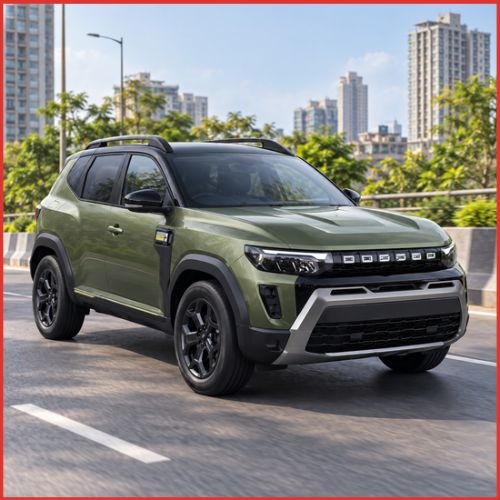
- Utility Vehicles, such as Brezza, Grand Vitara, and Fronx
- Light Commercial Vehicles like Super Carry
Maruti Suzuki Company Profile: Key Challenges
Market Competition
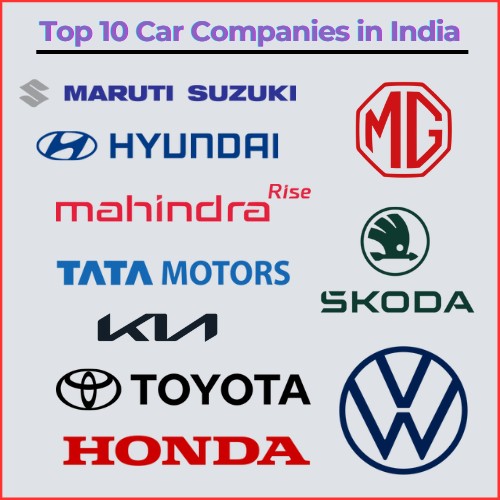
Despite intense competition from major companies such as Tata Motors, Mahindra, and Hyundai, Maruti Suzuki’s overall performance remains strong and ahead of the market. Maruti Suzuki’s core strengths are:
- Deep distribution and service network across India
- Strong brand loyalty rooted in the reliability and resale value
- Cost leadership through economies of scale
- Focus on fuel efficiency and affordable ownership
Market Challenges
- Changes in consumer preferences due to the rising demand for SUVs and EVs. This change poses major challenges to the dominance of traditional compact cars in the market.
- Uneven pressure from competitors in terms of SUVs and electric vehicles has significantly challenged Maruti Suzuki’s position in the market.
- The strict emission norms and safety requirements increase the development costs.
Strengths of Maruti Suzuki
- Strong leadership in small and affordable vehicles.
- Recorded growth in exports.
- Strong confidence in finance and investment.
- Established manufacturing footprints.
- Brand resilience and recognition.
Maruti Suzuki Company Future Outlook
Maruti Suzuki’s long-term future vision aims to maintain its leadership in the market while adapting to the evolving mobility trend. The company’s strategy is to focus on:
- The expansion of SUVs and electric vehicles
- Enhancing the capacities of production
- Spreading the market globally
- Strengthening the infrastructure of service
Conclusion
Maruti Suzuki’s journey from the Maruti 800 to an automotive leader worldwide is a testament to its strategic excellence, a deep market understanding, and customer focus. Despite all challenges from rivals and evolving customers’ preferences in the market, Maruti Suzuki balanced growth in sales, rising exports, and timely innovations to continue its dominance and stay relevant in the market. Maruti Suzuki is well-positioned for the next generation of the automotive transformation with the expansion of products and a growing global footprint.
FAQs
Q1. What makes Maruti Suzuki a leader in the market?
A: Maruti Suzuki’s leadership is rooted in decades of building affordable and reliable vehicles for everyone, with extensive growth in the market.
Q2. How strong is Maruti Suzuki’s Company Profile financially?
A: Maruti Suzuki has a market capitalisation of ₹5.25 trillion, as of December 2025, which reflects its strong financial status, investor confidence and market growth.
Q3. How important are exports for Maruti Suzuki globally?
A: Global exports are a major growth driver of Maruti Suzuki. The company exported nearly 395,000 vehicles, which represents over 21% year-over-year growth, and maintains its status as the largest global exporter of passenger vehicles in India.
Q4. What are the challenges faced by Maruti Suzuki?
A: There are several challenges faced by Maruti Suzuki, such as intense competition in the market with larger groups, shifting of consumers’ preferences towards SUVs and EVs, and others.
Q5. What is the future strategy of Maruti Suzuki?
A: Maruti Suzuki’s future outlook is expanding its product portfolio with SUVs and EVs, enhancing the export market globally, and increasing its manufacturing capacity.