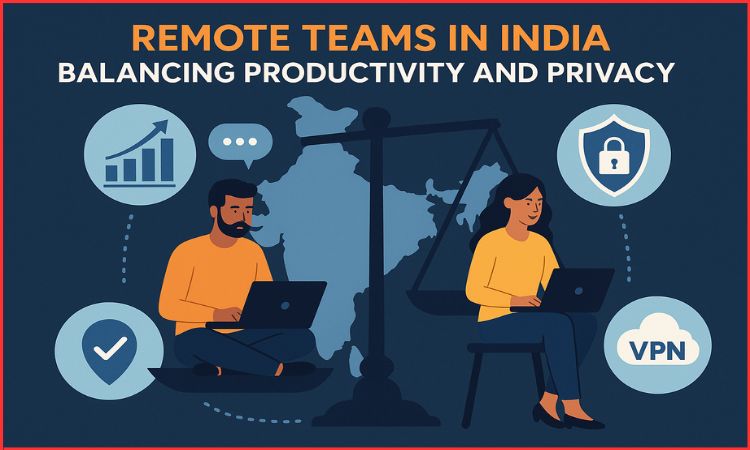
Remote work is rapidly increasing in India. The existence of many Indian companies and international companies employing Indian talent today is dependent on work-at-home or work-from-anywhere office teams. Such an arrangement is very flexible, economical and provides a wide range of talent. However, it also brings up two large questions: how to maintain a productive team and how to ensure their privacy (and the data security of the company). Striking the balance is key.
In this post, we discuss how to ensure a high level of productivity in a remote team without violating privacy. We will even briefly mention tools and best practices, such as how a Chrome VPN extension can both ensure security and convenience to remote workers.
Why Productivity & Privacy Must Go Together
Most companies view productivity and privacy as two different matters. However in a remote configuration, they communicate. In case the employees feel being spied on or doubted, the morale and concentration may decline. Conversely, poor privacy or security may disclose sensitive information and destroy reputations.
A healthy balance means:
- Providing form and order (objectives, time limits, communication means)
- Fairly using performance measurement.
- Gaining access to data without being obtrusive.
Challenges for Remote Teams in India
1. Trust vs. Oversight
Other managers are inclined towards heavy surveillance (screenshots, keystroke logging). But that can backfire. Research cautions against covert surveillance.
2. Inconsistent internet & infrastructure
Not every remote worker can have good and stable connectivity. Heavy monitoring or security equipment may slow their work process and even cause certain tasks to be impossible.
3. Data protection regulations & compliance
The rules in India to do with data privacy are also developing and the teams can also operate in countries where the laws are tougher, such as GDPR. It is important not to break rules and spill sensitive information.
Practical Tips to Balance Productivity & Privacy
Set clear expectations and goals
This begins by establishing the definition of success. Micromanagement at a minute-by-minute level is unnecessary; use deliverables, deadlines, and check-ins.
Use ethical, privacy-friendly monitoring.
In case you need to be visible, choose tools that do not violate boundaries (e.g, summary activities instead of constantly taking screenshots). Make employees understand what is monitored and why.
Secure connections with VPN and encryption
Remote teams usually work either at home or on public Wi-Fi systems. The full VPN software is useful to encrypt traffic and ensure the data against data leakage to the employee and to the company as well. VPNs are relevant to remote work since they encrypt internet activities and prevent sensitive company data from being exposed to cyberattackers.
Limit access & use role-based permissions
Grant access only to the systems and data each person needs. This limits exposure if a device is compromised.
Provide secure collaboration tools
Choose tools that encrypt data in transit and at rest. Avoid solutions where your content is unprotected. Integrate with VPNs or zero-trust systems where possible. For example, some work management platforms advise integrating VPNs into remote team setups.
Promote a privacy-aware culture
Train team members in security best practices: strong passwords, software updates, and phishing awareness. Encourage them to separate personal and work devices (or use containerization).
Conclusion
It is true that work teams in India can experience high productivity without compromising on privacy but only when the balance is carefully addressed. Give plain goals, disciplined check-ups, safe tools and put your trust in your employees. The members of the team are most likely to go the extra mile when they are safe and respected.