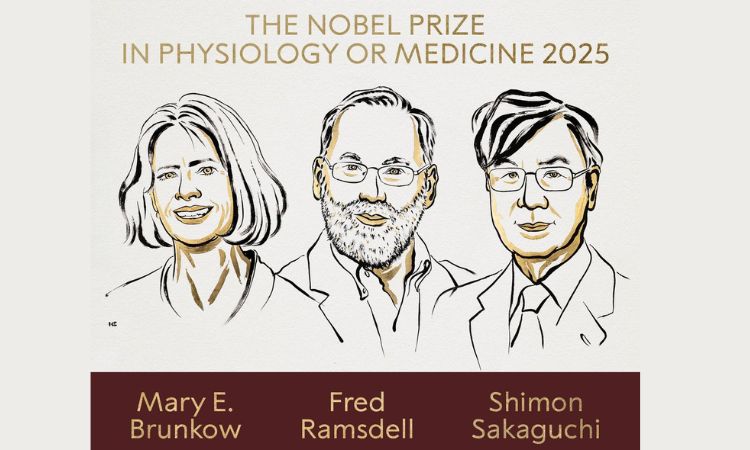
Source: The Hindu
October 6, 2025 – The 2025 Nobel Prize in Physiology or Medicine has been awarded to Mary E. Brunkow, Fred Ramsdell, and Shimon Sakaguchi for their significant discoveries regarding self-control of the immune response and immune tolerance to self-tissues.
According to a news release from the Royal Swedish Academy of Sciences, the scientists were awarded “for their discoveries concerning peripheral immune tolerance.” Their research contributed to the discovery of unique immune cells (regulatory T cells) that act as the immune system’s security force and suppress the activity of other immune cells attacking the body’s own organs.
Olle Kämpe, chair of the Nobel Committee, stated that their discoveries contribute significantly to the understanding of the immune system and the reasons why most people do not develop serious autoimmune disease.
Major Developments
In 1995, a Japanese scientist by the name of Shimon Sakaguchi documented a new immune cell that can help protect an individual from autoimmune illness. Researchers believed at the time that patients established immune tolerance only through central tolerance.” Central tolerance occurs when harmful immune cells are deleted, often in the thymus. Sakaguchi’s discovery demonstrated that immune tolerance also occurs outside of the thymus, measuring the concept of peripheral tolerance.
In 2011, American scientists Mary E. Brunkow and Fred Ramsdell discovered that a group of mice readily developed autoimmune diseases due to a mutation in the gene they discovered, which they called Foxp3. These scientists also proved that mutations in humans in that gene cause the severe autoimmune disease IPEX.
In 2013, Sakaguchi bridged these findings and presented evidence that the Foxp3 gene controlled the development of the cells Sakaguchi had studied earlier. These are now known as regulatory T cells (Tregs), which are responsible for maintaining the balance of the immune system.
About the Winners
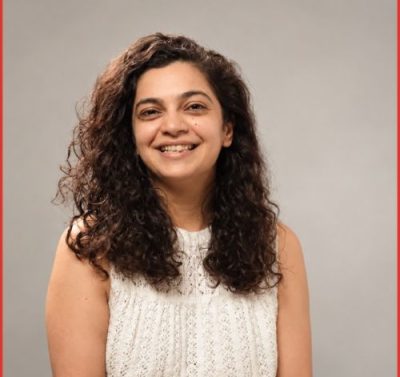
Mary E. Brunkow received her PhD from Princeton University and currently works as Senior Program Manager at the Institute for Systems Biology in Seattle, USA.
Fred Ramsdell is a Scientific Advisor at Sonoma Biotherapeutics, USA.
Shimon Sakaguchi is a Distinguished Professor at Osaka University, Japan.
Impact and Implications for Future Research
Their findings have opened new avenues for treating autoimmune diseases, organ transplant rejection and even cancer. Scientists have explored strategies for utilizing regulatory T cells in innovative therapies and countless clinical trials are being conducted in various parts of the world.
About the Nobel Prize
The Nobel Prize for Medicine has a monetary value of 11 million Swedish kronor (just over $1.2 million) and is awarded on December 10 in Stockholm.
Last year, the Nobel Prize for Medicine was awarded to Victor Ambros and Gary Ruvkun for their discoveries related to microRNA and its role in regulating genes.
The Medicine Prize will kick off Nobel week, with Physics on October 7, followed by Chemistry on October 8, Literature on October 9, Peace on October 10, and Economic Sciences on October 13.
Alfred Nobel created the Nobel Prizes because he wanted to reward people whose work has done the most good for humankind.