Source: uplarn
The UPSC Civil Services Examination (CSE) is not just an examination; it is a journey that tests knowledge, patience, resilience, and discipline. Every year, around 10–12 lakh people register for the examination, but only about 700–900 candidates finally get selected for esteemed services like the IAS, IPS, IFS, and IRS. The success rate of someone taking the CSE is less than 0.1%, which makes it one of the most difficult exams in the world.
However, many determined aspirants still manage to clear it successfully. The secret behind how to crack UPSC in first attempt lies not in endless studying but in smart preparation, consistency, and the right mindset. This guide explains the best roadmap, subject-wise preparation, time management strategies, and proven techniques that will help you move closer to success.
Understanding the UPSC Exam Pattern
Before beginning your UPSC exam preparation, it’s essential to understand its structure. The UPSC exam is conducted in three stages:
| Stage | What it Involves | Purpose |
| Prelims | GS Paper I (100 Qs), CSAT (80 Qs, qualifying) Objective type | Screening stage: eliminates 95% |
| Mains | 9 Descriptive Papers Essays, 4 GS Papers, 2 Optional Papers, 2 Qualifying Papers | Tests analytical depth & writing |
| Interview (PT) | 30–45 min Personality Test with UPSC Board | Assesses personality, confidence |
The primary reason for the failure of aspirants is when their preparation does not match the exam requirements. E.g., prelims demand speed + accuracy and mains require structured writing.
Building a Strong Base (First 3-4 Months)
The foundation stage of your UPSC exam preparation is crucial. Without a strong base, advanced strategies won’t yield results.
There are a few important must-dos:
- NCERTs (Class 6–12): Basic concepts are developed in History, Geography, Polity, and Economy
- Standard Books:
– Polity: Laxmikant
– Modern History: Spectrum
– Economy: Ramesh Singh or NCERTs + Budget/Survey updates
– Geography: NCERTs + G.C. Leong - Current Affairs: Start reading The Hindu or Indian Express newspaper daily and pick one monthly compilation publication (Vision or Insights) for your preparation.
Don’t chase after too many books. Use a single source per subject and stick to that source. Revise it at least 5-6 times.
Prelims Strategy (Objective Stage)
The Prelims are considerably unpredictable, with an increased emphasis on analytical ability, current affairs and environment.
Strategies highlighted below:
- Focus on static subjects (Polity, Geography and History) because of their scoring potential.
- Equally consider environment & development/economy, as they featured the most in recent papers.
- Solve at least 50-60 mock tests before the exam to get a good grip on time management.
- Develop elimination techniques; the UPSC always frames tricky options; therefore, logical guesswork is required.
Many of the toppers say the difference between success and failure in prelims is the ability to eliminate the wrong answers under the pressure of time.
Mains Strategy (Descriptive Stage)
Source:indiatvnews
To ensure clarity, the Mains exam is significantly different from the Prelims exam in that it tests depth and presentation. Just because you know how to answer doesn’t mean you will get a good mark because of a poor writing style.
What UPSC Looks For:
- Balanced answers (cover multiple dimensions).
- Logical structure: intro → body → conclusion.
- Use of examples, data, and case studies.
- Visual representations, i.e., maps, charts, and flow diagrams.
Example of writing a GS-II Answer
Question: “Discuss the role of NITI Aayog in cooperative federalism.”
- Intro: Definition of cooperative federalism.
- Body: Explain the role of NITI Aayog (policies, advice, state participation, schemes)
- Conclusion: Suggest how the institute can improve in strengthening another relationship in the federal system.
Practice writing 2–3 answers daily, preferably from previous year questions or questions from test series.
Optional Subject: The Game Changer
Optional subjects account for 500 marks and can significantly impact your ranking.
| Optional Subject | Why Choose It |
| Geography | Diagrams, overlap with GS-I & Environment. |
| Sociology | Short syllabus, scoring, overlaps with Essay & Ethics. |
| PSIR | Overlaps with GS-II, IR, and Essay. |
| Anthropology | High scoring if studied systematically. |
| Public Admin | Overlaps with governance topics in GS-II & Ethics. |
Suggestion for Optional Subject: Don’t fall into the trap of following trends. Identify a subject that you have an interest in + guidance + material available.
Time Management: Realistic Daily Routine
More imperative than time is consistency. Most toppers prepared for the exam 6–8 hours a day, not 14–16 hours a day.
Sample Routine:
| Time | Activity |
| 6:00 – 8:30 AM | NCERTs / Optional basics |
| 9:30 – 12:30 PM | Current Affairs + Newspaper |
| 1:30 – 4:00 PM | GS subjects (History/Polity/Economy etc.) |
| 5:00 – 7:00 PM | Answer Writing / Mock Practice |
| 8:00 – 10:00 PM | Revision of the day’s topics |
Track your progress every week. You are reading too much if you can’t revise.
Importance of Revision & Mock Tests
- Revise all subjects 3-4 times before the exam.
- Complete full-length mocks for both Prelims & Mains.
- Don’t just take the test and forget to analyze the mistakes and correct them.
Common Preparation Mistakes:
- Too much reading for subjects without revision.
- Ignoring CSAT because it is just qualifying. (Many people fail CSAT.)
- Having the answer-writing discussion after the Prelims.
- Comparing preparation style to others and emulating them.
- Neglecting mental health, exercise, and sleep.
Mindset and Discipline: The X-Factor
Source: creativitychronicles
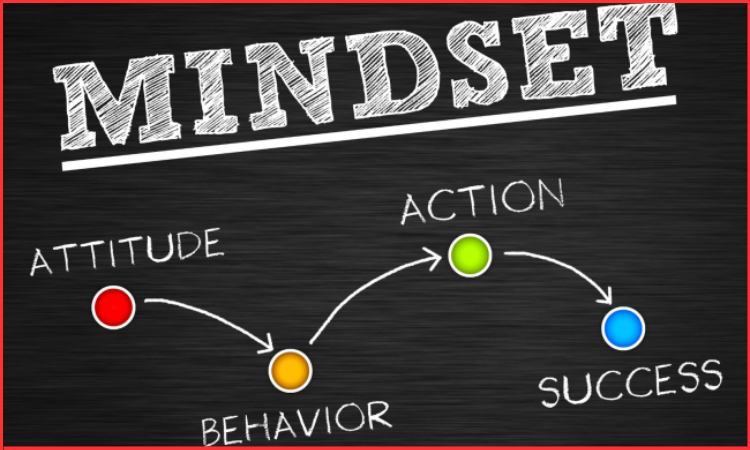
UPSC, however, is not a comprehensive reflection of the number of hours you spent studying; it is actually a test of your emotional energy and determination to persist through the challenging subjects/topics of the examination. I want you to KNOW that failure (whether it is on a mock exam or a topic) is part of the process. Do not overthink! Negativity will take most people’s minds out of the game! Small steps daily are better than cramming on the night before the examination.
Conclusion
Clearing UPSC in the first attempt might sound intimidating, but it is completely achievable with the right UPSC preparation strategy. Focus on understanding what the exam demands, build strong fundamentals, and practice answering consistently.
Ultimately, the key to how to crack UPSC in first attempt lies in patience, discipline, and smart revision. With a positive mindset, strong focus, and a well-planned routine, your first attempt can indeed become your best attempt.
FAQs
Q1. Is it possible to clear UPSC in the first attempt without coaching?
Yes. Numerous successful candidates (including Tina Dabi, AIR-1, 2015) have cleared exams without coaching. If you have discipline and the right study materials, you can clear the exam by self-study.
Q2. If I am starting from scratch, then how long will it take me to prepare for UPSC?
Usually, with consistency, 12-15 months of preparation is sufficient, assuming that you put in your full attention.
Q3. Are NCERTs enough for UPSC preparation?
NCERTs should serve as the foundation of your study; however, they will not be enough. You will also want to refer to standard books, current affairs, and writing practice.
Q4. Should I prepare for Prelims and Mains preparation separately from each other?
No. It is better to prepare in an integrated way. With Polity in this example, whatever you study for the Mains exam will also likely help you with the Prelims.
Q5. How do I avoid losing motivation as I prepare for a longer period?
Keep setting smaller goals, keep track of your progress, take breaks, and remember why you started. Many successful candidates also create vision boards or journals to maintain motivation and identity.