Imagine leaving behind a stable career in the army, facing failed business ventures, political hurdles, and still rising to manage one of the largest real estate empires in India. That is exactly what you will discover in Kushal Pal Singh’s Success Story: From Army Officer to Real Estate King. His life is not just about building earthquake-proof office buildings and business empires; it is about resilience, risk-taking, and spotting opportunities where others saw only farmland. Explore his success story in this article to uncover his transformational journey from being an army officer to a real estate king.
Kushal Pal Singh’s Biography
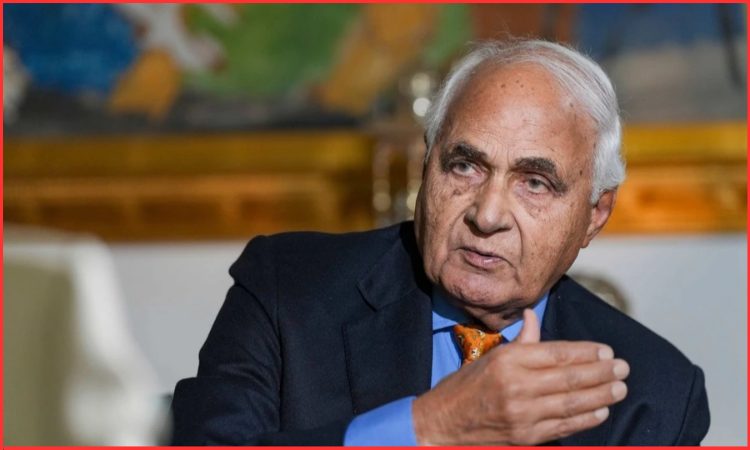
Image Source: Aaj Tak
| Born | 15 August 1931, in Bulandshahr, Uttar Pradesh |
| Education | Aeronautical Engineering |
| Known as | Real Estate King |
| Position | Chairman Emeritus of DLF Limited |
| Net Worth [September 2025] | $16.2 billion |
Early Life & Family Background
Kushal’s father, Chaudhary Mukhtar Singh, was a reputed lawyer in Bulandshahr. His Uncle was in charge of the stables at the then-Viceregal Lodge, now Rashtrapati Bhavan. During his visit to his uncle, he met the then Viceroy of India, Lord Wavell, who suggested he pursue riding. Therefore, his father then sent him to England, hiding from Singh that he incurred financial debt to get him there.
Education
Kushal completed his early education in India and graduated from Meerut College. He then moved to the UK, where he studied aeronautical engineering. While playing polo near Windsor, he met an officer of the Indian Army who convinced him to join a cavalry unit in the army.
Kushal Singh decides to join the Indian Military Academy.
Kushal was torn between settling in London with Julie or pursuing a military career in India. However, the Indian Military Academy allowed him to write the entrance exam in England, and later, the Indian government also agreed to pay for his journey back to India. Hence, Kushal decided to join the army.
Kushal Singh’s Army Journey
Kushal was commissioned into the Deccan Horse Regiment. In 1954, as an army officer, Kushal led the Deccan Horse in the 1954 Republic Day Parade. In 1961, he resigned from the army so that he could work with his father-in-law, Chaudhary Raghvendra Singh, in his company, DLF.
Kushal Singh’s Early Business Ventures & Challenges
Kushal, along with another retired army officer, initially entered the stud farm business. He then started a new battery company, which was unsuccessful. The losses derived from this unsuccessful venture caused his creditors to take him to court. However, in 1960, Kushal joined American Universal Electric Company. In 1979, after its merger with DLF, he took over as the Managing Director with Chaudhary Raghuvender Singh.
However, back in 1976, the Government of India introduced the Urban Land Act [ULCRA] to grow low-income housing and set limits for the ownership of vacant urban land. The law backfired on many people, including Kushal, who took over a dormant DLF to attempt to secure exemptions for investors while studying the city’s limitations.
Kushal identified the Old-Gurgaon Road as a key link between Delhi’s southern area and Haryana, which had not passed the ULCRA. DLF used the relaxed land acquisition laws as Kushal revitalised the company, starting with its 30 acres and rapidly acquiring land from local landowners and farmers.
During the 1980s, Kushal met Rajiv Gandhi and spoke to him about business plans for Gurgaon and how certain laws were hindering his acquisition of land in the state. He then had meetings with Rajiv later. Rajiv convinced his mother, Indira Gandhi, the then Indian prime minister, to change the Haryana land laws. Thus, in 1981, DLF received a license to develop land and another license in 1983.
During the early growth of DLF in the 1980s, Kushal had a dispute with Bansi Lal, a senior politician who had also served as the Chief Minister of Haryana. Bansi Lal attempted to ruin Kushal’s business and even had him arrested, which led to Kushal going into hiding on the advice of then-Prime Minister Rajiv Gandhi. Bansi Lal also managed to persuade other Haryana politicians to go against Kushal. However, Kushal’s friendship with Rajiv Gandhi led to Bansi Lal stopping his attacks on Kushal.
Expansion of DLF
Source: Zee News
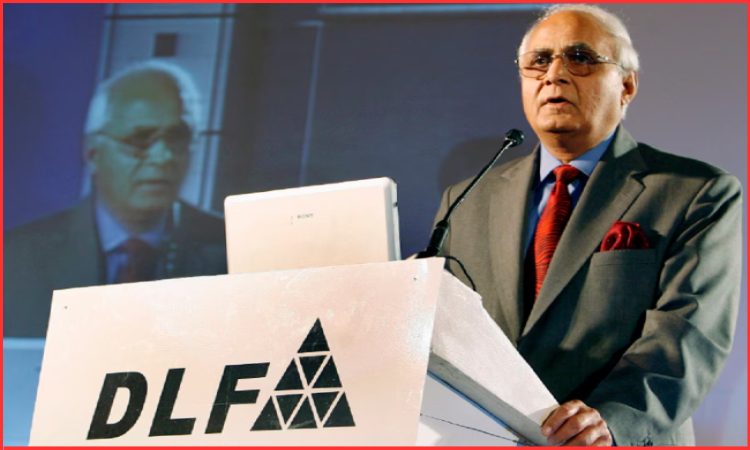
By the 1990s, several large foreign companies, including American Express, British Airways, IBM, and Nestle, became tenants of DLF properties due to the growth in outsourcing. In 1995, Kushal became chairman of the company. He constructed several earthquake-proof office buildings, apartments, shopping malls and leisure facilities in Gurgaon.
In 2007, the company went for an IPO and made approximately $2.24 billion, one of the largest IPOs in Indian history. Market capitalisation of the company increased to $24.5 billion, making Kushal and his family one of the richest clans in the world. In the same year, Kushal’s Cyber City Gurgaon was awarded the world’s first LEED Platinum City and Community Certification.
By 2015, Kushal scaled DLF’s land bank to 10,000 acres, the largest in India. In 2020, he retired from all of his executive positions in DLF. Today, DLF is run by his son Rajiv as chairman. Kushal is now chairman emeritus of DLF and lives mostly between London and Dubai.
Other Business Contributions
Kushal was one of the initiators for General Electric’s [GE] entry into India during the 1980s. His initial work with GE involved bringing their gas turbines to India for infrastructure projects, and later expanded to advising GE in other industries. Kushal also had a key role in establishing India’s first inter-state gas pipeline project, the HBJ [Hazira, Bijeypur, Jagdishpur] pipeline, which was launched in 1986.
Awards & Recognitions of Kushal Singh
- In 2000, Kushal was recognised with the Samman Patra Award, conferred by the Government of India, for being one of the top taxpayers of the Delhi region.
- In 2008, Kushal was recognised with a special award conferred by NDTV at the Indian of the Year Award for contributions towards India’s economic growth.
- Kushal was recognised with the Delhi Ratna Award, conferred by the Government of Delhi, for his valuable contribution to the city’s development.
- In 2010, Kushal was awarded the Decoration of Officer of the Order of Saint Charles, conferred by Prince Albert II of Monaco, for his contributions as Honorary Consul General of Monaco in Delhi for the previous two decades.
- In 2010, he was awarded the Padma Bhusan by the government of India.
- In 2011, Kushal received the Entrepreneur of the Year award at The Asian Awards.
- In November 2024, Kushal and Aparna Jain’s book Why the Heck Not? was published.
Key Learnings from Kushal Pal Singh’s Success Story
- Take the risk for education and exposure, like Kushal’s father did to send him abroad to shape his vision and later success.
- Balance personal choices with long-term vision, as Kushal did by prioritising the bigger picture that shaped his legacy.
- Develop the habit of discipline, like Kushal did in his army journey. This became his foundation for business leadership.
- Failure is part of growth. Kushal’s early ventures failed, but he pivoted and transformed DLF into a powerhouse.
- Build a strong network and strategic relationships. Kushal’s strong political connections highly impacted DLF’s land acquisition and licenses.
- Spot opportunities ahead of others, like Kushal identified Gurgaon’s potential when it was just farmland, turning it into a corporate hub before anyone else envisioned it.
- Resilience against setbacks. Despite political harassment and even being arrested, Kushal stayed persistent and rebuilt trust with other leaders.
Final Thoughts
Kushal Pal Singh’s success story reminds us of the importance of discipline, resilience, and vision in achieving what others consider impossible. He transformed the entire Gurgaon city, demonstrating that setbacks, political challenges, and failed ventures are merely stepping stones when combined with persistence and foresight. Therefore, Kushal Pal Singh’s remarkable success is rooted in courage and a long-term vision.
FAQs
Q1. Who is Kushal Pal Singh?
Kushal Pal Singh is the Chairman Emeritus of DLF Limited and a pioneering figure in Indian real estate, often called the Real Estate King of India.
Q2. What is Kushal Pal Singh’s Net Worth?
As of September 2025, Forbes estimates Kushal Pal Singh’s Net Worth at $16.2 billion.
Q3. How did he transform Gurgaon?
By identifying Gurgaon’s potential when it was mostly farmland, acquiring land strategically, and developing it into a leading corporate and residential hub.