(Image Source: The Economic Times)
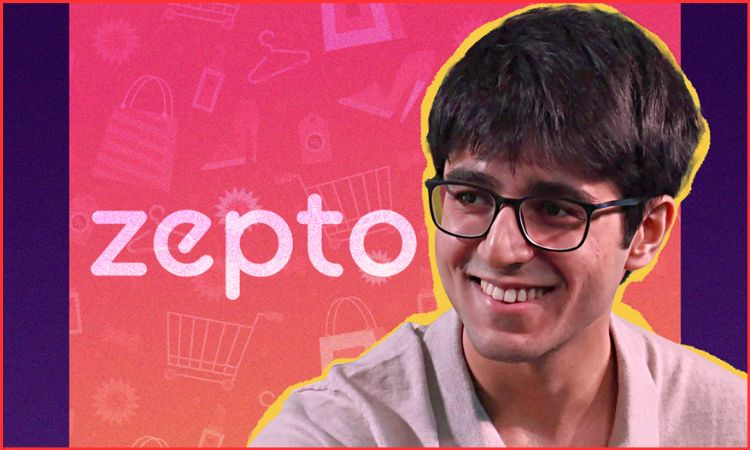
Zepto is racing toward the stock market. The company plans to file its DRHP with SEBI before 2025 ends, targeting a public listing by mid-2026 at a $500 million IPO size. On the surface, this looks like a victory lap. Zepto raised $450 million just two months ago at a $7 billion valuation. Investors, including CalPERS, General Catalyst and Lightspeed, are doubling down. The company has $900 million in cash.
But there’s something odd about the enthusiasm. Zepto raised $450 million just to keep the lights on. The company is still losing serious money. Operating revenues hit Rs 11,109 crore in FY25, up 150 percent year-on-year. But profits? Still negative. Nowhere near positive.
That’s the real story buried under the IPO headlines. Zepto isn’t going public because it solved the quick commerce puzzle. It’s going public because it needs to keep the game alive.
The Profitability Illusion
Zepto’s narrative focuses on a single metric: profitable dark stores. CEO Aadit Palicha says more stores are now profitable than the entire store network from a year ago. That sounds impressive until you understand what it actually means.
Individual stores becoming profitable doesn’t mean the company is profitable. It means the revenue from a single dark store exceeds its operating costs. But Zepto still has corporate overhead, marketing spend, technology investments, and capital expenditure on new dark stores. Those don’t disappear.
Blinkit has been claiming store-level profitability for over a year. Zomato still disclosed massive losses from Blinkit in quarterly filings. The company is now showing positive EBITDA, but that took aggressive cost-cutting and thousands of job losses.
Zepto is following the same playbook. More stores, higher volumes, and eventually profitability. But the path is longer and bloodier than the founders admit publicly.
The Scale Trap
Quick commerce operates on thin margins. Customers expect Rs 200 baskets delivered in 10 minutes for free. The economics are brutal. You need enormous density and volume to make money. That requires capital—lots of it.
Zepto processes 1.7 million orders daily. Blinkit processes more. Swiggy Instamart is smaller but has Swiggy’s entire infrastructure backing it. None of them is making real money on those volumes.
Why? Because they’re spending more to acquire and retain customers than they make from those customers. Discounts destroy economics. Every ₹100 order costs them ₹95 to acquire, deliver and fulfill. The math doesn’t work until you reach an absurd scale that might not even exist in India.
Why IPO Now, Not Later?
This is the crucial question. If Zepto is profitable at the store level and has a billion dollars in cash, why rush to go public? The answer: founders are worried capital will get tight.
Investors are getting impatient. They’ve been patient for four years. Eventually they want returns. Zepto needs to access public markets while the quick commerce narrative still feels hot. In another year, if profitability numbers don’t dramatically improve, sentiment could shift.
Going public also gives Zepto an exit mechanism. Early investors and founders can sell stakes. It’s not just about raising capital. It’s about liquidity.
What Public Markets Will Actually See
When Zepto’s prospectus goes public, analysts will do what they should have done years ago: scrutinize the unit economics. They’ll ask uncomfortable questions.
How much does each order cost to fulfill? What’s the gross margin after delivery costs? What’s the customer lifetime value against acquisition cost? How many years until the company reaches profitability at current burn rates?
The answers aren’t pretty. Zepto will likely show improving numbers, but nothing that justifies a $7 billion valuation on traditional metrics. The company will trade on growth potential and market opportunity size, not current profitability.
The Real Risk
Here’s what keeps venture investors up at night: what if quick commerce never becomes profitably scalable in India? What if the TAM doesn’t justify the unit economics? What if customers will always expect subsidized pricing?
If that’s true, Zepto and Blinkit and Instamart are all playing a game that ends with one winner who survives by being the last one with cash. Zepto wants to ensure it has that cash. Going public helps.
Why It Still Makes Sense
Despite the pessimism, Zepto’s IPO isn’t irrational. Quick commerce has genuinely changed how urban Indians shop. The market is real. It’s growing. And one player might actually figure out the profitability code.
Zepto has raised over $2 billion in seven years. That’s an enormous vote of confidence from sophisticated investors. CalPERS doesn’t invest in stories. They invest in fundamentals.
The company also has advantages. Founders are young and hungry. The team has executed brilliantly on logistics and technology. Cost per order is dropping. Average order value is rising. The trajectory is positive.
But the gap between positive trajectory and actual profitability is where most quick commerce companies die.
The Bottom Line
Zepto’s IPO won’t solve the profitability problem. It will just mean a public company with the same problem. Investors will own a piece of a business burning billions trying to become the dominant 10-minute grocery delivery platform.
That might still be a good investment if you believe India’s quick commerce market can support a $20-30 billion business. But it’s not a bet on a profitable company. It’s a bet on survival and eventual dominance.
For Zepto’s founders, the IPO is crucial. It validates their vision, gives them capital, and creates an exit. For shareholders, it’s a speculative bet on whether quick commerce math changes once you reach scale.
The real test comes after the IPO, when quarterly earnings actually matter and profit doesn’t.