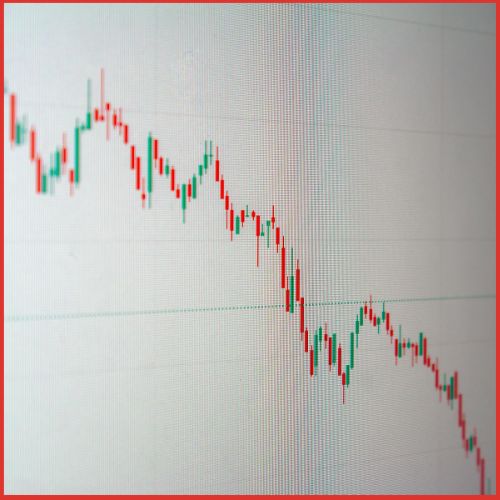
India’s benchmark equity indices opened sharply lower on Thursday, with the Sensex and Nifty extending losses as investors turned cautious ahead of the Economic Survey 2026, a plunging rupee, and global uncertainty triggered by the US Federal Reserve’s policy stance.
At around 10:20 am, the BSE Sensex was trading at 81,767.69, down 576.99 points (0.70%), while the NSE Nifty 50 slipped 139.25 points (0.55%) to 25,203.50. Market breadth remained weak, with 2,322 stocks declining, 1,329 advancing, and 116 stocks touching their 52-week lows on the BSE.
Economic Survey 2026 in Focus
Investor attention is firmly fixed on the Economic Survey 2025–26, scheduled to be tabled at 11 am, as it is expected to set the tone for the Union Budget 2026 on February 1.
Ponmudi R, CEO of Enrich Money, said, “The Survey will be closely watched for signals on capital expenditure, fiscal consolidation, and policy support for infrastructure, defence, and manufacturing.”
He added that cooling India VIX, stable domestic macro indicators, and resilience in the banking sector may provide downside support, keeping markets largely range-bound with selective stock-specific action.
US Fed Rates Policy Weighs on Global Sentiment
Global cues remained subdued after the US Federal Reserve decided to keep its benchmark interest rate unchanged at 3.5–3.75%, following three rate cuts in late 2025.
Additionally, JM Financial noted that “Markets are not pricing in any rate cut until Jerome Powell’s term ends in May. Investors may wait for the appointment of a new Fed chair to reassess how long this tactical pause continues.”
Fed Chair Jerome Powell said the US economy has entered 2026 on a firm footing, with steady growth, improving labour market conditions, and manageable inflation levels, according to Rajesh Palviya, Head of Research at Axis Securities.
He cautioned that globally, the decision could lead to mild equity corrections and a stronger US dollar, while in India, indices such as the Sensex and Nifty may consolidate as foreign investors remain cautious.
Rupee Slumps to Record Low of 92
Adding to market pressure, the Indian rupee fell to an all-time low of 92 against the US dollar in early trade, driven by rising dollar demand, persistent FPI outflows, and weak equity sentiment.
The currency opened at 92, breaching its previous record low of 91.96, and has now depreciated 2.25% so far in 2026, intensifying concerns around imported inflation and capital flows.
Union Budget 2026: Caution Prevails
Investors are also positioning cautiously ahead of the Union Budget 2026, with expectations of a pragmatic and inward-looking policy framework.
JM Financial anticipates the Budget to prioritise demand revival, supply-chain self-reliance, and macroeconomic stability. On the taxation front, the focus is likely on broadening the tax base, as fiscal room for aggressive tax incentives continues to narrow.
Indian Stock Market Outlook
With the Economic Survey, Union Budget expectations, a volatile rupee, and global monetary cues converging, Indian equity markets are likely to remain volatile in the near term, with investors preferring selective bets over broad-based risk-taking.