ITC Limited is one of India’s most diversified and influential conglomerates, with a presence that touches millions of consumers every day. From cigarettes and packaged foods to hotels, paperboards, agri-business, and digital ventures — ITC’s growth story reflects strategic transformation, strong leadership, and the ability to reinvent itself in a rapidly changing marketplace.
This case study explores how ITC evolved from a tobacco-dominated company into a multi-sector powerhouse, while maintaining profitability and building some of India’s most trusted brands.
History and Genesis of ITC: Pioneering Excellence in Business
Tobacco Business Expansion:
In 1911, ITC, primarily reliant on agricultural resources, embarked on a journey into partnerships with southern Indian farmers for leaf tobacco sourcing. This led to the establishment of the ‘Indian Leaf Tobacco Development Company Limited’ in the Guntur region of Andhra Pradesh in 1912. The inaugural cigarette manufacturing facility emerged in 1913 in Bangalore.
Progressing further, leaf-purchasing centers were established in southern India in 1918. The year 1925 marked a pivotal moment with the integration of a printing facility into ITC’s cigarette factory at Munger, signaling the company’s entry into non-tobacco businesses. While the initial years concentrated on the growth and consolidation of cigarette and leaf tobacco enterprises, 1925 saw the inception of ITC’s packaging and printing business, which has since evolved into India’s most sophisticated packaging house. Additional factories across India were subsequently established to bolster cigarette production capabilities.
In 1928, construction commenced on the company’s headquarters, the illustrious ‘Virginia House,’ situated in Calcutta. Further fortification occurred in 1935 with the acquisition of Carreras Tobacco Company’s plant at Kidderpore. Notably, in 1946, an indigenous cigarette tissue-paper-manufacturing plant was established to reduce import costs significantly.
The expansion continued with the establishment of a printing and packaging factory in Madras in 1949. In 1953, ITC expanded its footprint by acquiring the manufacturing business of Tobacco Manufacturers (India) Limited and the lithographic printing business of Printers (India) Limited.
Indianization of Business:
The transformation into a Public Limited Company on October 27, 1954, marked a significant milestone for ITC. Simultaneously, the company took its first steps towards Indianization by allocating 6% of its shares to Indian stakeholders. The 1960s witnessed a strategic focus on technology, manifested in the establishment of cigarette machinery and filter rod manufacturing facilities, aiming for self-sufficiency in cigarette production.
A pivotal moment occurred in 1969 with the appointment of Ajit Narain Haskar as ITC’s first Indian director, underscoring the commitment to fostering Indian leadership within the organization. Under Haskar’s stewardship, the company underwent a name change from ‘Imperial Tobacco Company of India Limited’ to ‘India Tobacco Company Limited’ in 1970.
ITC further pioneered the phased Indianization of capital, witnessing an increase in Indian shareholding from 6% to 25%. The early 1970s marked the commencement of ITC’s foray into brand sponsorship for various sports, starting with the Scissor’s Cup in 1971. The era also saw the initiation of innovative marketing campaigns and the adoption of electronic data processing. This period laid the foundation for ITC’s evolution into a multifaceted and dynamic conglomerate that continues to shape India’s corporate landscape.
1973-1975: ITC’s Transformative Leap
In 1973, ITC established its incorporated research center in Bangalore, marking a significant move towards expansion and diversification into research and development. As part of its strategic growth initiatives, the company underwent a transformation in 1974, adopting the name ‘I.T.C. Limited.’ During this period, the Indian shareholding stake increased to 40%. In 1975, ITC ventured into the hospitality sector by inaugurating the ITC Welcomgroup Hotel Chola in Madras.
The selection of the hospitality industry was driven by ITC’s recognition of its potential to generate substantial foreign exchange, contribute to tourism infrastructure, and create a significant scope for both direct and indirect employment. By 1976, the company’s shareholding had risen to over 60%, leading to the commencement of additional hotel projects in the subsequent years. In 1979, ITC diversified into the paperboards business with the establishment of ITC Bhadrachalam Paperboards Limited. The appointment of J N Sapru as the company’s director in 1983 marked a pivotal moment, setting the stage for international expansion through the acquisition of Surya Nepal Private Limited in 1985.
ITC Product Portfolio Overview
ITC’s strength lies in its ability to operate successfully across multiple high-potential sectors. Its product and business portfolio includes:
1. FMCG – Foods & Personal Care
The FMCG division is now one of ITC’s fastest-growing segments. ITC has built powerful consumer brands such as:
- Aashirvaad – Atta, salt, ghee, and ready meals
- Sunfeast – Biscuits, cakes, and bakery products
- Bingo! – Chips and snacks
- YiPPee! – Noodles and pasta
- Fiama, Vivel, Engage – Personal care & fragrances
- Savlon – Hygiene and health products
Strong distribution, consistent product innovation, and aggressive brand-building have helped ITC compete with FMCG leaders like HUL and Nestlé.
2. Hotels & Hospitality
ITC Hotels is one of the largest hotel chains in India, known for luxury, sustainability, and culinary excellence. The brand focuses on:
- Luxury and premium hotel experiences
- Responsible luxury and eco-friendly architecture
- Award-winning F&B offerings
The hotels division also helps build ITC’s premium brand image and contributes to long-term real estate value.
3. Agri-Business
ITC has built one of India’s most efficient agri-business supply chains. The company helps farmers through digital platforms like e-Choupal, which connects them with real-time market data and improves farm productivity.
Key contributions include:
- Exporting agricultural commodities
- Sourcing quality raw materials for FMCG and foods
- Providing technology and support directly to farmers
This vertical not only drives revenue but also strengthens ITC’s backward integration advantage.
ITC : Business Model And marketing Strategies
Founded in 1910 as the Imperial Tobacco Company of India, ITC initially focused on the tobacco industry for several decades before diversifying into non-tobacco sectors during the 1970s. Over the years, ITC has evolved into a multi-business conglomerate, engaging in various industries such as hotels, lifestyle retail stores, the ready-to-eat sector, confectionery, paperboards, body care products, and more.
ITC stands out as one of India’s leading multi-business enterprises, boasting a market capitalization of $52 billion and achieving a gross sales value of $10 billion. The company holds prestigious titles, including being recognized among the world’s best large companies, Asia’s FAB 50, and the World’s Most Renowned Companies by Forbes magazine. Additionally, it has been acknowledged as ‘India’s Most Admired Company’ in a survey conducted by Fortune India magazine and Hay Group.
In a study conducted by the Boston Consulting Group, ITC was identified as one of the world’s largest value creators in the consumer goods industry. Business Today magazine has consistently listed ITC among India’s Most Valuable Companies, and the company has secured a position among the ’10 Most Valuable Company Brands’ in India, according to an analysis conducted by Brand Finance and published by the Economic Times.
Moreover, ITC has earned recognition in Asia, being ranked among Asia’s 50 best-performing companies by Business Week. With a rich history and a diverse portfolio, ITC continues to uphold its position as a key player in India’s corporate landscape.
Utilization of BCG Matrix in ITC’s Business Strategy
ITC strategically manages diverse business sections, including FMCG-Cigarettes, FMCG-Foods, ITC Infotech, Agri-Business, Hotels, Paperboards and Packaging, Branded Apparels, and Packaged Foods. Notably, FMCG-Cigarettes serves as the company’s cash cow, while Agri-Business, Hotels, Paperboards, and Packaging are positioned as “stars” within the ITC portfolio. FMCG-Foods remains a strategic question mark, and Branded Apparel and Packaged Foods are categorized as dogs.
Distribution Strategy
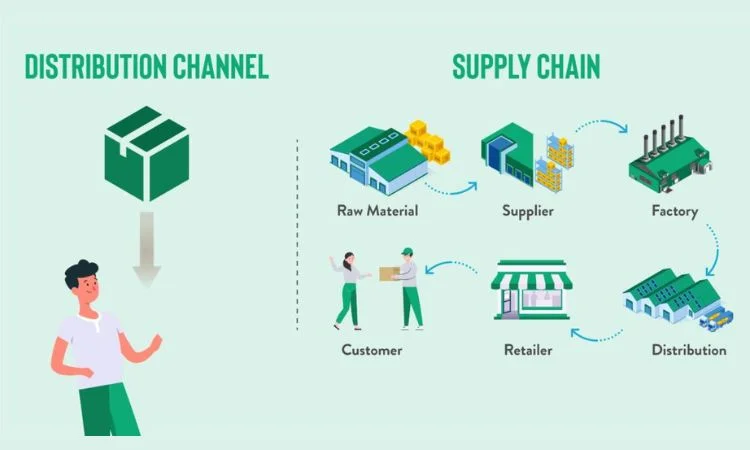
The company employs a well-structured distribution channel where products reach wholesale vendors through Carried and Forward Agents (CFA’s). Subsequently, these products are distributed to retailers in towns directly or through Small Wholesale Dealers, facilitating market penetration into even the remotest areas of India.
Brand Value Recognition
ITC holds a prominent position on Forbes magazine’s list of the top 2000 companies globally, securing the 772nd rank. The brand’s valuation, as of June 2018, stands at an impressive $51.5 billion. Furthermore, ITC is recognized as the 239th best employer worldwide by Forbes Magazine and holds a position in Asia’s 50 biggest performing companies list compiled by Business Week.
Market Analysis and Financial Overview
In light of the GST system and the additional cess imposed on cigarettes and tobacco-related products, ITC maintains a steady taxation rate of over 20%. Analysts indicate a decline of more than 5% in the company’s cigarette sales volumes in the last quarter. Over the past decade, ITC has generated a foreign exchange profit of $7.1 billion, with agri exports contributing 56% to this figure. In the social sector, ITC’s initiatives, such as e-chaupal, social and farm forestry projects, and ‘Mission SunehraKal,’ have positively impacted over 32,000 individuals, reaching and improving the lives of numerous farmers and their families in rural India.
Conclusion
ITC Ltd. stands as a preeminent Fast-Moving Consumer Goods (FMCG) Company within the Indian market. Over the past three consecutive years, the company has demonstrated a remarkable trajectory of growth within its FMCG portfolio, establishing itself as a beacon of success. ITC has adeptly positioned itself as a market leader across diverse verticals, a testament to its strategic prowess.
The company’s commitment to excellence is underscored by its sustained dominance through a myriad of well-established brands, setting a precedent for continued success in the ever-evolving landscape of the FMCG industry.