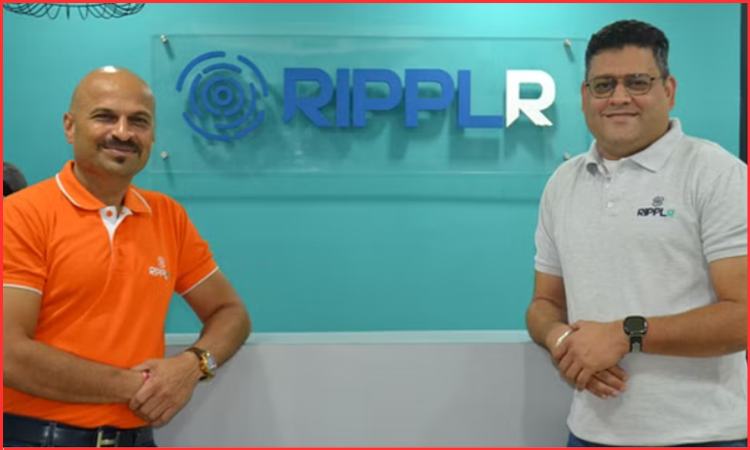
(Image Source: Ripplr)
Have you ever wondered how your favorite packet of biscuits or brand of toothpaste actually makes it to that tiny corner shop in your neighborhood?
It seems simple. The factory makes it, and the shop sells it. But in between, there is a messy, chaotic web of middlemen, dusty warehouses, and paper ledgers. For years, big brands have struggled to see where their products go once they leave the factory gates.
Enter Ripplr, a Bengaluru-based startup that is trying to fix this massive blind spot.
While the company made headlines just yesterday for raising $45 million (approx. ₹400 Cr) in a fresh funding round led by SBI, the real story isn’t just the money. It is how they are quietly modernizing the backbone of Indian retail.
The Problem: The “Black Box” of Distribution
In the traditional world, a brand like Britannia or Nivea sells goods to a large distributor. That distributor sells to a smaller wholesaler, who eventually sells to the shopkeeper.
For the brand, this is a “black box.” They don’t know which specific shops are buying their products, how fast they are selling, or if the stock is sitting in a damp godown for weeks. They only find out sales figures months later.
The Ripplr Solution: “Distribution as a Service”
Ripplr calls its model Distribution as a Service (DaaS). Think of it as a “plug-and-play” distribution network.
Instead of a brand having to hunt for dozens of local distributors in every new city they want to enter, they can hire Ripplr. Ripplr acts as the modern, tech-savvy middleman.
- Tech-First Logistics: They use an app-based system to manage inventory. Nothing is written on paper.
- Real-Time Data: When a shopkeeper buys stock, the brand sees that data instantly. They know exactly what is selling in a specific pin code in Pune or Chennai.
- Asset-Light: Ripplr doesn’t necessarily own hundreds of trucks. They aggregate existing logistics partners onto their platform, kind of like how Uber doesn’t own the cars but manages the rides.
Why Shopkeepers and Brands Like It
For the brands (and they work with big ones like HUL, Dabur, and Tata Consumer), it is about visibility. They can finally see their supply chain clearly.
For the small shopkeeper, it means better service. They get their orders on time, and because Ripplr uses data to predict demand, the shops are less likely to run out of popular items.
What’s Next?
With the fresh ₹400 Cr in the bank, Ripplr plans to expand deeper into India. They are already covering around 1 lakh retailers across major cities, but the goal is to reach even more remote corners.
In a market where quick-commerce (like Blinkit or Zepto) gets all the hype, Ripplr is doing the unglamorous but essential work of making sure the shelves of India’s 12 million kirana stores stay full.
It is not the flashy side of tech, but it is the plumbing that keeps the economy moving.