Reid Hoffman is the inspiring success story of vision, persistence, and innovation. Reid, the founder of LinkedIn embodied these qualities in a way that changed the way people connect professionally around the world.
Reid Hoffman’s success was not just in starting a company; it was in the process of building an interactive ecosystem that merged ideas, talent, and opportunity. His experience in the classrooms of Stanford and boardrooms of Silicon Valley exemplifies the power of courageous thinking and resiliency.
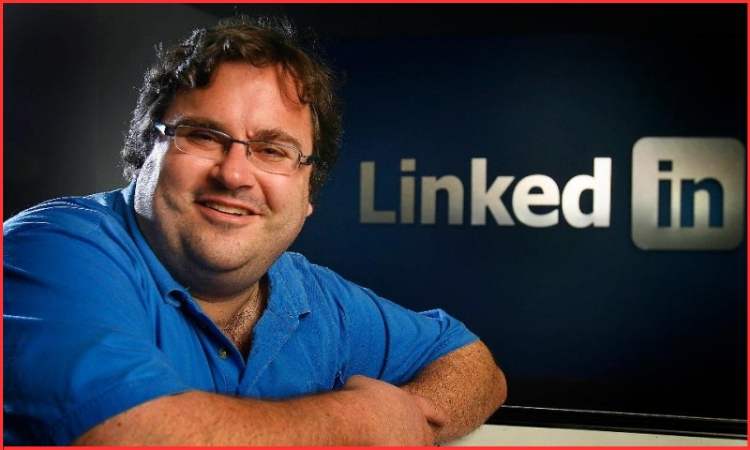
This inspiring success story illustrates exactly how to bring together academic curiosity, entrepreneurial drive and confidence in networks for a renewed experience of the everyday professional online.
In this blog, we will tell the story of Reid Hoffman the founder, how LinkedIn grew into a global success, and how other entrepreneurs can be inspired by his success story.
Reid Hoffman’s Early Life and Education – The Start of an Inspiring Story
Reid Garrett Hoffman was born on August 5, 1967, in Palo Alto, California. Living right in the middle of Silicon Valley, he was exposed to innovation from a young age, though early on, he was not obsessed with technology. In fact, Hoffman was deeply interested in philosophy, human nature, and storytelling. He would later draw upon these interests to create his own remarkable story as a thinker and founder.
Hoffman enrolled at Stanford University, where he achieved a Bachelor of Arts in Symbolic Systems and Cognitive Science in 1990. This academic focus on how people think and interact predicted his later contributions to social networking. As a Marshall Scholar, he went on to get his Master’s degree in Philosophy at Oxford University. This combination of technology and philosophy was central to his life as a founder who was always trying to marry ideas with action.
Reid Hoffman’s Early Career
Reid Hoffman’s successful career didn’t start at LinkedIn. He started in entry-level roles in the tech industry. After attending Oxford University, he became an employee of Apple Computer in 1994, where he contributed to eWorld, an early version of a digital online social platform where humans could engage. eWorld was not a commercial success, but it piqued his interest in how humans engaged and interacted on a digital platform and transformed engagement between humans.

Source: Forbes
Hoffman then became a Fujitsu employee in 1996 to continue experimenting with online-based services, but Hoffman had business ambitions. Hoffman wanted to build products that would last as well as transform humans’ living, work engagement, and participation. Hofmann’s first founder journey was as co-founder of SocialNet, which was a dating and social networking website founded and launched in 1997. SocialNet did not materialize, but Hoffman’s experiments with the product afforded him invaluable experience in new product development, interface design, time to market, and essentially human usage behavior that would help in building LinkedIn.
PayPal Era – An Important Chapter in the Success Story
In 2000, Reid Hoffman made a big move when he became one of the first executives at PayPal. He took a position as the company’s Executive Vice President, responsible for all external-facing relationships, or payments infrastructure, business development, and government relations.
PayPal, co-founded by Peter Thiel, Max Levchin, and Elon Musk, soon became a leader in the global online payments sector. Reid Hoffman provided leadership to help the company get through challenges, specifically with fraud and regulators, and then PayPal was sold to eBay in 2002 for $1.5 billion ( eBay press release 200).)
Founding LinkedIn – The pivotal moment in Reid Hoffman’s inspiring story
In December 2002, Reid Hoffman, along with Allen Blue, Konstantin Guericke, Eric Ly, and Jean-Luc Vaillant, launched LinkedIn, a new social network platform that launched in May 2003 with a simple yet radical vision of creating a professional networking site for people to connect, advance their careers, and find opportunities.
The old days were challenging, particularly around user growth, which was slow, and many doubted that a business-centered social network would gain traction. By the end of its first month, LinkedIn had only 4,500 members. Hoffman had faith and conviction within networks, and, despite the difficulty in growing LinkedIn, he continued to develop the product, cultivate relationships, and concern himself and the company with increasing user value.
By 2004, the company had introduced features for profiles, professional connections, and job listings; innovations that signify the real beginning of LinkedIn’s rise in Hoffman’s founding story.
Scaling LinkedIn – From Startup to Global Leader
LinkedIn’s growth really took off in 2005 when it implemented a business model based around paid subscription services, recruitment services, and advertising, while simultaneously focusing on differentiating itself from other networks like Facebook or MySpace by emphasizing professional identity.
- In 2011, LinkedIn had its Initial Public Offering with a market value of $4.25 billion (source: CNBC, 2011)
- By 2016, Microsoft had purchased LinkedIn for $26.2 billion, one of the largest tech acquisitions in history (source: Microsoft Press Release, 2016).
The growth of LinkedIn to a worldwide platform to use for networking and professional connections cemented Reid Hoffman’s remarkable story as a visionary founder.
Leadership Style and Vision
Reid Hoffman will not only be remembered as the founder of LinkedIn but also as a thought leader. Hoffman’s leadership style stems from what he calls network thinking: the notion that opportunities arise from networks and connections.
He has co-authored important books, some of which include:
- “The Start-Up of You” (2012): A guide on how to apply entrepreneurial skills to your career.
- “Blitzscaling” (2018): A how-to guide on how to scale companies quickly in competitive markets.
Hoffman’s philosophy emphasizes flexibility, boldness, and having the tenacity to fail. These lessons weave through his trajectory and remarkable story.
Investing, Mentorship, and Philanthropy- Enriching the Legacy
Besides his enterprise and influence on LinkedIn, Reid Hoffman has quickly become one of the more prominent investors and mentors in Silicon Valley. Reid Hoffman is a partner at Greylock Partners, where he has invested in companies like Airbnb, Zynga, and Convoy. He invests in companies that he feels build networks and increase people’s agency.
Reid Hoffman also engages in philanthropy, funding programs that target education, ethics related to technology, and democracy. To Reid Hoffman, his inspirational story is not merely about his own success, but, in addition, about giving back to society, and helping build the next generation of founders.
Lessons for Founders from Reid Hoffman’s Inspirational Story
Reid Hoffman’s journey offers timeless lessons for entrepreneurs:
- Accept failure as a learning experience: SocialNet was not successful in its business, but created the vision for LinkedIn.
- Build networks, rather than products: Your success will be dependent on relationships you build.
- Be patient about scaling: Once again, it took years for LinkedIn to find traction and scale.
- Be open to flexibility: You will need to be flexible about product approach and strategy in order to stay in business.
- Scale with ambition: Once you have traction, you do not need to be afraid to scale.
These same principles serve to make Reid Hoffman’s inspirational story a playbook for anyone building a company.
Conclusion
The incredible saga of Reid Hoffman epitomizes vision, ambition, and significance. The journey of the Stanford graduate to the co-founder of LinkedIn tells us how bold visions and ambition can shift the direction of industries; founders can build great companies.
LinkedIn is more than a tool for networking; it exemplifies Hoffman’s deep belief in the value of connection. A great success story, it encourages every founder to think big, rise to every challenge, and never forget the value of a network.
Even today, Reid Hoffman continues to teach, invest, and shape the world of technology and entrepreneurship. His life story shows that great companies are built successfully, while also creating tremendous value for people and society.
FAQs
Q1: How much money is Reid Hoffman worth?
As of 2025, Reid Hoffman’s net worth is approximately $2.5 billion (Forbes).
Q2: Did Reid Hoffman and Elon Musk ever work together at PayPal?
Yes, both were part of the PayPal team; however, Hoffman was working at external affairs and Musk was involved with product and technical dealings.
Q3: Is Reid Hoffman still part of LinkedIn?
Hoffman is not involved daily with LinkedIn; nonetheless, he is still a part of the board of directors at Microsoft, the parent company of LinkedIn.
Q4: Is Reid Hoffman a campaign donor?
Yes, he has been active in helping promote, nurture, and protect democracy and the ethical use of technology.