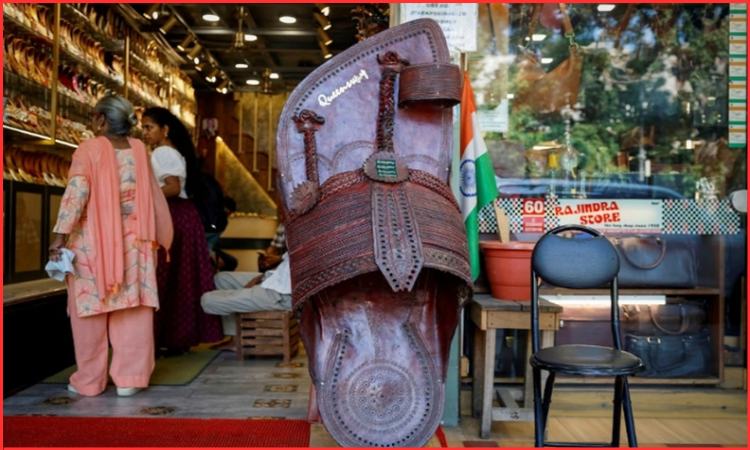
(Image Source: Reuters)
Prada learned a hard lesson six months ago about the power of social media backlash and cultural pride. When the Italian luxury house debuted sandals resembling traditional Kolhapuri chappals at Milan Fashion Week without crediting the Indian heritage, the response was swift and brutal. Photos went viral. Artisans fumed. Politicians spoke out. A prestigious brand looked tone-deaf.
Now Prada is doing something different. The company announced this week that it will launch a limited-edition collection of sandals made in India, priced at around 800 euros, or $930 a pair. The twist: these sandals will be produced in collaboration with Indian artisans, blending traditional craftsmanship with Italian expertise.
From Controversy to Collaboration
The journey from scandal to partnership happened remarkably fast. After the backlash, Prada’s leadership quickly acknowledged the mistake. Lorenzo Bertelli, the company’s chief marketing officer and head of corporate social responsibility, admitted the sandals drew inspiration from traditional Indian footwear. But acknowledgment wasn’t enough. The brand needed to back up words with action.
Prada reached out to Indian artisan groups and government bodies. Virtual meetings became in-person conversations. By early summer, serious talks were underway with Maharashtra’s Chamber of Commerce. By late fall, the company had signed formal agreements with Sant Rohidas Leather Industries and Charmakar Development Corporation (LIDCOM), organizations dedicated to promoting India’s leather craftsmanship.
The brand didn’t just apologize. It committed real money and resources to the partnership.
The Product and the Process
Prada plans to produce 2,000 pairs of these sandals in Maharashtra and Karnataka, the regions where Kolhapuri chappals actually originate. Each pair will be handcrafted using traditional techniques but incorporating Prada’s production methods and quality standards. Think of it as an exchange: Indian artisans bring centuries of heritage. Prada brings global brand credibility and distribution reach.
The collection launches in February 2026 across 40 Prada stores worldwide and through online platforms. The price tag of $930 is deliberately high. This isn’t charity or corporate guilt shopping. This is Prada positioning Kolhapuri chappals as genuine luxury products worthy of high prices.
What It Means for Artisans
For marginalised communities that have hand-crafted these sandals for generations, the impact could be transformative. Prerna Deshbhratar, managing director of LIDCOM, put it clearly: once Prada endorses this craft as a luxury product, demand should skyrocket through what she calls a domino effect.
Prada is investing several million euros into a three-year partnership that includes training programmes in India and opportunities for artisans to spend time at Prada’s Academy in Italy. This goes beyond one-off collection. The company is trying to build capability and attract younger people to a craft that’s been losing appeal as cheap imitations flood the market.
Business Lesson
What makes this story interesting isn’t just that Prada faced backlash. It’s that the company didn’t double down defensively or quietly drop the product. Instead, it transformed a crisis into a legitimate business opportunity.
Prada gets a story of redemption and authentic collaboration. Indian artisans get access to global luxury markets and fair compensation. Kolhapuri chappals, a craft threatened by cheap knockoffs and declining demand, get validation as a heritage product worth protecting.
The sandals might cost $930, but for artisans and their communities, the real value is the recognition that their craft matters enough for a global luxury brand to invest in it seriously.