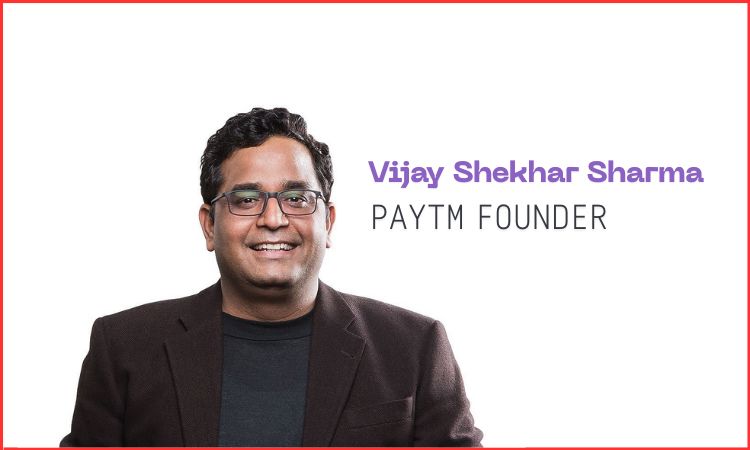
Vijay Shekhar Sharma, the innovative founder of Paytm, had one of the most significant parts in the reimagining of India’s digital payments landscape. From being a small-town student struggling in school due to his English ability to being the creator of one of India’s largest fintech ecosystems, Sharma’s journey is a story of resilience, innovation, and faith in technology. Paytm did not simply build a useful app; it became the foundation of a movement that transformed the way everyday Indians send, spend, and manage their money.
In this article, we will step through his early life, the development of Paytm, the impact it had on India, the challenges faced, leadership lessons, and lessons for future entrepreneurs.
Vijay Shekhar Sharma’s Early Life & Struggles
Background and Education
Vijay Shekhar Sharma was born in Aligarh, Uttar Pradesh and grew up in a middle-class family with limited means. He went to school in Hindi medium and struggled in the English-only classes at the Delhi College of Engineering. Rather than giving up, he took matters into his own hands and began teaching himself the language, reading newspapers, listening to interviews and doing an excessive amount of practice.
Early Entrepreneurial Spirit
He showed an inclination for technology early on:
- He created his first website at the age of 15
- He started an online content platform in college
- He experienced poverty, at times living on a maximum of ₹10 per day
These conditions inspired him to be innovative and to think without any fear.
The Emergence of Paytm and the Rise of Digital Payments
The Launch of Paytm
In 2010, Vijay introduced Paytm by launching it as a mobile recharging and bill payment application. The vision was straightforward: “Pay From Mobile.”
Moments That Changed the Game
Paytm skyrocketed because of two pivotal events:
- The smartphone and internet boom (2014 – 2016):
Cheap data plans allowed millions of people to access digital services for the first time.
- Demonetisation 2016
As cash was demonetized, Indians opted for digital payments.
Paytm became a household name across India in an instant.
How Paytm’s Model Changed Digital Payments
Paytm altered the method of payments in India by:
- Mainstreaming QR codes (the first Indian app to do so)
- Instant payments without having to use a bank card
- Capturing the digital payment market in both urban and rural India
- Onboarding kirana stores, farmers, shops, cabs, vendors
- Satisfying the need for a safe and easy-to-use wallet
Millions of Indians used digital payments for the first time because Paytm made it simple.
Paytm’s Business Model and Revenue Streams
How Paytm Earns Money
| Revenue Source | Explanation |
| Payments | MDR, merchant services, QR solutions |
| Paytm Wallet | Float income & usage fees |
| UPI Ecosystem | Partnerships & value-added services |
| Financial Services | Paytm Postpaid, loans, insurance, wealth products |
| Commerce | Ticketing, travel, entertainment |
| Advertising | In-app ads from brands |
Paytm’s Important Advantages
- Major market share
- Largest merchant network in India
- Strong customer understanding
- Huge data-led insights
- Smooth user experience
Vijay Shekhar Sharma’s Leadership and Vision
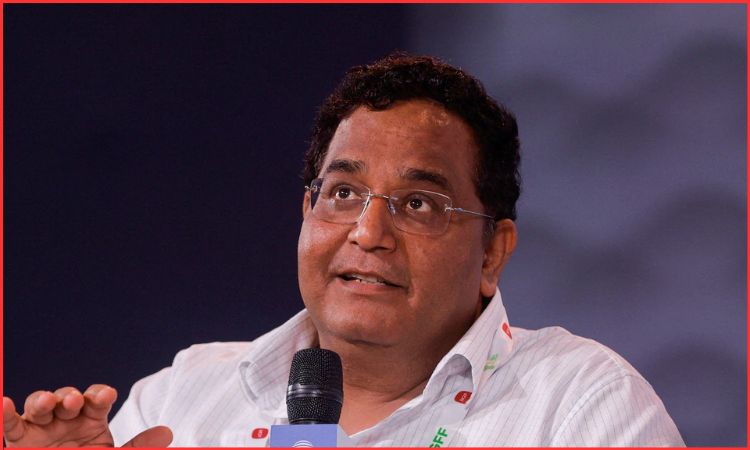
Source: dartjets
Aggressive Risk-Taking
Vijay is recognized for making massive and strategic bets.
He introduced a lot of money back into:
- Offline merchant acquisition
- QR technology
- Digital banking infrastructure
Customer-First Thinking
He always would say, “Build for India, not the elite.”
Paytm’s commitment to the ordinary person the taxi driver, the small shop, the student, and the worker became its biggest strength in a society with a strong sense of caste and privilege.
Creating a Digital Financial Ecosystem.
While under his leadership, Paytm launched:
- Paytm Payments Bank
- Paytm Postpaid
- Paytm Money
- Paytm Credit Cards
- Paytm FASTag
- lending and wealth management.
This positioned Paytm to be much more than an app; they created a digital financial ecosystem.
Issues with Vijay Shekhar Sharma & Paytm
Foremost Competition
Paytm has faced competition from:
- Google Pay
- PhonePe
- BharatPe
- Banks
- Neobanking startups.
Regulatory Pressures
RBI guidelines about:
- KYC
- Wallet usage
- Regulations on payment banks
Presented compliance challenges.
Low IPO
Paytm’s IPO in 2021 received some of the most press for a market moment in India.
After the merger, the stock plummeted immediately after listing, which led to market skepticism.
However, Vijay was stance in focusing on operations, profitability, and long-term growth.
The Role of Paytm in the Digital Economy of India
Image Source: moneycontrol
Financial Inclusion
Paytm brought digital payments to:
- Rural villages
- Street vendors
- Small businesses
- Delivery staff
- Auto and cab drivers
Supporting India’s Cashless Economy
Paytm:
- Enabled millions of digital transactions daily
- Reduced cash dependency
- Assisted the government in marketing Digital India
- Made UPI and QR popular
Helping Small Business
Through QR codes and low-fee programs, Paytm helped to:
- Increase sales for local shops
- Reduce cash management issues
- Enhance financial discipline
- Build trust in digital banking
The Worldwide Recognition of Vijay Shekhar Sharma
Awards & Recognition
- Time Magazine, 100 Most Influential People
- Ernst & Young, Entrepreneur of the Year
- India Today, Most Innovative Entrepreneur
- Ambassador of India’s Fintech Movement to the World
Entrepreneurial Lessons from Vijay Shekhar Sharma
Lessons
- Start slow, think big.
- Transform problems into opportunities.
- Stay persistent, with or without successes.
- Create for real India, and not just the big cities.
- Invest in technology as early as possible.
- Build trust with customers, even before the product.
- Adapt and change rapidly in a changing market.
All of these principles helped Vijay create one of the most successful startups in India.
Conclusion
Vijay Shekhar Sharma established not just a company but also altered the course of a nation’s relationship with digital payments. Paytm changed how Indians pay, earn, shop, and save through QR codes, digital wallets, and a variety of financial services that have transformed India’s fintech landscape.
His entrepreneurial journey is a testament that any innovation, courage and thorough understanding of consumer pain points can create companies that can alter a nation. The Paytm story will continue to inspire millions of Indian entrepreneurs, dreamers and innovators for years.
FAQs
1. What inspired Vijay Shekhar Sharma to build Paytm?
An aspiration to create a simple mobile-first platform that would make it easy for every Indian to make digital payments.
2. How did Paytm impact rural India?
New QR codes and easy wallet payments made it possible for shopkeepers, farmers and small vendors to accept cashless payments.
3. What do you think the biggest contribution Paytm made to the fintech sector was?
Paytm made digital payments mainstream in India during the demonetization period, when millions had to adopt cashless payments.
4. What other revenue does Paytm make besides payments?
Through financial services, lending, Paytm Postpaid, insurance, ticketing, advertising and marketplace services.
5. What leadership style does Vijay Shekhar Sharma embody?
Choosing a bold, innovative perspective with the end consumer in mind and grounded in a deep understanding of India and its real pain points.