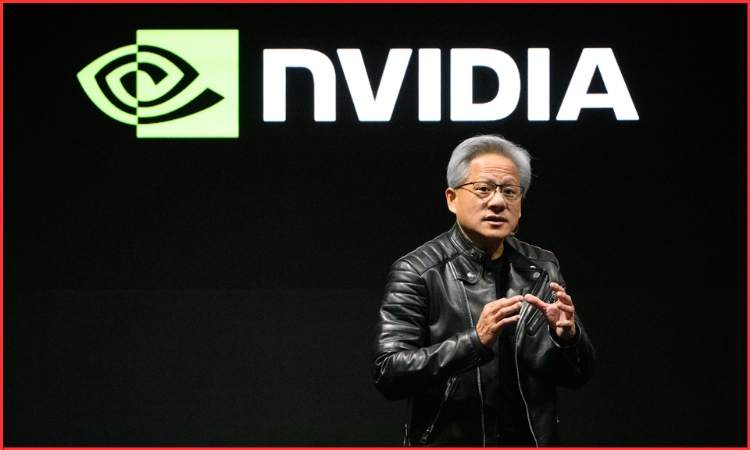
When Jensen Huang started NVIDIA in 1993, it was a small start-up trying to make high-performance graphics cards. Thirty years later, under Huang’s leadership, NVIDIA is now a trillion-dollar AI leader that has completely changed what is possible in computing. Huang saw the potential in AI long before it became a priority for other companies and organizations, making a series of very large bets on GPU technology that now powers advances in sectors like healthcare, robotics, data centers, and self-driving cars.
By leading NVIDIA to make AI the basis of their innovations, establishing strong partnerships, making future-looking acquisitions, and investing in research, Huang set the company up as a pillar of the global tech ecosystem. NVIDIA has sown its roots deeper than gaming, venturing far down the hardware and software AI markets.
Today, NVIDIA is more than a technology company, acting as an advancing force of change in the world. Huang has earned that reputation through his commitment to investments and bold leadership. He has now created a business model that is changing how we will work, learn, and create in the world. The article is an example that, with the right leadership, an organization can prepare for the future, but more importantly, shape the future, and how Jensen Huang made NVIDIA a Trillion-Dollar AI Giant.
The Story of NVIDIA AI – From Graphics Card Producer to a Trillion-Dollar AI Company
Source: TechCrunch
When NVIDIA was founded in 1993, it primarily manufactured high-performance graphics processing units (GPUs) for gaming. But under the leadership of Jensen Huang, the founders realized there was a much bigger opportunity. Huang saw the potential for GPUs to focus on so much more than just gaming, and deeply utilized their power for artificial intelligence.
By the time Huang had evolved the company to NVIDIA AI sometime around 2010, NVIDIA’s business had transformed. Huang had decidedly changed the company from a gaming graphics manufacturer to an artificial intelligence company. Huang’s early investments of the 2010s into deep learning and data science were timely and visionary, and prepared NVIDIA to be at the forefront of next-generation AI, robotics, and autonomous vehicles.
Today, because of Huang’s persistent vision and determination over the last +10 years, NVIDIA has GPUs powering everything from ChatGPT to self-driving cars. NVIDIA still has its chips in detail industries such as supercomputers, healthcare, and space research. The Hindu recently reported that NVIDIA has now made history as the very first $4 trillion tech company, and Huang has been given the moniker ‘the Steve Jobs of AI.’
How Innovative NVIDIA AI Technologies Fueled Trillion-Dollar Growth
The foundation of NVIDIA’s success story as a trillion-dollar company is its investment in technological innovation. Under Jensen Huang, NVIDIA transitioned from primarily selling graphics processing units (GPUs) for gaming to producing multipurpose high-performing processors capable of running sophisticated AI workloads. Those GPUs are performers regardless of use case. They are now used to power countless AI applications, driving the training of giant neural networks, powering data centers that support the infrastructure of smart cities, or autonomous systems.
Source: Vox
In 2006, NVIDIA developed one of the strongest innovations in computational performance in the industry: CUDA (Compute Unified Device Architecture). CUDA broke the glass for programmers to take GPUs and use them for a greater purpose beyond rendering three-dimensional graphics. Deep learning, scientific research, finance, and health care can all use GPUs to speed up data processing, fueling a growing AI research community and increasing AI applications. CUDA’s rapid growth with respect to adoption ushered in a robust software ecosystem and ensured that for any AI work, NVIDIA hardware would be the retailer of choice.
Furthermore, NVIDIA has built upon this foundation and improved its AI-centric hardware with the introduction of the Blackwell platform, which was announced at Computex 2025. The next-gen AI superchip’s aim is to ensure superior performance with higher complexity AI models, providing faster training and inference. These developments show that NVIDIA continues to be a key enabler of AI advancements around the world.
Overcoming Challenges – How Jensen Huang Met the Challenges of the Tech Industry
Even the NVIDIA success story has its challenges. But Jensen Huang, the hard-working and resilient Chief NVIDIA’s rise was not without challenges. Under Huang’s resilient leadership, the company navigated obstacles that could have derailed its growth:
- Strategic Pivot – Transitioning from a gaming GPU company to an AI powerhouse was a bold risk, but it positioned NVIDIA as a leader when demand for AI surged.
- Chip Shortages – NVIDIA tackled global supply chain disruptions by building long-term supplier relationships and planning for chip availability well in advance.
- Market Volatility – While tech stocks fluctuated, Huang focused on long-term innovation rather than short-term profits, ensuring steady growth.
- Fierce Competition – Rivalries with Intel, AMD, and Apple challenged NVIDIA, but its unmatched AI solutions kept it ahead.
- Talent Wars – Attracting elite AI engineers was tough, but Huang created a compelling mission and culture that drew top talent.
Huang not only overcame these challenges but also turned them into opportunities, strengthening NVIDIA’s position in the industry.
The Future of NVIDIA AI
NVIDIA has a bright future, and that future revolves around AI. Jensen Huang isn’t taking any time off. And, as he has said repeatedly, AI is ushering in the next age of computing. That is the vision behind NVIDIA’s transformation from a chip maker to a full-stack AI company, one that helps shape the digital future of the world.
From building AI factories to developing state-of-the-art platforms like Omniverse and the Blackwell chips, NVIDIA is pushing boundaries, and these technologies are helping to train the world’s largest AI models, large-scale robotics, and even small-scale climate models. Everything NVIDIA creates is designed with AI in mind.
In his Computex 2025 keynote, Huang said NVIDIA AI would make our industries more efficient and intelligent, and he’s not stopping there. His vision is to empower a world where AI is at work everywhere in our lives: faster, safer, and smarter.
Lessons from Jensen Huang’s Leadership
The journey of Jensen Huang, NVIDIA, is more than just a story of success; it’s a playbook for leadership, innovation, and vision. Here are some lessons we can take from how he has made NVIDIA into an AI trillionaire:
- Think Long-Term- Huang did not follow trends. He looked out into the future of technology and got NVIDIA ahead of the AI boom very early.
- Take a Bold Step in Your Strategy- Moving from gaming to AI was not a small leap. However, it put NVIDIA in a leadership position when demand for AI exploded.
- Build Partnerships- Huang knew that he could not be successful alone. Forming partnerships with companies like Microsoft, Meta, and OpenAI helped to amplify NVIDIA AI around the world.
- Invest in Talent and the People- Behind every AI product was a passionate team. Jensen built a culture of innovation, curiosity, and excellence.
- Lead with Vision- Huang leads on the stage, communicates where NVIDIA is going, and brings everyone along for the ride.
As he said, “AI will get into our lives faster than the internet did”. Huang’s story demonstrates that with bold thinking and smart execution, you can go from a startup to a trillion-dollar AI company.
Conclusion
Jensen Huang’s early recognition of AI’s potential and relentless focus on innovation placed NVIDIA at the forefront of the AI revolution. With platforms like CUDA and next-generation chips such as Blackwell, NVIDIA continues to drive advancements across industries from healthcare to autonomous vehicles.
Under Huang’s leadership, NVIDIA has become one of the most influential technology companies in the world. Its story demonstrates how visionary strategy and groundbreaking technology can deliver long-term success in a rapidly evolving landscape.
FAQs
Q-1. What prompted Jensen Huang to create NVIDIA?
He saw an opportunity to improve graphics processing and revolutionize computing.
Q-2. How does NVIDIA’s AI technology compare to AMD and Intel?
NVIDIA leads with superior AI GPUs and a strong developer ecosystem.
Q-3. What role does NVIDIA play in AI gaming?
It powers advanced graphics and AI features, including ray tracing.
Q-4. How has Jensen Huang’s background influenced NVIDIA’s culture?
His engineering roots foster a culture of innovation and bold problem-solving.
Q-5. What AI projects is NVIDIA working on beyond chips?
NVIDIA is developing AI platforms, collaborative virtual environments, and robotics technologies.