Jack Dorsey is one of the rare founders who revolutionized communication and digital payments. From co-founding Twitter, which turned short messages into global conversations, to building Block, which empowers small businesses and supports the crypto economy, Jack’s journey reflects vision, resilience, and reinvention. Despite facing failures, criticism, and legal challenges, he has left a lasting mark on technology and entrepreneurship.
Jack Dorsey’s Biography
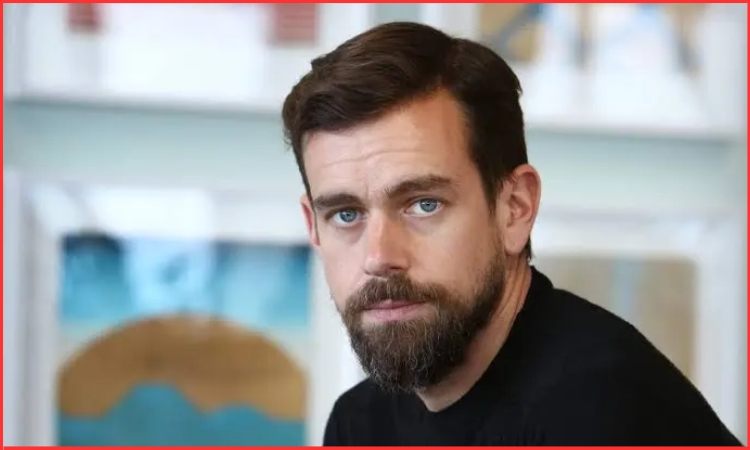
| Name | Jack Patrick Dorsey |
| Born | 19 November 1976, in St. Louis, Missouri |
| Education | New York University |
| Known for | Co-founding Twitter and Block |
| Net Worth | $5.4 billion [9 September 2025] |
Early Life of Jack Dorsey
Jack is the son of Timothy G. Dorsey and Marcia A. Dorsey. He was born and raised in St. Louis, Missouri. His father worked for a company that developed mass spectrometers, while his mother was a homemaker. His uncle is a Catholic priest in Cincinnati, so he was raised Catholic.
Jack Dorsey’s Education & Early Interests
As a teenager, Jack was fascinated by the idea of tracking objects in real-time. He used to pull data from police scanners into his computer and then write software that mapped ambulances, fire trucks, and taxis across the city. He was highly interested in seeing the moving life of the city through short information.
Jack attended Bishop DuBourg High School. In his young days, he worked occasionally as a fashion model. In 1995, he enrolled at the University of Science and Technology. After two years, he left the university to pursue his dream life in New York. Therefore, in 1997, he joined New York University, from which he dropped out in his final year to work on his ideas.
Jack Dorsey’s Pre-Twitter Journey in Oakland
While studying at New York University, Jack was invited by Greg Kidd to join his startup, because he had detected a security hole in some dispatch software that caught the attention of Greg Kidd. So after dropping out, in 1999, he joined Greg Kidd and experienced the world of real-time messaging and dispatch systems.
In 2000, he started his dispatch software company in Oakland. The software was used to send quick location updates of couriers, taxis, and emergency services to others. However, the business did not scale high, but the idea of short, real-time updates directly influenced the geniuses of Twitter.
Jack pivoted to become a licensed massage therapist after closing down the company. However, he continued as a freelance programmer and designer on the side.
Twitter’s Origin
During the early 2000s, Evan Williams was running Odeo in San Francisco with Noah Glass and Biz Stone. Odeo was focusing on helping people record, publish, and subscribe to audio shows.
In June 2005, Apple announced iTunes, which supported podcasts natively. Hence, Odeo started brainstorming new ideas to scale. Jack got introduced to Odeo through Noah. He pitched his idea of short, real-time status updates. Evan Willians agrees to fund a prototype, and Biz helped Jack in designing.
In March 2006, the first version was built, called ‘twttr’. Jack sent the first tweet: ‘Just setting up my Twitter’ on March 21, 2006. By July 2006, the team had launched it publicly. Later, Odeo was renamed as Obvious Corporation, which then spun off Twitter, Inc.
Jack Dorsey becomes Twitter’s CEO
Source: Reuters
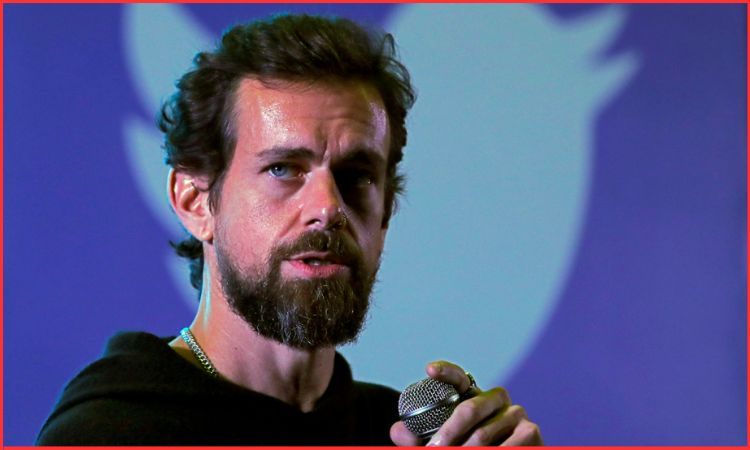
In 2007, Jack became the CEO of Twitter. The startup went through two rounds of funding by venture capitalists. He prioritised improvements over generating revenue. His three guiding principles, which he termed company shares, are simplicity, constraint, and craftsmanship.
In 2008, Jack lost his position as CEO for being reported for leaving work early to enjoy other activities like yoga and fashion design. Thus, Williams took over as CEO, while Jack became chairman of the board. However, in October 2015, Jack was named as permanent CEO of Twitter.
Political Scrutiny
In October 2020, Jack was one of several tech firm CEOs invited by the US Senate Commerce Committee. Republican Roger Wicker led the charge to force the CEOs of Twitter, Facebook, and Google to testify about the legal immunity the tech platforms should receive under Section 230 of the Communications Act of 1996.
Jack Dorsey Resigns as CEO
Jack announced his resignation as CEO on November 29, 2021. Parag Agrawal became the CEO. In May 2022, Jack left the social network’s board of directors. He retained his 2.4% ownership of Twitter in October 2022, when the company was sold to Elon Musk.
In 2022, Jack wrote, ‘The biggest mistake I made was continuing to invest in building tools for us to manage the public conversation, versus building tools for the people using Twitter to easily manage it for themselves.’ Thus, by admitting this, Jack realised that Twitter should have been user-driven.
Origin of Square

Source: Blockmanity
In 2009, Jack’s friend, Jim McKelvey, who is a glass artist in St. Louis, lost a sale because he could not accept credit cards. At that time, taking card payments required expensive hardware and bank approvals. Hence, Jack teamed up with McKelvey to solve the problem.
They came up with a tiny square-shaped card reader connected with a simple app. This made it easier for artists, food truck owners, and market vendors to receive payment instantly. They named the startup ‘Square’ for its square-shaped card reader. In 2011, Square was valued at approximately $240 million and was signing up 100,000 new merchants every month.
Square’s Rapid Growth & Key Partnerships
In April 2011, they secured an investment from Visa. In October 2011, they were processing about $2 billion per year in payments through their ‘Square’ card readers, charging 2.75% per swipe. In 2012, they partnered with Starbucks so that they could use their payment technology to accept payments for coffee. In the same year, Starbucks also invested in Square at a valuation of $25 million, when they were handling an annual payment volume of around $6 billion.
The Launch of Cash App
In 2013, they launched Cash App, a peer-to-peer payment service. Afterwards, many new integrations were made in the payment processing system for efficient usage. In 2020, Square invested around 1% of its total assets in Bitcoin, for its potential to become a universal currency in the future. Additionally, in February 2021, more bitcoins were purchased by the company, bringing the company’s total holdings to around 8,027 bitcoins.
Rebranding as Block & Acquisitions
In 2021, Square paid $297 million in cash and stock to acquire majority ownership in Tidal, a music streaming service provider. On December 10, 2021, Square was renamed as Block, Inc. However, less than a week into the rebranding, H&R Block sued them with allegations of trademark infringement. The lawsuit was resolved in April 2023 when both companies jointly agreed to dismiss the suit.
In 2022, Block successfully acquired Afterpay, a buy-now, pay-later (BNPL) lender in Australia. However, in 2023, all services and products of Block, including Afterpay, faced operational issues that increased customer reports. The outage was caused by a problem with the company’s DNS, which was fixed by them.
Bitcoin Mining Initiative
In February 2024, Block announced that it had finished the development of a three-nanometer bitcoin mining chip and was focusing on the design with a semiconductor foundry. They also reported the development of a full bitcoin mining system to decentralise the supply of bitcoin mining hardware and the distribution of hashrate.
In July 2024, they signed a ‘large-scale crypto mining hardware pact’ while agreeing to supply its chips to bitcoin miner ‘Core Scientific’. In July 2025, they were added to the S&P 500 by replacing Hess Corporation.
Under Jack’s leadership, the company’s Q2 2025 gross profit has grown to $2.54 billion, with 14% YoY growth. Today, Block is recognised as one of the leading fintech companies, known for its digital payments, mobile commerce, and blockchain technology.
Lessons from Visionary Jack Dorsey for Entrepreneurs
- Start with Curiosity: Jack’s first experiments came from tracking city life through scanners. Hence, your simple interests can spark big ideas.
- Don’t Fear Failure: Jack’s Oakland dispatch startup did not scale, but it planted the seed for Twitter.
- Keep it Simple: Twitter’s success was built on short messages. Moreover, Square’s card reader was just a small white device. Hence, with simplicity, you can attract scale.
- Stay Adaptable: Jack moved from programming to massage therapy to payments to crypto. Thus, reinvention is key to long-term success.
- Think long-term: From Bitcoin investments to mining chips, Jack’s bets on the future. Thus, do not cater to quick wins; instead, think long-term.
Conclusion
Jack Dorsey’s journey shows how ideas rooted in curiosity can grow into platforms that change the world. Whether it was mapping taxis in real time, simplifying payments for artists, or reimaging the future of money, Jack followed his instincts and took bold risks. For entrepreneurs, his journey is not about overnight success but about developing persistence and staying true to a bigger mission.
FAQs
Q1: What is Jack Dorsey’s net worth?
As of September 2025, Forbes estimates it at $5.4 billion.
Q2: Why was Square renamed Block?
The rebranding reflects its broader ecosystem in blockchain and Bitcoin.
Q3: Which companies has Jack Dorsey founded?
Jack co-founded Twitter and Block (formerly Square).
Q4: What is Jack Dorsey’s net worth in 2025?
As of 2025, Jack Dorsey’s net worth is estimated at $5.4 billion, according to Forbes.