(Image Source: The New Indian Express)
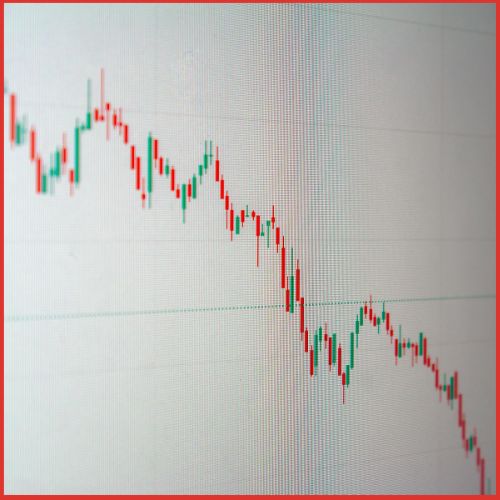
The Indian stock market closed in negative territory for the third consecutive session on Wednesday, with both benchmark indices sliding to their lowest levels in nearly a month. Foreign investors continued to pull money out, and uncertainty around US-India trade talks weighed heavily on sentiment throughout the trading day.
The NSE Nifty 50 index shed 81.65 points, or 0.32 percent, to finish at 25,758. During the session, the index swung between a high of 25,947.65 and a low of 25,734.55, showing the volatility that has gripped the market over the past few trading sessions.
The broader market weakness extended to the Sensex as well, with the index facing selling pressure in the final hour of trading. Consumer durables, private banking, and information technology stocks bore the brunt of the selloff as investors trimmed positions ahead of key central bank decisions and ongoing trade negotiations between the US and India.
The FII Factor
Foreign portfolio investors have been consistent sellers in recent weeks, pulling a net 3,760 crores out of the market on Tuesday alone. Analysts say this outflow has been one of the biggest drags on market sentiment, even as domestic institutional investors have been stepping in with purchases worth 6,225 crores on the same day.
The currency weakness compounded the problem. The rupee opened weaker at 90.03 against the dollar, making imported goods more expensive and reducing the attractiveness of Indian assets for foreign money managers. The FII selling has become something of a self-reinforcing cycle: outflows weaken the currency, which in turn prompts more selling.
Trade Anxiety
President Trump’s recent comment that action should be taken against India for allegedly dumping rice in the US rattled markets. With trade deal negotiations between the two countries already dragging on, investors are nervous about the possibility of tariffs or other protectionist measures that could impact India’s exports and earnings for major corporations.
Vinod Nair, Head of Research at Geojit Investments, said the situation reflects global apprehension seeping into Indian markets. “The direction of the market in the short term will be shaped by signals from the central bank and developments in trade negotiations,” he noted.
Which Stocks Got Hit
Among the Sensex heavyweights, notable losers included Trent, Bharat Electronics, Mahindra and Mahindra, UltraTech Cement, ICICI Bank, and Tata Motors. These losses reflected broad-based selling rather than company-specific issues.
On the flip side, some sectors held up better. Steel, pharmaceuticals, TCS, Reliance Industries, HCL Technologies, Power Grid, and Asian Paints managed to post gains despite the overall market weakness. The pharmaceutical sector, in particular, continued to show resilience, suggesting that defensive positions are still getting some attention from investors.
Broader Market Weakness
The weakness wasn’t just confined to the large-cap space. The broader market indices also declined, with mid-cap and small-cap stocks getting battered harder than the main indices. This is typical in a risk-off environment where investors pull money back into safer, large-cap stocks.
What’s Coming Next
The real test for markets in the coming weeks will be the Federal Reserve’s final interest rate decision of the year. Any hints about future rate policy could significantly impact foreign capital flows into India. Higher US rates typically make American assets more attractive and encourage capital to flow back home.
Domestically, analysts are waiting to see how the Reserve Bank of India responds to inflation data that’s scheduled to be released. The central bank has already cut rates aggressively, but questions remain about whether further cuts are in the offing or if they’ll pause to assess the impact of previous moves.
The delay in finalizing the US-India trade deal is also creating uncertainty. Markets hate uncertainty, and until there’s clarity on what tariffs or trade restrictions might come, foreign investors will likely remain cautious about building positions in Indian stocks.
The Valuation Question
Some analysts argue that the recent selloff, while painful, might actually be healthy for the market. Valuations had been running high on the back of strong liquidity and positive sentiment. The fact that the broader market is taking bigger hits than the large-cap space suggests that some froth might be getting wrung out of the system.
“The market structure is becoming challenging as the year draws to a close. Heavy selling in the broader market is justified since valuations have been elevated,” Vijayakumar from Geojit Investments pointed out. He added that fundamentals remain favorable, with higher growth and corporate earnings achievable in the quarters ahead.
Looking Ahead
The Indian market still has strong fundamentals underlying it. Corporate earnings are expected to improve, government stimulus is starting to produce results, and inflation has been kept at bay. But in the short term, sentiment is being driven by global factors: US interest rates, trade tensions, and foreign capital flows.
For investors, the message seems clear: don’t expect smooth sailing over the next few weeks. The market will likely remain volatile until there’s clarity on trade talks and the Fed’s policy path. But for those with a longer time horizon, the dips might actually present buying opportunities in fundamentally sound companies.