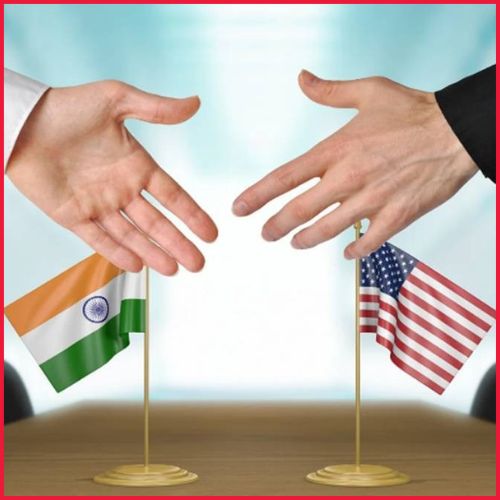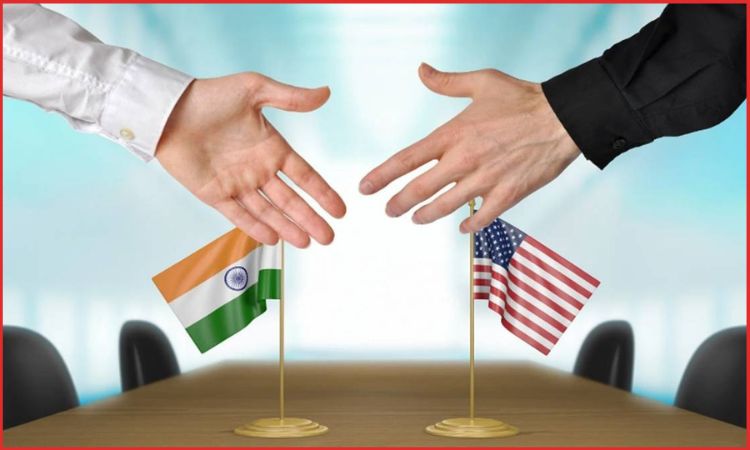
The global trade map was redrawn this weekend. After months of gruelling negotiations and high-stakes tariff wars, India and the United States have officially hit the “reset” button on their economic relationship.
The unveiling of the Interim Trade Agreement framework marks a historic pivot. For Indian exporters, it’s the light at the end of a costly tunnel: reciprocal US tariffs that had skyrocketed to 50% have been slashed to 18%, with several high-value sectors moving toward zero-duty status.
This is not just a policy update; it is a $30 trillion opportunity for “Made in India” to dominate the American living room.
The Conditions: A Strategic Give-and-Take
This agreement was not born out of thin air. It is a pragmatic “give-and-take” designed to de-escalate the trade friction that peaked in late 2025.
The Core Conditions:
- The Energy Pivot: In a significant diplomatic concession, India has committed to purchasing $500 billion in US energy, aircraft, and technology over the next five years.
- The Russian Factor: To secure the removal of the 25% “punitive” portion of the tariffs, India agreed to reduce its reliance on Russian crude oil significantly, pivoting its procurement toward US and Venezuelan sources.
- Market Reciprocity: While India gains lower export duties, it has opened its doors to US industrial goods and a specific basket of agricultural products, including tree nuts, soybean oil, and premium spirits.
Sector Spotlight: Who Wins Big?
The market impact is expected to be immediate, particularly for labour-intensive industries and MSMEs that were struggling under the previous 50% tariff regime.
Textiles and Apparel: The Competitive Edge
With duties falling to 18%, Indian garment manufacturers have instantly regained their footing. At this rate, India now enjoys a more favourable position than regional rivals like Vietnam (20%) and Bangladesh (20%). This 2% margin is the difference between a lost contract and a massive order for clusters in Tirupur and Noida.
Gems & Jewellery: A Zero-Duty Sparkle
The US remains the world’s largest consumer of polished diamonds. Moving toward zero tariffs in this sector provides an instant boost to profitability, positioning India as the undisputed global hub for diamond processing and design.
Generic Pharmaceuticals: Medicine for the Masses
India’s “Pharmacy to the World” status just got a significant upgrade. The framework outlines a path to zero tariffs on generics, providing regulatory clarity and pricing advantages that will help Indian pharma giants scale their US operations without the fear of sudden trade barriers.
Aerospace and Auto Parts: The ‘Section 232’ Relief
In a strategic win, India secured exemptions from Section 232 national security duties on aircraft parts. This move, combined with a preferential quota for auto components, aligns perfectly with the government’s ‘Make in India’ push in high-skill manufacturing.
Protecting the Roots: The Farmers’ Safeguard
Despite the broad opening of trade, Commerce Minister Piyush Goyal emphasised that India’s “red lines” remained intact. Sensitive sectors, specifically dairy and staple grains like wheat and rice, have been fully protected to safeguard the livelihoods of millions of domestic farmers.
“Farmers Safe, Country Developed,” Goyal stated, ensuring that while India eyes the $30 trillion US market, its own rural heartland won’t be flooded by subsidised imports.
Market Sentiment: A “Watershed Moment”
Industry captains have hailed the deal as a “watershed moment.” From SpiceJet to FICCI, the consensus is clear: the deal provides the stability needed to attract fresh investment. By removing the “punitive” 25% penalty, the US has signalled that India is no longer just a trading partner, but a preferred strategic ally in the Indo-Pacific.
Market Impact: A Surge in Confidence and Capital
The announcement has acted as a shot of adrenaline for the Indian economy. Beyond the immediate sector-specific gains, the deal is reshuffling the broader financial landscape.
- Stock Market Rally: On the day the framework was confirmed, the BSE Sensex and Nifty 50 soared by over 2.5%, with export-heavy stocks leading the pack. Investors are particularly bullish on companies like Gokaldas Exports (up 17%) and Titan (up 2.4%), viewing the 18% tariff as a stable floor for future earnings.
- Currency & FII Flows: The Indian Rupee, which had been under pressure, saw a significant recovery, appreciating by 124 paise to 90.27 against the USD. Analysts expect this to trigger a reversal of Foreign Institutional Investor (FII) outflows, as the removal of trade uncertainty makes Indian equities a “buy” once again relative to emerging-market peers.
- A Strategic “China Plus One” Win: By securing an 18% rate, lower than the 19-20% faced by Vietnam and Bangladesh, and significantly below China’s 30-35%. India has effectively positioned itself as the preferred alternative for global supply chains seeking to diversify.