(Image Source: Mathrubhumi English)
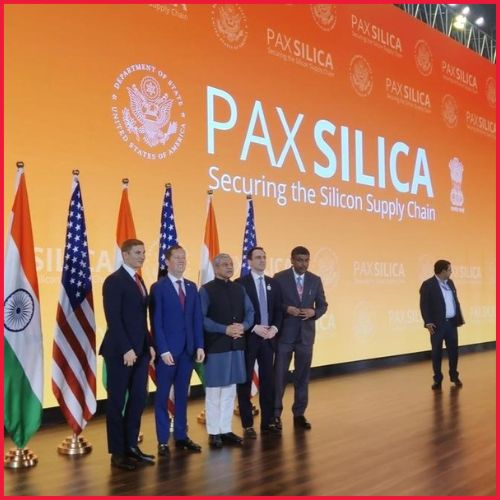
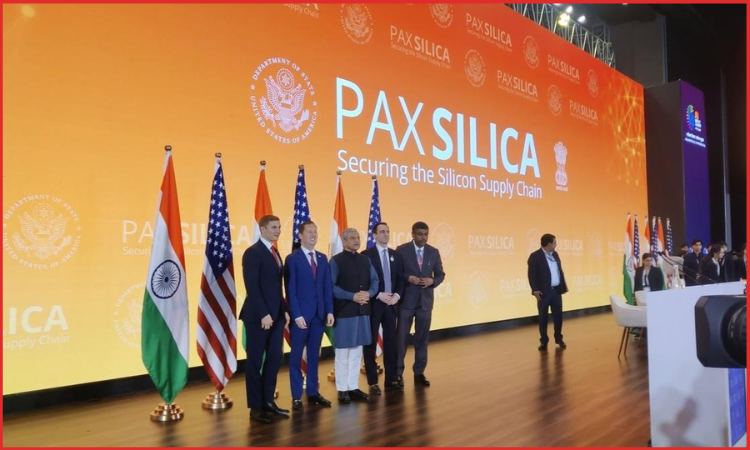
In the rapidly evolving landscape of global technology, a new alliance has emerged that promises to reshape the future of artificial intelligence and semiconductor manufacturing. On February 20, 2026, India took a monumental step by formally joining Pax Silica, a U.S.-led strategic initiative designed to secure the global supply chains of the 21st century.
This move, announced during the India AI Impact Summit in New Delhi, signals a “limitless” partnership between the world’s two largest democracies. But what exactly is Pax Silica, and why does it matter for the future of business and technology?
The Dawn of Pax Silica: Why India’s Entry into the U.S. Tech Alliance Changes Everything
For years, the global tech industry has been haunted by “weaponised dependency,” the risk of critical supply chains being controlled by hostile actors. Enter Pax Silica. The name, derived from the Latin “Pax” (peace) and “Silica” (the foundation of silicon chips), reflects a vision for a peaceful, stable, and collaborative technological order.
By signing the Pax Silica Declaration, India joins an elite group of “trusted partners,” including Australia, Japan, South Korea, and the UK. Together, these nations are building a “coalition of capabilities” to ensure that the future of AI and semiconductors is built on freedom and mutual security.
Securing the AI Supply Chain: From Critical Minerals to 2-Nanometer Chips
The scope of Pax Silica is breathtakingly ambitious. It is not just about software; it covers the entire AI technology stack. This includes:
- Critical Mineral Extraction: Securing the raw materials needed for high-tech manufacturing.
- Semiconductor Manufacturing: Reducing reliance on adversarial nations and boosting domestic production.
- AI Infrastructure: Building the data centres and foundational models that will power tomorrow’s economy.
Union Minister Ashwini Vaishnaw highlighted India’s growing dominance, noting that India is already designing advanced 2-nanometer chips and is on the verge of starting commercial production at its first semiconductor plant. For the electronics industry, this alliance is a massive green light for investment and growth.
A Strategic Shift
For business leaders and investors, India’s inclusion in Pax Silica is a game-changer. Here’s why:
- Investment Certainty: With the backing of the U.S. and a commitment to “trusted ecosystems,” India is positioning itself as the safest harbour for tech investment.
- The Talent Advantage: Minister Vaishnaw estimated that the semiconductor industry will need one million skilled professionals, and much of that talent will come from India.
- Reducing Geopolitical Risk: By joining this “innovation-driven silicon supply chain,” businesses can mitigate the risks of coercive trade practices and supply chain disruptions.
The “India AI Impact Summit”: A High Table for Technology
The signing ceremony was a star-studded affair, attended by tech titans like Sundar Pichai and Sam Altman. Their presence underscores a fundamental truth: New Delhi has become a “high table” for global technology.
U.S. Under Secretary Jacob Helberg described the declaration as a “roadmap for a shared future,” emphasising that economic security is now synonymous with national security. As India integrates its India AI Mission and India Semiconductor Mission into this global framework, the potential for AI-powered prosperity is, as Ambassador Sergio Gor put it, “limitless.”
The Bottom Line
Pax Silica is not just a policy document; it’s a declaration of independence from old dependencies. For India, it’s an opportunity to lead. For the world, it’s a blueprint for a more secure, prosperous, and innovative future.