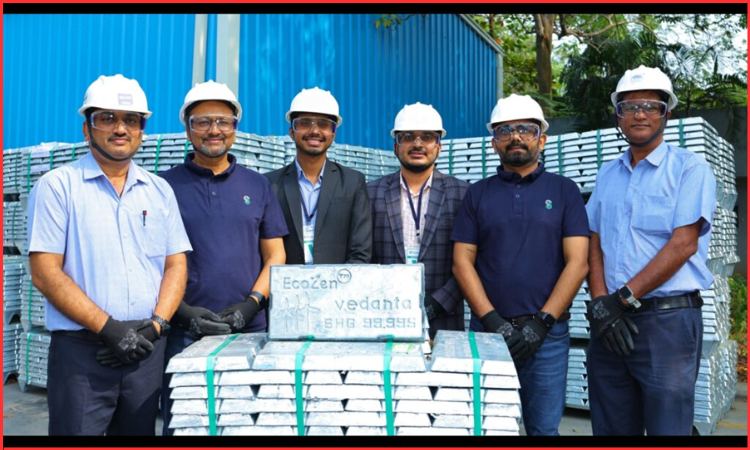
(Image Source: Hindustan Zinc)
Silox India and Hindustan Zinc announced a major collaboration on January 6, 2026 aimed at transforming how India’s manufacturers reduce their carbon footprint. The partnership centers on Silox India’s decision to integrate EcoZen, Hindustan Zinc’s innovative low-carbon zinc product, into all of its manufacturing operations. This move signals a shift in how India’s industrial companies are tackling climate goals.
Rather than waiting for government mandates or customer pressure, both companies are taking action now. Silox India recognized that its zinc supplies carried significant embedded carbon. By switching to EcoZen, the company can cut its own emissions while giving its global customers a pathway to meet their climate commitments. This is practical sustainability, not marketing talk.
The Real Numbers: What Makes EcoZen Different
A Zinc Product Built for the Climate Era
EcoZen breaks new ground as Asia’s first low-carbon zinc made using only renewable energy. The numbers are compelling. The product produces less than one tonne of CO₂ for every tonne of zinc created. That’s roughly 75 percent less carbon than what conventional zinc makers produce.
What sets EcoZen apart goes deeper than just the headline carbon figure:
- Uses renewable energy exclusively, avoiding carbon-intensive power sources
- Comes with a verified carbon footprint under 1 tonne CO₂ per tonne zinc
- Has independent checks and Environmental Product Declarations that customers can trust
- Carries ISO and REACH certifications, meeting global standards
- Let’s customers prove they met their Scope 3 emission goals
- Works across many industrial supply chains without performance loss
Why This Matters for Steel and Cars
Steel makers and carmakers are finding real value in EcoZen. When they use it for coating steel, they cut about 400 kilograms of CO₂ per tonne of steel. For industries producing millions of tonnes of steel yearly, this adds up quickly. Automotive companies, infrastructure builders, and renewable energy makers now have access to a zinc source that reduces their total carbon burden.
Silox India: From Buyer to Sustainability Leader
Making the Switch to Low-Carbon Inputs
Silox India specializes in inorganic chemistry and materials made from non-ferrous metals. The company sells to many sectors and realized that its zinc supply chain was a weak point in its sustainability story. By adopting EcoZen company-wide, Silox India is fixing that problem at the source rather than trying to offset emissions elsewhere.
The shift isn’t just about carbon numbers. Silox India’s customers increasingly demand proof that their suppliers use responsible materials. By switching to EcoZen, the company shows its customers that it takes environmental responsibility seriously. This matters for large multinationals that face pressure to clean up their supply chains.
Building Supply Chain Credibility
Silox India’s move sends a message to its customers: we’re not waiting to be forced. The company is voluntarily reducing the carbon in everything it makes. That kind of initiative builds trust and makes Silox India more attractive to customers who have strict ESG requirements.
Upstream Makers Must Lead on Climate
Why This Partnership Matters Beyond These Two Companies
Most companies focus on cutting their own emissions. Silox India and Hindustan Zinc are doing something different. They recognize that raw material suppliers hold enormous power to reduce emissions across entire industries. If zinc makers cut carbon, every company using zinc benefits automatically.
Hindustan Zinc, the world’s biggest integrated zinc producer, understands its role in the global supply chain. Arun Misra, the company’s Chief Executive Officer, explains the thinking: “Decarbonisation at Hindustan Zinc is not limited to our own operations; it extends to how our products are used across industries. EcoZen represents a step change in how zinc can support cleaner manufacturing. By partnering with customers like Silox India, we are enabling the wider adoption of low-carbon solutions at scale.”
What Customers Say
Prakash Raman, Managing Director of Silox India, captured the practical side of the partnership: “Integrating EcoZen into our manufacturing processes allows us to lower embedded emissions across our product portfolio while continuing to deliver high-performance solutions to our customers. This partnership demonstrates how upstream innovation can accelerate sustainability outcomes downstream.”
The Bigger Picture: India’s Industrial Sector Gets Serious
From Compliance to Competitive Advantage
India’s manufacturers are moving beyond just meeting minimum environmental rules. They’re starting to use low-carbon inputs as a selling point. Companies that can offer cleaner materials gain an advantage over competitors still using conventional supplies.
Global buyers increasingly want to work with suppliers who can prove their environmental commitment. The Silox-Hindustan Zinc partnership is the kind of proof that carries weight. When a major chemicals maker adopts low-carbon zinc company-wide, it sends a signal that climate action is good business, not just good for the planet.
Sectoral Ripple Effects
The benefits will spread across multiple industries. Automakers cutting emissions from their supply chains. Infrastructure projects using cleaner steel. Renewable energy companies reducing their carbon footprint. These ripple effects compound over time, turning a single partnership into an industry-wide shift.
What Comes Next
The Silox-Hindustan Zinc partnership is not the end of the story, it’s the beginning. As more manufacturers adopt low-carbon inputs, the cost of green materials falls, making sustainable choices the default rather than premium options. That’s how real change happens in industry, one partnership at a time.