GST 2.0, the new Goods and Services Tax (GST) regime, has now officially started and is the largest overhaul of the system since the introduction of GST in 2017.
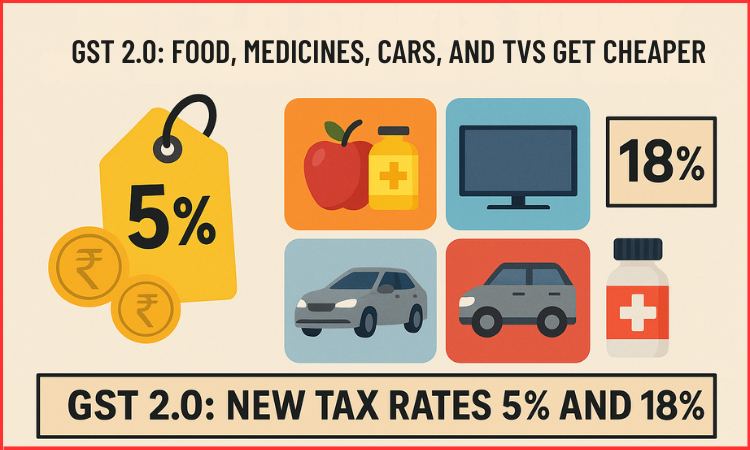
The previous version of the system had four basic tax rates: 5%, 12%, 18%, and 28%. Now the system has two basic slabs: 5% and 18%. A special 40% tax will now be imposed on ultra-luxury goods, while tobacco products will still be taxed at 28% plus cess.
Finance Minister Nirmala Sitharaman stated that the novel structure will ease the tax burden on ordinary taxpayers and lower the price of many goods and services.
“The mobile phone is no longer an aspirational good; it is an essential digital infrastructure for education, healthcare, financial inclusion, and governance. It should rightly be taxed at 5 per cent GST, in line with the Prime Minister’s GST reform agenda and his vision of a $500 billion electronics ecosystem,” said Pankaj Mohindroo, Chairman, ICEA.
Huge Relief for Healthcare
Healthcare has undergone some of the most substantial changes:
- Insurance premiums: Previously set at 18%, life and health insurance policies are now not subject to any GST.
- Medicines: Most medicines will be subject to a 5% tax rate, down from the current 12-18% GST tax rate. Life-saving medicines for cancer, HIV, and TB remain tax-free.
- Medical devices and kits: Medical devices and kits used for diagnoses and medical applications will now be categorized under lower tax slabs.
Officials have instructed all insurers, pharmacies, and hospitals to pass on these benefits to consumers immediately. New bills from vendors must reflect the new GST rates, even if old stock has printed higher prices.
Other Areas of Price Reductions
- Daily essentials: Butter, ghee, biscuits, sweets, soaps, shampoos, baby products, toothpaste.
- Electronics and appliances: TVs, washing machines, air conditioners, dishwashers (taxed at 18% versus 28%).
- Vehicles and trainers: Cars and two-wheelers are less expensive. Bus tickets for vehicles of more than 10 passengers were taxed at 28%; it is now 18%.
- Services and lifestyle items: Stationery, beauty services, and machinery.
What Remains Unchanged
- Cell phones: Still taxed at 18%. Industry stakeholders want this returned to 5%.
- Cigarette products: Remains at 28% plus cess.
- Ultra-luxury items: Taxed at 40%.
Why It is Important
The new GST is thought to:
- Reduce household costs.
- Stimulate demand during the festive season.
- Encourage more people to purchase insurance.
- Encourage public transportation use.
Experts warn that government tax collections may cool in the short term, and buyers will have to check in with businesses to see if the price benefits are being passed on.
Brief Summary for GST 2.0
What’s Now Cheaper:
- Medications (5%)
- Life and health insurance (0%)
- Food and daily expenses (5%)
- Cars and motorcycles (18%)
- Bus tickets (18%)
- TVs, ACs, washing machines, dishwashers (18%)
What’s Not Cheaper:
- Mobile phones (still 18%)
- Tobacco (28% + cess)
- Ultra-luxury goods (40%)