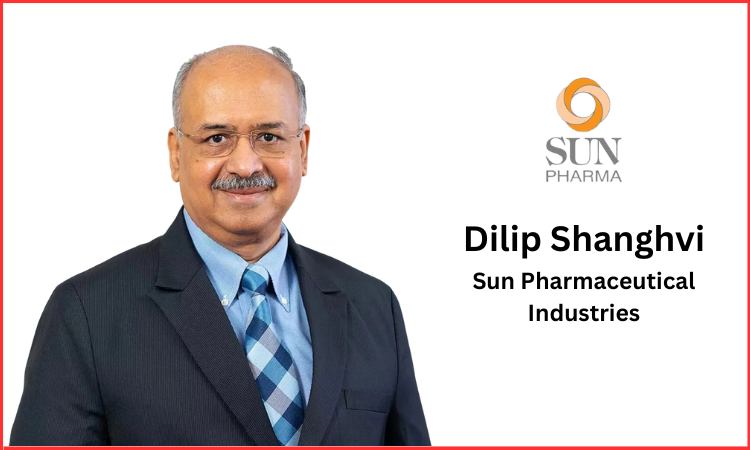
Among the top names in pharmaceuticals, few are as prominent as Dilip Shanghvi, founder of Sun Pharmaceutical Industries (Sun Pharma). Shanghvi, who was born in a small village in Gujarat and relocated to Kolkata, whose story is not about inherited wealth, but rather about vision, hard work, and persistence. From selling products in a small shop run by his father to now being one of India’s richest self-made billionaires, his story is truly the embodiment of entrepreneurship.
In this article, you will explore how Dilip Shanghvi made Sun Pharma a global giant his beginnings, struggles, strategies, philosophy, leadership style, and most importantly, the lessons for unsuccessful aspiring entrepreneurs.
Dilip Shanghvi’s Early Life
Dilip Shanghvi was born in 1955 in Amreli, Gujarat, and later grew up in Kolkata. His father ran a small pharmacy shop, and from a young age, Shanghvi helped in the shop. He learned how medicines worked, how to manage customers, and how to run a small business. These early lessons shaped his future as an entrepreneur.
How Dilip Shanghvi Started His Journey
While working in his father’s shop, Dilip Shanghvi noticed that most medicines in India were imported, and affordable options were limited. He wanted to change this by making quality medicines available at low prices. This idea became the starting point for Sun Pharmaceutical Industries, which would grow into one of India’s largest global pharmaceutical companies.
Dilip Shanghvi at a Glance
| Attribute | Details |
| Full Name | Dilip Shanghvi |
| Born | 1 October 1955, Amreli, Gujarat, India |
| Education | Bachelor of Commerce, University of Calcutta |
| Profession | Entrepreneur, Industrialist |
| Known For | Founder of Sun Pharmaceutical Industries |
| Net Worth (2025) | ~ $20 billion (approx.) |
| Awards & Recognition | Padma Shri (2016), Forbes Billionaire Listings |
| Current Role | Managing Director, Sun Pharma |
The Birth of Sun Pharma

Source: profitmart
- In 1983, with only ₹10,000 of capital borrowed from his father, he launched Sun Pharmaceutical Industries in Vapi, Gujarat.
- The company began with five psychiatric drugs targeting mental health conditions, which were mostly ignored by big pharma companies.
- This focus on neglected therapeutic areas gave Sun Pharma uniqueness in the Indian market.
Strategic Growth executed by Sun Pharma
1. Focus on Niche Segments
Sun Pharma’s competitors focused on the fad-of-the-day type of medicine, with Shanghvi focused on chronic and specialty diseases, such as psychiatry, cardiology, neurology and oncology.
2. Rational Pricing of Generics
Through rational pricing of generics, Sun Pharma builds goodwill with doctors and patients in price-conscious markets such as India.
3. Mergers and Acquisitions as Growth Engine
Dilip Shanghvi leveraged mergers and acquisitions to catapult Sun Pharma into a global giant by acquiring distressed companies and fixing them. Examples of M&A deals include:
- Caraco Pharma, USA (1997): Entry into U.S. generics
- Taro Pharmaceutical, Israel (2010): Improved Sun Pharma’s dermatological presence internationally
- Ranbaxy Laboratories (2014): Purchased for $4 billion, this acquisition made Sun Pharma India’s largest generics company and would have been ranked 5th largest in the world at that time.
4. Globalisation
Today, Sun Pharma is operating in 100+ countries, with manufacturing in India, the U.S., Canada, Israel, Hungary and several other countries.
Sun Pharma at a Glance
| Metric | Data |
| Founded | 1983 |
| Founder | Dilip Shanghvi |
| Headquarters | Mumbai, India |
| Employees | 37,000+ |
| Revenue (FY 2024) | ₹47,300 crore |
| Net Profit (FY 2024) | ₹9,500 crore |
| Market Capitalization | ~$40 billion |
| Global Presence | 100+ countries |
| Ranking | Top 4 generics companies worldwide |
The Leadership Style of Dilip Shanghvi
Source: realnaijaa
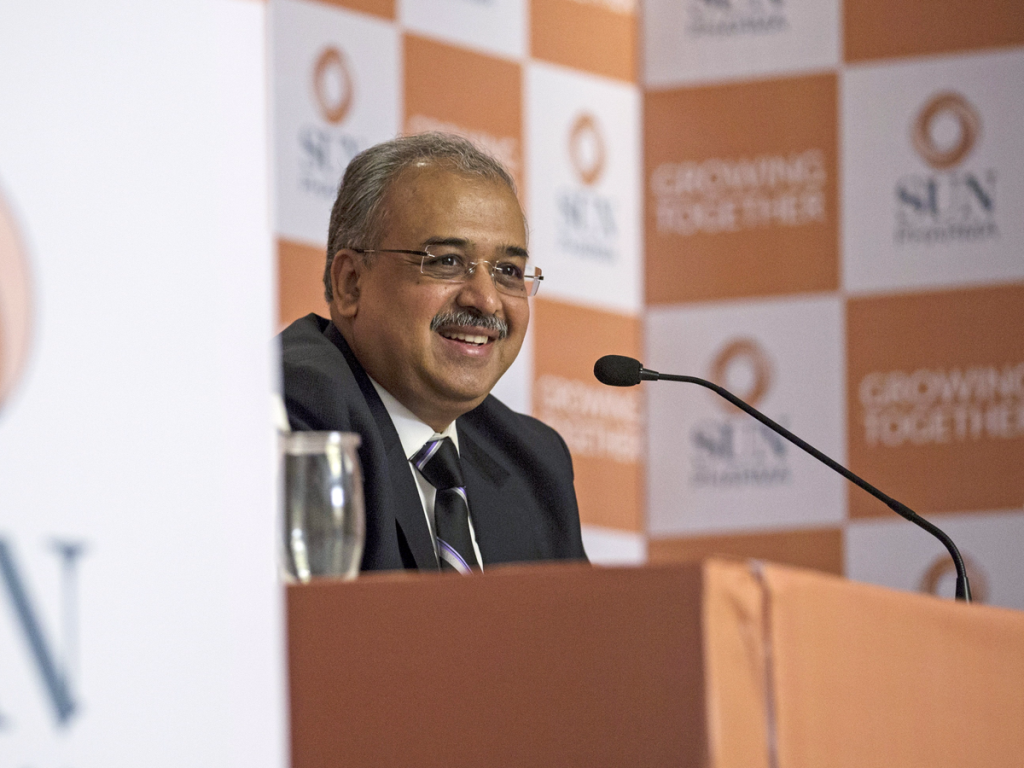
Shanghvi is regarded as a quiet visionary. Unlike the other business leaders today, his strength comes from steady decision-making and long-term thinking.
- Humility: Even at his level, he does not bask in public, preferring to keep the media at arm’s length.
- Risk Management: Although he has made notable, bold acquisitions, he has clarity and reasoning behind each purchase.
- Focus on People: He has developed a robust team culture, developing scientists, researchers, and managers who empower scientists to innovate.
- Adaptation: The biggest misconception about Sun Pharma is that it is India-centric. Sun Pharma is now a global pharmaceutical leader.
Major Challenges and How He Overcame Them
| Challenge | Impact | Response |
| Regulatory Hurdles in U.S. | FDA bans on some plants affected exports | Invested in compliance, upgraded facilities |
| Ranbaxy Acquisition Issues | Legacy regulatory and quality problems | Streamlined operations, restored credibility |
| Intense Global Competition | Pressure on generic prices | Focused on specialty drugs and innovation |
| Currency Fluctuations | Impacted international revenues | Hedging strategies and diversification |
How Shanghvi’s Leadership Impacted the Indian pharma industry
Source: digitalmarketingdeal
- Sun Pharma has championed India’s generics industry by creating affordable medicines across the globe.
- It has raised India’s image as the “pharmacy of the world.”
- He has created access to employment, research and development, and healthcare on a large scale.
The Future Ahead
In the future, Sun Pharma will emphasize:
- Specialty medicines in areas like dermatology, oncology, and ophthalmology.
- Biologics and biosimilars compete in advanced therapies.
- Building presence in emerging markets across Asia, Latin America, and Africa.
- Digital healthcare innovations, like AI-driven drug discovery and partnerships on telemedicine.
Conclusion
Dilip Shanghvi’s life is more than a story of wealth; it is about vision, tenacity, and impact. From an aspiring entrepreneur from a small town working in his father’s pharmacy store to a billionaire who runs a global pharmaceutical corporation, Shanghvi has demonstrated that it is not about making noise but about having clarity of purpose and executing discipline.
Sun Pharma not only represents Shanghvi’s entrepreneurial brilliance but also represents the growth of India as a player in global healthcare. His story should inspire all aspiring entrepreneurs who want to have a global impact but start from the smallest beginnings.
FAQs
Q1. How did Dilip Shanghvi begin with Sun Pharma?
He started in 1983 with a share capital of ₹10,000, producing five psychiatric drugs in Vapi, Gujarat.
Q2. How did the components of success work for Sun Pharma?
The ability to combine the four pillars: a unique target niche focus, low-cost generics, opportunities for acquisitions globally, and disciplined leadership.
Q3. Why was the Ranbaxy acquisition valuable?
The challenge of putting the successful pieces together made the success all the more valuable. Sun Pharma was not only able to take its place as India’s largest pharma company but also establish itself as a global competitor.
Q4. Where is Sun Pharma today globally?
Sun Pharma is today one of the top 4 generic pharmaceutical companies in the world, with operations in 100+ countries.