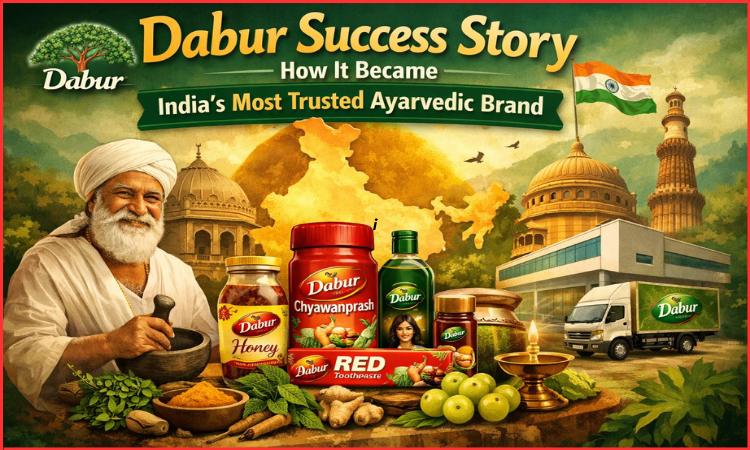
Ayurveda is a significant part of India and Dabur has played a vital role in getting the holistic benefits of Ayurveda into modern-day households across India. As one of the most iconic and respected names in Ayurveda, Dabur has developed emotional bonds with millions of families through products like Chyawanprash and Real Juices. Today, Dabur is an FMGG company valued at ₹11,500+ crores (data from FY 2024).
Dabur’s passionate journey as a company represents a fantastic combination of innovation meeting heritage. For over a century, Dabur has continuously transformed its business while maintaining strong ties with its Ayurvedic philosophies. The purpose of this article is to review how Dabur became a fabulous success, the way Dabur developed its business strategies and innovation in product development, its leadership, the obstacles Dabur has faced over the years, and how Dabur became the global representative of Ayurvedic Products.
Dabur Success Story: A 140+ Year Legacy of Ayurveda
The Vision of Dr S K Burman
Dabur’s origins began in 1884 when Dr. S. K. Burman, a physician in Calcutta, started making herbal remedies for everyday illnesses such as malaria and cholera.
Dr. Burman’s vision included:
- Providing People with a Natural, Affordable, and Easy-to-Access Treatment
- Modernizing and Standardizing Ayurveda
- Bringing Good Health to People Living in Rural Parts of India, Not Just Urban Areas.
Dr. Burman’s Vision for the future was the creation of Dabur, which is the shortened form of Daktar Burman (Dr. Burman).
Transition from a Small Practice to a Brand
By 1900, Dabur had transitioned from being a small, home-based business to a Large Manufacturing organisation.
In the early days, Dabur was one of the first to do the following:
- Standardise Ayurvedic Products
- Scientifically Bottle, Package and Label Ayurvedic Products.
- Create Trust Through Consistency in Quality.
Evolution of Dabur into India’s Ayurvedic Powerhouse

Source: iide
Building Trust Through Flagship Products
Dabur became a household name through products that Indians rely on even today:
- Dabur Chyawanprash
- Dabur Honey
- Dabur Red Toothpaste
- Dabur Hajmola
- Dabur Amla Hair Oil
Each of these products became a market leader because Dabur blended:
- Traditional recipes
- Modern quality standards
- Consistent consumer trust
Dabur’s Business Expansion and Diversification
The Shift From Ayurveda to FMCG Leader
Beginning in the 1980s, Dabur began to diversify its business model; the company expanded into the Fast-Moving Consumer Goods (FMCG) sector from its core competencies in traditional Ayurvedic herbal medicines to develop an international consumer-oriented brand.
Major Business Divisions
Dabur now operates through three major verticals:
| Business Division | Key Products | Contribution |
| Healthcare | Chyawanprash, Honitus, Dabur Honey | Strongest legacy category |
| Home & Personal Care | Vatika, Amla Hair Oil, Red Toothpaste | Drives large FMCG revenue |
| Foods & Beverages | Real Juice, Homemade | Fastest-growing segment |
Dabur’s Global Presence
Expanding Ayurveda Across Borders
Dabur today operates in 120+ countries and earns nearly 30% of its revenue from international markets.
It serves regions like
- Middle East
- Africa
- USA
- Europe
- South Asia
This global expansion helped Dabur position Ayurveda as a credible, science-backed wellness system worldwide.
Dabur’s Marketing Strategy
Connecting Emotionally with Indian Families
Dabur has always used emotional, trust-driven marketing built around:
- Family health
- Tradition and purity
- Natural ingredients
Iconic campaigns like “Andar se Strong” for Chyawanprash helped build deep credibility.
Data-Driven Modern Marketing
In recent years, Dabur adopted:
- Influencer collaborations
- Youth-targeted digital ads
- Seasonal marketing (winter, immunity, flu seasons)
- Social media campaigns around immunity & wellness
This helped Dabur stay relevant to new-age consumers.
Product Innovation and R&D
Blending Science with Ayurveda
Dabur invests heavily in scientific validation of Ayurvedic formulas. Its research labs test herbs, ingredients, purity, and efficacy to ensure products meet global quality standards.
Recent Innovations
- Immunity boosters during COVID
- Sugar-free versions of classic products
- New variants of honey, juices, and hair oils
- Plant-based and natural skincare solutions
Dabur Financial Performance

(Image Source: equentis)
Dabur continues to show strong growth, especially in healthcare and beverages.
| FY | Revenue | Growth |
| 2023–24 | ₹11,530 crore | 7% growth |
| 2024–25 (Projected) | ₹12,200+ crore | Rising due to consumer wellness trends |
Key Drivers:
- Increasing preference for healthy, herbal, and organic products
- Strong performance in rural markets
- Expansion of Real Juices’ portfolio
Dabur’s Biggest Challenges
Despite its brand strength, Dabur faces challenges from:
- FMCG giants like HUL, Colgate, Patanjali, and Marico
- Rising demand for clean-label and premium wellness products
- Increasing raw material costs for herbs
- Need for international regulatory compliance
How Dabur Became India’s Most Trusted Ayurvedic Brand
Key Reasons Behind Dabur’s Trust
- 140+ years of heritage
- Strong focus on purity and quality
- Transparent communication
- Deep understanding of Indian consumers
- Ability to evolve with time
Future of Dabur
The future growth areas include:
- Herbal nutraceuticals
- Ayurveda-based preventive health
- Clean beauty
- Plant-based foods
- Digital-first distribution
Dabur aims to become a globally dominant Ayurvedic wellness brand.
Conclusion
The story of Dabur’s success exemplifies that by merging traditional knowledge with innovation, it is possible to create timeless brands. Dabur evolved from being an Indian Ayurvedic practitioner to one of the largest Fast Moving Consumer Goods (FMCG) firms in the world. They are committed to natural wellness and build their reputation based upon trust and quality. At a time when people throughout India and around the globe are increasingly adopting healthy ways of living, Dabur continues to maintain an unwavering position as India’s leading Ayurvedic brand and will continue to influence the evolution of the wellness industry.
FAQs
1. Recent Historical Timeline of Dabur:
Dabur was established on 01 January 1884 by Dr. S.K. Burman, an Indian doctor who established Dabur with the intention of offering the benefits of Ayurveda to the common people.
2. What is the Primary Focus of Dabur?
Dabur markets Ayurvedic Healing medicines which include such products as Chyawanprash, Dabur Honey, Dabur Red Toothpaste, Amla Hair Oil, and Real Juices.
3. Is Dabur considered an International Corporation?
Currently, Dabur has a worldwide market presence that covers over 120 Countries and obtains a large portion of their revenue from its International Markets.
4. How does Dabur guarantee the Excellence of its products?
Dabur uses scientifically tested methods and best-quality controls as well as the latest packaging technology to ensure that the product is pure and safe.
5. What is the Growing Product Category of Dabur?
The Food & Beverage division of Dabur (Real Juices) is one of the fastest-growing divisions of Dabur at this time.