
Source: entertales
In India’s start-up ecosystem, the story of Byju Raveendran along with BYJU’S is one of the most complex and powerful stories available. Not only is this story about the success and failed attempts of many entrepreneurs, but it is also a powerful lesson in how ambition, timing, and the right execution can create and challenge a business on a global level.
BYJU’S was once referred to as the most valuable Edtech start-up in India and symbolized where the future of education would be headed. Students from all over the world used the app, large investors lined up to support their vision, and the person who created it became a representative of modern education. However, in order to grow and scale the companies exponentially during this period, many issues started to develop as the company was pushed further away from its stated objectives to achieve these results. As the rapid growth and resulting financial concerns began to grow, so did the regulatory and governance concerns within BYJU’S.
This article intends to present a model that allows interested readers to grasp not only the rise of BYJU’S but also its fall and the business lessons that can be learned from this case study of BYJU’S.
Who Is Byju Raveendran? – The Man Behind BYJU’S
The life of Byju Raveendran began in a rural village of Kerala, where his two educators worked as teachers. Although he grew up in an educational environment, there was nothing entrepreneurial about his upbringing; entrepreneurship was never on Byju’s radar until after he helped friends prepare for their proficiency exams (CAT).
Unlike most people who learn through memorization, Byju took a different approach to the preparation of his students and instead focused on the understanding of concepts, visualization, and logical reasoning in a more fun and engaging fashion. The word of mouth spread quickly, and Byju was fortunate enough to attract thousands of students throughout various cities in India, not because of any marketing, but due to the faith that students placed in him.
This stage of his business helped him to develop his core beliefs that effective learning should be intuitive, visual, and enjoyable. These beliefs became the guiding principles upon which he established the foundation of BYJU’S.
The Idea Behind BYJU’S: From Teaching to Technology
Early Offline Success
BYJU’S started out as an offline coaching program before becoming a technology company. The business model saw large numbers of students compressed into large auditoriums at a time, with one large group learning together. Although the initial response to this business model was very strong, this centralized method of teaching faces practical limitations of efficacy.
Offline teaching necessitated physical presence and support, required high operational costs to provide instructional support and support teachers, and therefore could not reach the number of students that would be required if we were to make the learning process available to all students in a country of over 1 billion people. For this reason, Byju Raveendran understood that the best way to accomplish this goal was through the use of technology.
Birth of the BYJU’S Learning App
In 2015, the launch of BYJU’S Learning App targeted only students in Grades 4-12 and provided the content through animated video, theoretical storytelling with credibility, and examples from everyday life, making complex subject areas easy to understand.
The introduction of the BYJU’S Learning App changed the perception of BYJU’S from an offline coaching brand to a technology-led educational platform, capitalizing on the growth of the smartphone market and the affordability of the internet in India.
BYJU’S Rise: Becoming India’s Largest EdTech Company

(Image Source: Tvisha)
When parents were actively searching for solutions that offered improved learning outcomes and preparation for competitive exams, BYJU’S was in the right place at the right time. The company marketed itself as a high-end education solution rather than as a provider of free content.
Millions of people downloaded BYJU’S app, resulting in many free users converting to paid subscribers. The company spent heavily on marketing by partnering with famous people and sponsoring high-profile sports events, and it became one of India’s top education brands in a short time. BYJU’S success can be attributed to a combination of its timing, high-quality products, and the development of compelling stories around investing in a child’s future through education.
Funding & Valuation: The Billion-Dollar Phase
As BYJU’S continues to grow in size, global investors are starting to notice it. Among those investing in BYJU’S are some of the leading names in venture capital, such as Sequoia Capital, Tiger Global Management, SoftBank Group Corp., and the Chan Zuckerberg Initiative.
BYJU’S is now valued at more than 20 billion dollars as of late 2021, which makes it India’s most valuable startup and one of the largest education technology companies in the world. During this phase of growth, BYJU’S was experiencing the height of its influence, confidence, and ambition. However, the high valuation also creates pressure to grow faster, expand globally, and meet investor expectations.
Aggressive Expansion Strategy: Growth Over Stability
Major Acquisitions by BYJU’S
BYJU’S followed a strategy of acquiring companies to expand fast.
| Acquired Company | Purpose |
| Aakash Institute | Offline test prep |
| WhiteHat Jr | Coding for kids |
| Great Learning | Higher education |
| Epic! | US school content |
| Osmo | Interactive learning |
Challenges of Over-Acquisition
While acquisitions increased scale, they also created problems:
- Cultural mismatch
- Integration difficulties
- High costs
- Complex management structure
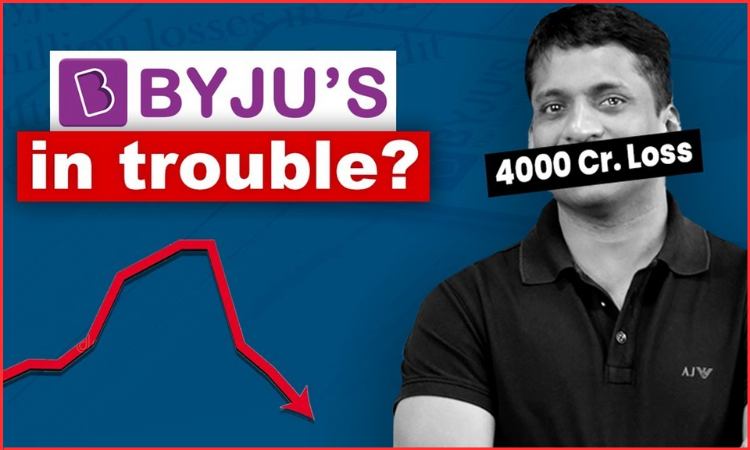
The Fall of BYJU’S: Where Things Started Going Wrong
(Image Source: YouTube)
The decline of BYJU’S was gradual, not sudden.
1. Unsustainable Business Model
BYJU’S relied heavily on:
- Aggressive sales teams
- High-priced courses
- Long-term payment plans
2. Sales & Customer Complaints
Many parents complained about:
- Mis-selling
- Pressure tactics
- Difficult refund processes
3. Financial Transparency Issues
Delayed financial statements, auditor exits, and investor concerns raised serious questions about corporate governance. In the startup world, trust is currency, and BYJU’S started losing it.
4. Post-COVID Reality
During COVID:
- Online learning demand exploded
After COVID:
- Students returned to offline classes
- Growth slowed drastically
- Revenue projections failed
BYJU’S Rise vs Fall: A Clear Comparison
| Area | Rise Phase | Fall Phase |
| Strategy | Aggressive growth | Forced cost-cutting |
| Funding | Easy capital | Debt pressure |
| Brand Image | Aspirational | Controversial |
| Focus | Valuation | Survival |
Key Business Lessons from BYJU’S Story
1. Danger in Revenue Growth without Profit.
Eventually, Revenue Growth must result in Profits. A Business is not sustainable based on a Valuation alone.
2. Governance is Not Negotiable.
To be successful at scale, effective leadership, transparency, and accountability are needed.
3. Sales Ethics Impact Sales.
Although Revenue Gains in the Short Term may appear good, they can destroy long-term brand loyalty.
4. The Evolution of the Founder is Necessary.
The Role of a Founder changes as the organization develops. A founder’s emotional attachment may interfere with their ability to make effective decisions.
Impact on India’s Startup Ecosystem
The BYJU’S experience has led to a change in the way investors assess the startups they invest in, a change in the way boards hold companies accountable, and a change in the way founders of some companies plan to grow their businesses. The tendency of “growth at any cost” is likely to fade away, replaced by an increased focus on sustainability, responsibility and accountability when growing.
Can BYJU’S Make a Comeback?
Despite the obstacles, BYJU’S can recover. To replace its current unproductive practices with productive processes, BYJU’S will need to simplify its operational processes, eliminate outstanding debt, improve its governance practices and earn back the trust of both its customers and investors through sound management processes. BYJU’S may remain on the minds of the public; the execution of its business plan will determine whether it will be successful.
Conclusion
The experiences of Byju Raveendran and BYJU’S serve as both a reminder of the power of great ideas to change the way we educate our children and how failure to maintain a balanced approach to the growth of any business can easily destroy it. BYJU’S will be remembered in the history of business in India not only for what it accomplished, but also for the lessons it has taught us.
FAQs
Q1. Is BYJU’S completely shut down?
No. The company is undergoing restructuring and facing operational challenges.
Q2. Was BYJU’S product weak?
No. The learning content was strong; business execution and governance failed.
Q3. What was BYJU’S biggest mistake?
Overexpansion without financial and operational discipline.
Q4. Is Byju Raveendran still an entrepreneur worth learning from?
Yes. His vision and early execution offer valuable insights.
Q5. What is the biggest takeaway for startups?
Sustainable growth matters more than fast growth.