In 2025, the business landscape is more dynamic, unpredictable, and competitive than ever before. Market trends shift rapidly, technology evolves at lightning speed, and customer expectations continue to rise. In this fast-paced environment, having a well-defined business strategy is no longer optional; it’s necessary. A clear strategy acts as a guiding blueprint, helping organisations navigate uncertainty, adapt to change, and confidently seize growth opportunities.
Meaning of Business Strategy
A business strategy is a structured, comprehensive plan formulated by a firm to achieve long-term objectives, remain competitive or sustain itself, and create value. It involves consciously settling things such as where to deploy resources, which markets to consider, what products or services to offer, price consideration, and how the brand or image will land in the marketplace.
In 2025, in this age of change and cutthroat competition, a more personal, customised approach needs to be taken by businesses so that their particular objectives, market standing, and available resources guide the strategies, thereby equipping businesses with resilience for long-term growth.
Importance of Unique Business Strategy in 2025
We are in a complex business environment in 2025 that requires a lot more than just being reactive while making decisions. Interferences being much tougher, technology evolving way too fast, and customers getting more demanding, companies can no longer leave their fate to be decided through spur-of-the-moment decisions.
A unique and innovative business strategy becomes a cornerstone for instilling a vision and providing direction in this fast-paced environment. This will enable businesses to stay fore-fronting of disruption, differentiating themselves from their competitors and addressing new challenges and opportunities enable thereby enabling the long-term viability in the ever-changing world.
Crucial Factors For a Winning Business Strategy in 2025
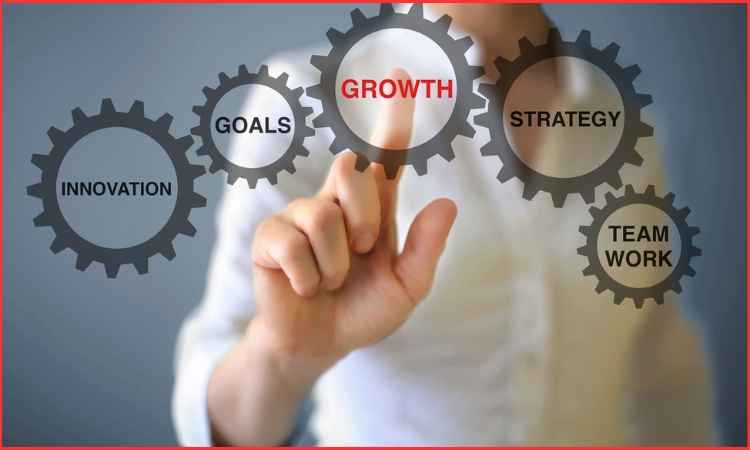
Image credit: Chief Outsiders
Finding an important winning business strategy in today’s world is necessary to achieve success in a competitive world. Let’s explore the crucial factors for a winning business strategy in 2025.
Mission and Goals
Any successful strategy will have the backing of a clear mission statement and well-defined goals. Your mission is a basic description of why a company exists, whereas goals describe what it intends to achieve. In 2025, it will be under rapid change and aggressive competition; thus, it is not enough just to state them as such-the must be in the DNA of your company culture. Every decision, every action, and every initiative should be based on that mission and moving forward toward those strategic goals. If those goals and mission are aligned and interspersed throughout every layer, they become a very powerful force that unites teams, initiates action, and puts a company on the path of long-term success.
Smart Decision-Making
With the advancement in high analytics and AI, businesses have now opened doors to insights never considered before. Your strategy in 2025 must allow the use of these technologies to foster intelligent decision-making, along with decisions based on assessed variables such as being in the right place at the right time and tracking real-world trends. Strategically integrating intelligence enables your entity to respond precisely and agilely in ways ranging from customer behaviour to market changes in the forecast. Decisions based on actionable insights set your company apart from being behind the times, maintain a competitive edge, and grow more intricate by the day.
Market Edge
What makes your business stand out from the pack? In 2025, getting and keeping an edge in the market is trickier and more important than ever. With rivals that move fast and customers who want more, your plan needs to spell out how your company is different. Maybe it’s through new ideas that break ground, keeping costs down, service that goes above and beyond, or focusing on a specific area. Your edge in the market should be at the heart of your big-picture plan. It’s not just about doing better than the competition right now, but about keeping that special something that makes you different to stay important and do well for years to come.
Dynamic Resource Planning
Let’s help you sketch a plan to uphold your business by way of making efficient use of people, technology, and money in order to sustain the competition. Everything in 2025 is focused on making its way into resource agility against fast-changing markets. So it enables them to jump on fresh opportunities, face challenges, and keep the ball rolling. When you set off the gears of resource management, your firm will be able to bounce back amid a sea of business unpredictability.
Sustainable Impact
By 2025, customers no longer just want great products; they want brands that demonstrate ethicality, sustainability, and social responsibility. Your strategy must include initiatives that provide a lasting positive impact. Such an approach benefits society and the environment and creates trust and loyalty with customers. When the brand’s values coincide with those held by its audience, it assumes the position of a responsible trailblazer. That translates into long-term success in a value-driven marketplace.
Highly Customised Approach
With the various needs and preferences that any two customers may have, experiences have become the crux of modern-day customers. From the year 2025, any business that does not accommodate the ultra-personalised approach will lose relevance and market share. Your strategy needs to work into taking customer data and analysing it in some way so that you create a personal solution that resonates with the individual, yet scales. Through the distribution of fabric-stitched products and services, strong relationships can be formed between the company and its customers, allowing for customer satisfaction enhancement and maintaining a lead in the race of intensive competition.
Digital-Driven Global Growth
With the digital revolution, businesses now have a much simpler time expanding internationally. By 2025, the groundwork for global growth will exist, enabling companies to expand without the use of physical resources. Through the use of digital tools, such as e-commerce platforms, social media, and cloud services, your enterprise can access international customers in a timely and cost-efficient manner.
Employing this model not only optimises your spending but also enhances your agility to respond and expand in numerous regions around the globe.
SWOT Analysis for Business Strategy in 2025
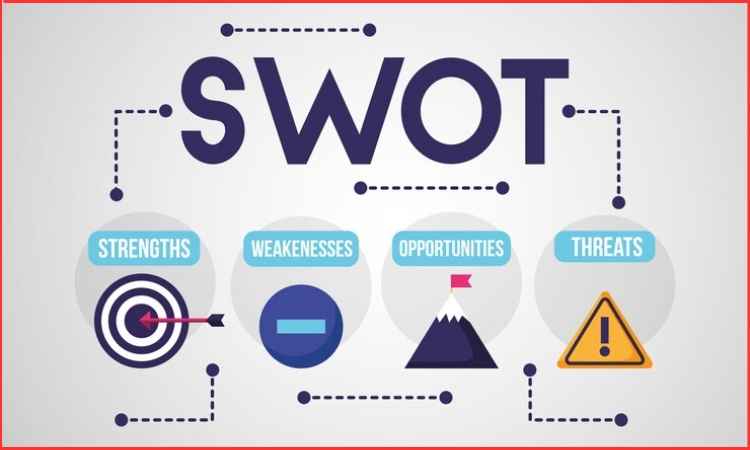
Image credit: Jaro Education
A SWOT analysis-which evaluates a company’s strengths, weaknesses, opportunities, and hazards-2025 is an important tool for developing a successful business strategy. At a time defined by rapid digital changes, changing consumer behaviour and global uncertainty, a complete SWOT analysis helps inform, favourably and further, thinking.
Strength refers to internal capabilities that provide a business with an advantage over competitors. By 2025, strength may include a technology-loving workforce, a loyal customer base, strong brand recognition or a strong digital infrastructure. Companies that can benefit from advanced technologies such as AI, Big Data and Automation are particularly well positioned to streamline operations and improve customer experiences.
Weaknesses are internal challenges that hinder performance. These may include chronic systems, lack of talent, high operating costs or limited market access. Identification of weaknesses allows companies to prioritize improvement sectors, invest in employees’ resignation, or to modernize cultural monuments to remain competitive.
Opportunities arise from external factors that may arise from redeeming a business. By 2025, new opportunities may include expansion in new global markets through digital platforms, adopting permanent practices to attract conscious consumers and using customer data analysis. Companies that are tight and responsible for trends will be better positioned to seize the opportunity for this development.
The dangers include external risk that can affect the success of the company. These can vary from violating cyber security and economic instability to aggressive competition and regulatory amendments. Preparation of hazards through risk management and strategic plan is important for flexibility and long -term stability.
In summary, a SWOY analysis in 2025 is more than a regular exercise – this is a strategic requirement. It gives businesses the right to coordinate their abilities with the realities of the market, address weaknesses and bring to position for permanent success in a rapid complex world.
Top 5 Challenges in Building a Winning Business Strategy in 2025

Rapid Technological Advancements
It is necessary to use fast book innovations such as AI, automation and data analysis. Companies that cannot integrate new techniques effectively fall back.
Economic and Geopolitical Uncertainty
Enemical global conditions, including inflation and political instability, make the long -term plan difficult and require more flexible, risk -incredible strategies.
Rising Customer Expectations
Today’s consumers prioritise privatisation, stability and moral business practices. Failing to match these values can harm branding and loyalty.
Intensified Global Competition
With the digital access that lowers the input barrier, competition is fiercer than ever. Companies should continuously innovate and differentiate clearly to stand out.
Internal Resistance to Change
Strategic initiative often fails due to reluctance to embrace the misleading or change in the organization. Success requires strong leadership and an integrated vision.
Conclusion
By 2025, passing of international expansion will be more accessible than ever, thanks to the transformational power of digital technology. With the right strategy, companies can tap into global markets without heavy investments in physical infrastructure.
Taking advantage of tools such as e-commerce, social media, and cloud services enables cost-effective, scalable and timely search for international customers. This digital-driven model not only reduces operating costs but also improves flexibility, so companies can respond rapidly to the market’s demands and increase the boundaries with confidence and efficiency.