When cement became one of India’s most strategic industries after liberalisation, one man quietly yet resolutely built a legacy that reshaped the sector. Benu Gopal Bangur, the patriarch of the Bangur family’s industrial lineage, transformed a modest family enterprise into Shree Cement, now among the largest, most efficient, and profitable cement manufacturers in India.
His story is one of resilience, careful strategies, and innovation in an industry often overlooked, yet deeply tied to India’s infrastructure growth. This profile delves deep into who Benu Gopal Bangur is, his rise to prominence, his leadership of Shree Cement, and what lies ahead for this industrial titan.
Who is Benu Gopal Bangur? | Biography
He was born in 1931 into a Marwari Hindu family in Kolkata, originating from Rajasthan. Benu Gopal Bangur was educated at the University of Calcutta, where he earned his commerce degree. His studies took place in the late 1940s to early 1950s, a transformative period following India’s independence in 1947, when the nation was undergoing a significant shift toward industrialisation and planned development.
As one of the first members of the Bangur family to attain a university degree, Bangur’s academic achievement represented a notable departure from the family’s longstanding tradition of prioritising practical business apprenticeship over formal higher education.
He was brought up within a business-oriented family, which instilled in him a deep understanding of markets and enterprise from an early age. Bangur’s formative years coincided with India’s economic changes, from the licence-raj era to liberalisation in the early 1990s, shaping his strategic approach to business and growth.
His Involvement in the Family Business
The Bangur family ranked among India’s top 10 business houses in the 1950s and 1960s. They had built their foundation on trading in jute, cotton, and other commodities, with significant activities centred in eastern India, particularly in West Bengal.
As India pursued industrialisation in the post-independence era, the family diversified from trading into manufacturing sectors like paper and engineering, with Bangur contributing to the management of these expansions amid the group’s shift toward integrated production in eastern India.
His Care for Nature
Benu Gopal is believed to support environmentally friendly production methods. He has earned recognition for the measures he has put in place to ensure that Shree Cement uses ecologically friendly production methods. He helped the brand invest in solar energy and waste-heat recovery technologies, expanding its offerings as a green cement manufacturer.
He saw that Shree Cement consistently follows a sustainability approach, emphasising waste reduction and pollution prevention. Thanks to him, the company has been acknowledged as one of India’s most sustainably managed cement companies.
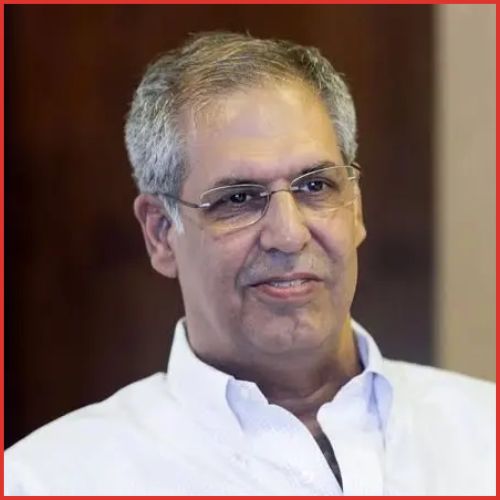
Benu Gopal Bangur and Shree Cement
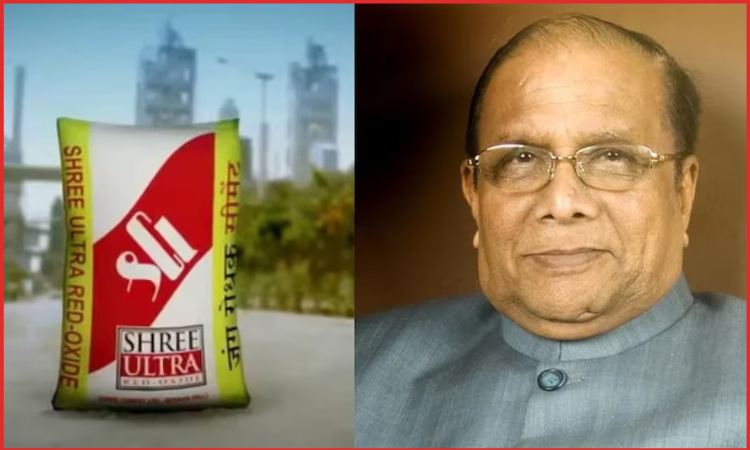
(Image Source: AajTak)
The Bangur family’s commercial journey began over a century ago. Rooted in Rajasthan in 1979 and later in Kolkata, the Bangurs built diversified business interests across jute, textiles, tea, and cement. The family’s entrepreneurial roots trace back to Mungee Ram Bangur, a stockbroker who laid the foundation of the Bangur business empire in the late 19th century.
However, like many large Indian business families, differences eventually led to a split. In 1991, the sprawling Bangur business house was divided among five branches of the clan, with Benu Gopal Bangur taking control of what would become Shree Cement.
Though the family had exposure to diverse sectors, it was the cement business that would define Benu Gopal Bangur’s legacy.
Success of Shree Cement
Shree Cement evolved from a modest regional producer into a national and international industrial force. The company’s growth under his stewardship can be divided into distinct strategic phases:
Operational Expansion and Capacity Growth
Shree Cement dramatically scaled up plant capacity across multiple Indian states, including Rajasthan, Haryana, Uttarakhand, Uttar Pradesh, Bihar, and Chhattisgarh, to build one of the country’s largest cement production footprints. By 2025, the company’s installed cement capacity had reached over 66.8 million tonnes per annum (mtpa) across India and overseas.
Vertical Integration: Power and Energy Self-Sufficiency
Bangur’s vision extended beyond cement manufacturing. Recognising the high energy intensity of cement production, he commissioned captive power plants and diversified into power generation. This move lowered energy costs and improved reliability, a significant competitive advantage. By 2009, captive thermal plants were feeding power back into the grid.
Today, Shree Cement’s energy capacity stands at nearly 983 MW, securing a stable supply and optimising cost structures.
Shree Cement Product Portfolio
Instead of competing solely on price, Shree Cement, under Bangur’s guidance, introduced differentiated brands tailored to market segments, such as:
| Brands | Category |
| Shree Ultra OPC | Core construction cement |
| Jung Rodhak | Rust-prevention formulation |
| Bangur Cement and Rockstrong | Strength-oriented solutions |
| Roofon and Bangur Power | Premium offerings tailored to urban, high-value construction projects |
These products helped build customer loyalty, achieve higher margins, and enhance market resilience.
Global and Strategic Acquisition of Shree Cement
In 2018, Shree Cement made a significant international leap by acquiring Union Cement Company in Ras Al Khaimah, UAE, a strategic move that elevated its global presence and capacity portfolio.
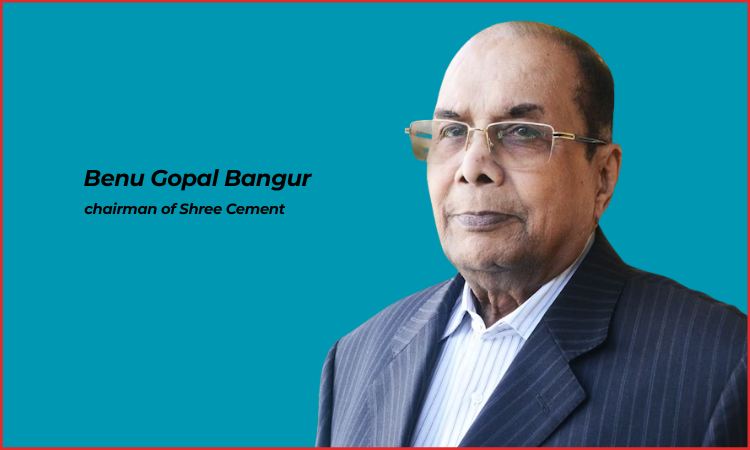
Benu Gopal Bangur and His Leadership Transition
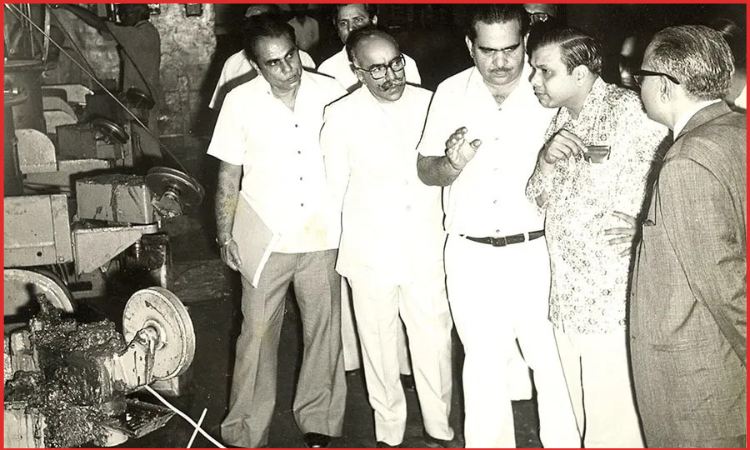
(image Source: Channel I’M)
In 2022, Benu Gopal Bangur stepped back from daily operations, passing the baton to his son, Hari Mohan Bangur, as Chairman, continuing the family’s leadership tradition. His grandson, Prashant Bangur, serves as Vice Chairman.
Hari Mohan, an IIT Bombay alumnus, has been instrumental in accelerating capacity growth, operational excellence, and strategic diversification since the 1990s.
Awards and Recognition
His efforts were recognised by the industry, as in 2007, he was awarded the Padma Bhushan for his contribution to trade and industry.
How is Shree Cement Different from Others?
Unlike many competitors and legacy cement families that stagnated post-liberalisation, Bangur’s group embraced efficiency before scale. Shree Cement emphasised operational efficiency to boost profitability, such as:
- Captive power production
- Waste Heat Recovery Systems (WHRS)
- Strategic location-based plant optimisation
- Product differentiation
Benu Gopal Bangur as Philanthropist
While Bangur is known for its low profile, the company’s Project NAMAN stands out for its social impact, reaching millions in rural India through health, education, and community development initiatives.
Benu Gopal Bangur has long supported educational initiatives, focusing on rural and underserved areas in Rajasthan through personal contributions and the corporate social responsibility (CSR) programs of Shree Cement.
Overall, Bangur’s work through family trusts and Shree Cement has impacted tens of thousands of beneficiaries, fostering sustainable rural development by linking education to skills development for industrial employment and ensuring accessible healthcare. This legacy underscores the family’s commitment to social equity in regions tied to its business roots.
Challenges Faced by Shree Cement
No success story is complete without obstacles:
- Industry Cyclicality: Cement demand fluctuates with economic cycles.
- High Capital Intensity: Cement projects require substantial upfront investment.
- Energy Cost Pressures: Despite captive power, fuel costs remain volatile.
- Competition: From domestic giants like UltraTech and Ambuja.
Yet, Bangur’s strategies of diversification, energy integration, and product branding helped Shree Cement meet these challenges expertly.
Pros of the Bangur Model
- Operational Efficiency: Captive energy and waste mitigation technologies.
- Diverse Product Portfolio: Catering to multiple segments, ensuring customer loyalty.
- Strategic Acquisitions: Scaling domestically and internationally.
- Stable Governance: Family leadership with professional management integration.
Shree Cement Future Outlook
Expansion and Market Positioning
Shree Cement aims to expand capacity to approximately 80 mtpa by mid-2026, further consolidating its position among India’s top three cement producers.
RMC and Digital Integration
The company’s move into Ready-Mix Concrete (RMC) aligns with urban infrastructure demands, while digital supply chain optimisation promises cost and delivery advantages.
ESG and Sustainability
With carbon footprint reduction and renewable power adoption, the company is poised to meet increasingly stringent sustainability standards, an advantage in global markets.
Conclusion
Benu Gopal Bangur’s journey is not just a business narrative; it’s a study in strategy, resilience, and legacy-building. From navigating family divisions to steering Shree Cement into a national powerhouse, his leadership philosophy, combining efficiency, brand differentiation, and long-term investment, transformed an industrial sector and left an enduring legacy.
Today, as the next generation carries forward the vision, Shree Cement is not just a testament to one man’s leadership; it is a blueprint for industrial excellence in emerging markets.
FAQs
Q1. Who is Benu Gopal Bangur, and why is he a significant figure in Indian business?
A: Benu Gopal Bangur is an Indian billionaire industrialist, born in 1931, and former Chairman of Shree Cement Limited. He transformed Shree Cement from a regional player into one of India’s largest cement producers by capacity and market value.
Q2. What is Shree Cement, and how did Bangur build it into a giant?
A: Shree Cement, founded in 1979 in Beawar, Rajasthan, grew into a national cement giant under Bangur’s leadership. Through geographic expansion, captive energy production, product diversification, the introduction of brands like Roofon and Jung Rodhak, and strategic acquisitions such as Union Cement in the UAE, the company enhanced capacity and operational efficiency.
Q3. What is Benu Gopal Bangur’s estimated net worth?
A: As of early 2026, Forbes estimates Benu Gopal Bangur’s net worth at about $7.1 billion, placing him among India’s wealthiest individuals. His wealth primarily comes from the majority stake in Shree Cement and related enterprises.
Q4. How does Shree Cement compare to competitors?
A: Shree Cement is among India’s top three cement producers, alongside UltraTech Cement and Ambuja Cement. While UltraTech dominates in overall scale, Shree Cement’s competitive edge lies in operational efficiency, captive power generation, and higher margins from differentiated product segments. Its market capitalisation consistently ranks it in the top 50 listed Indian companies.
Q5. What is the future outlook for Shree Cement and the Bangur legacy?
A: The future for Shree Cement remains strong. The company plans further capacity expansion, sustainable energy initiatives, and expanding the RMC segment to capitalise on India’s infrastructure boom.