Source: India Today
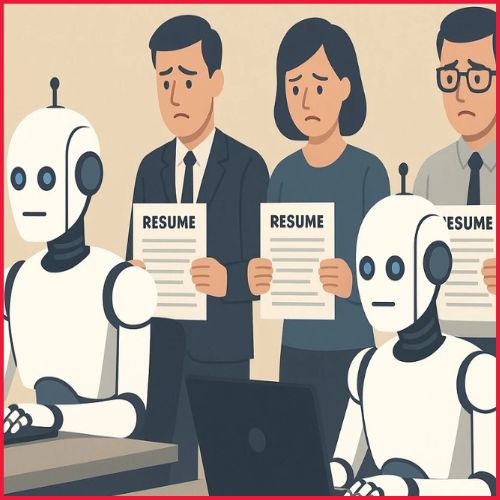
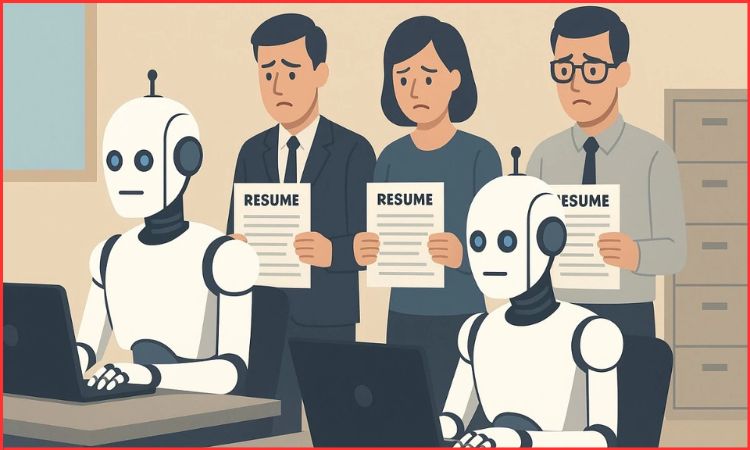
AI is rapidly reshaping India’s job market, and we can no longer pretend that everything is fine. According to the World Economic Forum, jobs that will disappear because of AI by 2030 are projected to reach 92 million globally, depending on the speed of AI adoption. At the same time, around 170 million new job roles are expected to be created, resulting in a net gain of 78 million jobs worldwide.
But how will this transformation affect India?
This article explores the reality of AI job loss in India, the sectors at the highest risk, and what professionals can do to stay relevant in an AI-driven future.
Why is AI replacing Jobs?
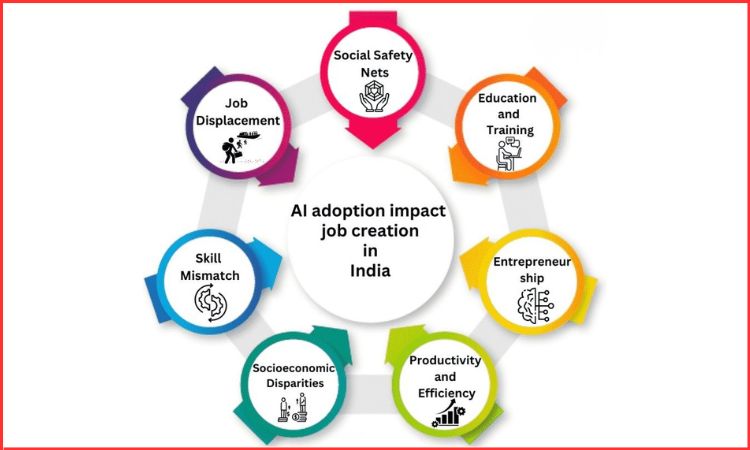
Source: IABAC
As businesses adopt generative AI tools to improve efficiency and reduce costs, millions of job roles across sectors are at risk of partial or complete automation.
- This change is happening because AI tools are becoming more sophisticated, making workloads easier and enabling more to be done in less time with fewer people.
- Machines are taking on more responsibilities that were once performed by humans.
- Businesses and workers need to understand this spread of transformation for a better future.
- Job roles with repetitive tasks are easily replaceable. To secure a future career, it is essential to upgrade skills through continuous learning, as AI is changing work patterns globally.
Jobs with Higher Risk of Automation
Rule-based and routine jobs are at higher risk of getting replaced by AI, for example:
- Data entry roles are likely to be automated by 2030. In some regions, such as India, the risk can be as high as 95%. As AI tools such as OCR and RPA can scan documents in seconds, extract information quickly, and update databases accurately.
- According to McKinsey and the World Economic Forum, Telemarketing job roles are consistently identified as one of the most vulnerable job roles to AI, as the daily tasks involve making scripted calls, delivering sales pitches, and handling routine inquiries, which can be easily automated by AI-powered voice bots and chatbots.
- Basic customer services and telecalling job roles are now vanishing, as AI chatbots manage queries cheaply and quickly.
AI Job Loss in India: Jobs at High Risk by 2030
Transforming here means roles being automated, augmented, and entirely redefined by AI capabilities, with 24% of tasks across these industries becoming fully automated or enhanced by AI.
Some of these jobs are:
Data Entry
By 2030, AI is expected to significantly automate data-entry roles. These are highly repetitive tasks that AI excels at. However, this will be a workforce transformation rather than mass unemployment, as new job roles will emerge to work alongside and manage AI.
Talemarketers
AI-powered chatbots and virtual assistants are rapidly evolving to handle a range of tasks, from customer queries to promotional offers and cold calls. These systems never take off, can manage numerous conversations at once, and are far from human limitations such as fatigue or error.
Manufacturing
Manufacturing job roles are likely to experience dual impact by 2030, which leads to the displacement of routine tasks, while creating new job roles in technology and automation.
According to Oxford Economics, it estimates that up to 20 million jobs could be lost to AI. However, the new job roles demand technology specialists who can manage, build, and improve AI systems.
Retail
Job roles such as cashiers, inventory and stock clerks, customer service representatives, and back-office administrative staff often involve manual, basic operations that are particularly vulnerable to task automation and the creation of new technology-focused roles.
IT and BPO
The Information Technology and Business Process Outsourcing sectors are expected to experience significant job displacement globally, while creating new opportunities for higher-skilled roles in AI management.
Bookkeepers and Payroll Clerks
AI will fundamentally reshape the roles of bookkeepers and payroll clerks by 2030, but it will not eliminate them globally. Heavy tasks will get automated. The role will shift toward more analytical, advisory, and technological management, which requires significant upskilling.
Customer Service Representatives
Among the jobs that will disappear in India because of AI by 2030 are customer service representatives. The growing number of customer queries across industries will be handled more easily by chatbots and AI virtual assistants, allowing human agents to focus on more complex, critical thinking, and emotional intelligence.
The World Economic Forum estimates that AI could replace 92 million jobs globally by 2030, with Customer Service Representatives among the hardest hit.
Proofreaders and Copy Editors
By 2030, AI will completely shift the focus from ‘fixing errors’ to ‘enhancing meaning.’ AI will handle mechanical proofreading (typos, grammar, and punctuation), while humans focus on judgmental tasks to ensure ethical quality.
Tools like Grammarly and other language software are becoming highly preferable for catching accurate spelling, grammar, and even style errors. It makes the role of human proofreaders less and it is expected that AI will perform 90% of proofreading tasks by 2030.
These roles are not the only ones changing, but represent a clear signal that the global workforce is being reshaped in various ways.
Jobs That Will Disappear in India Because of AI by 2030: Key Stats
The changes that AI is bringing to the workplace are indeed surprising. According to the World Economic Forum, AI could impact (displace or automate) 92 million jobs globally, and create 170 million new job roles by 2030.
This means there will still be opportunities for professionals to remain employed, only if they upgrade their skills as needed.
On the other hand, global automation studies indicate that about 27% of job roles, including manufacturing, transportation, and routine work, are at high risk of automation.
| Jobs | Impacted by 2030 in India | Stats/Notes |
| Manufacturing workers | Highly impacted | Approx. 80 Lakh jobs are likely to be affected |
| Retail workers | Highly vulnerable | Approx. 76 Lakh jobs are likely to be impacted |
| Education sector jobs | Moderate risk | Approx. 25 Lakh jobs likely to be affected |
| Customer support roles | High automation risk | Up to 75% of interactions will be handled by AI |
| Data entry jobs | Very high automation risk | Repetitive tasks are likely to get automated |
| Office support roles | Decline in demand | Admin assistants, ticket clerks, are among the fastest declining |
| IT/Coding tasks | Medium to high risk | Few coding and testing roles will get automated |
| Payroll clerks | Tasks redefined by AI | Routines are overseen by AI agents |
| Basic content work | Automated writing tools will impact jobs | AI generators will handle many routine text tasks |
India-Specific Global Projection
By 2030, around 1.8 crore Indian jobs will be impacted by AI, according to the ServiceNow AI Skills Research 2025 report:
- Around 80 lakh jobs will be impacted in the Manufacturing sector.
- The Retail sector will experience an impact of around 76 lakh jobs.
- In the Education sector, around 25 lakh jobs will be impacted.
Notes: Impacted here means displaced, redefined, or shifted, not entirely disappear.
Jobs with High AI Automation Risk Globally by 2030
| Role | Jobs Impacted (automated, transformed, or replaced) by 2030 |
| Customer service / Call centre representatives | Approx. 76% to 80% automated risk and approx. 5% job decline |
| Data entry / Administrative assistants | Approx. 83% to 95% automation risk and approx. 24% to 25% jobs shrink |
| Cashiers and Ticket Clerks | Approx. 65% to 93% automation risk and approx. 13% job roles decline |
| Proofreaders and Basic Editors | Approx. 85% automation risk with job growth expected to fall |
What does this mean for Young Professionals?
For working professionals, this shift and transformation mean rethinking what job security really looks like, and for industries, it means letting go of roles that no longer fit the way the world works.
The concept of a stable job is no longer tied to routine roles because technology has now taken over predictable tasks, and the market is placing higher value on adaptability, tech savvy, and cross-functional capabilities.
Young professionals should focus on:
- Problem-solving
- Creativity
- Communication skills
- Emotional Intelligence
- Tech adaptability
Why can’t AI replace all Jobs?
Source: Peter Boolkah
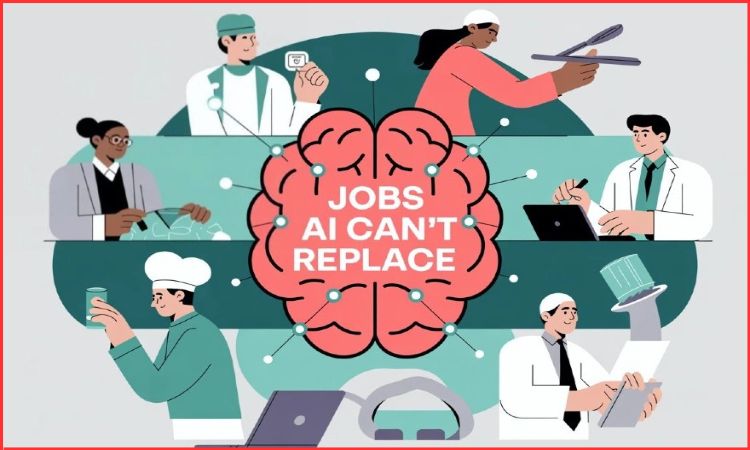
Though AI is reshaping the future and evolving in many work industries, it has its own limitations. This is the reason that AI is taking only repetitive and routine job roles. Let’s look at the jobs that are safer for now from AI.
- Jobs with a need for emotional intelligence, such as empathy, creativity, and emotional intelligence, are more human qualities that AI finds difficult to work with.
- AI faces challenges in creativity. It can create content, suggest ideas, or write a basic storyline. But it lacks imaginative spark, which distinguishes it from human creativity.
- Jobs with more complex human interactions are safe. For example, event planners, teachers, and psychologists.
How to Future-Proof Your Career?
Amid this ongoing change, there are several ways skilled professionals can secure their future.
One of them is an AI skills advancement course led by the Indian government, i.e., IndiaAI FutureSkills, in the tier 2/3 cities. In which the focus is on reskilling 40 to 45 million by 2025.
Here’s how to secure your future career:
- Upgrade your skills according to the demand.
- Build options for your job roles. Learn multiple skills.
- Highlight your transferable skills and experiences, which are shared across multiple roles.
This shift is different from others because it is not driven by layoffs or economic crises. Instead, it comes from operational changes and evolving digital infrastructures.
Conclusion
Workplaces across India are undergoing a quiet yet powerful transformation. By 2030, AI will disrupt many routine and repetitive roles. However, AI job loss in India does not signal the end of employment—it signals a shift toward higher-value, skill-based opportunities.
With millions of jobs being redefined and new roles emerging, professionals who embrace learning and adaptability will find opportunity amid disruption.
FAQs
Q1: How many jobs will AI replace in India by 2030?
A: AI can replace up to 1.8 crore job roles. It can disrupt mainly routine roles.
Q2: Which sector has the higher risk?
A: Among the jobs that will disappear in India because of AI by 2030 are manufacturing, data entry, retail, and other sectors, which are at high risk.
Q3: Will AI create more job roles?
A: Yes, there are possibilities that AI will create around 170 million new job roles worldwide.
Q4: What should Data Entry workers do in this ongoing transformation to thrive in the job market?
A: They should shift to data analytics or quality assurance to stay in the market.
Q5: Do Indian government programs help?
A: Yes, programs like Skill India target 40 to 45 million reskilling by 2025.