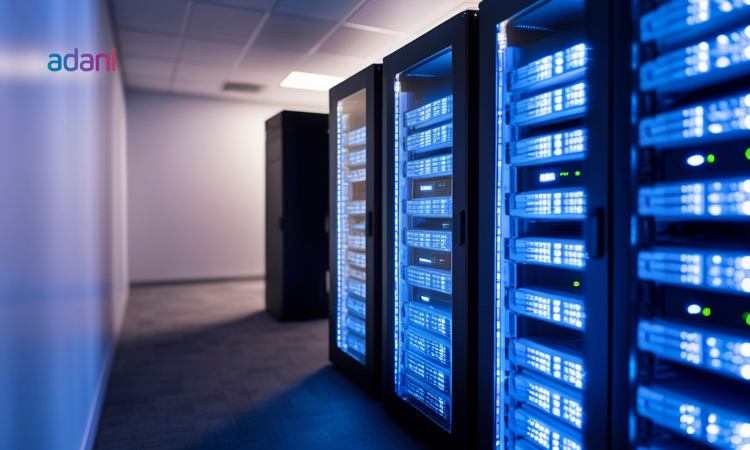
(Image Source: TechNexus )
There is a silent revolution happening under the hood of Digital India, humming to the tune of cooling fans and buzzing servers. While the world was busy debating the next big AI tool, India quietly laid the groundwork for a massive infrastructure pivot.
The latest industry forecasts suggest that India is targeting a staggering $200 billion in data centre investment over the next decade. Led by giants like the Adani Group, which recently announced a $100 billion commitment to AI-ready, renewable-powered hubs, the nation is no longer just a consumer of data; it’s becoming the world’s digital warehouse.
Why the Data Centre Boom is Moving to India
For years, the “Cloud” felt like an abstract concept floating somewhere over Silicon Valley. But data has gravity. As AI integration becomes the standard in enterprise operations, the need for physical infrastructure near the end user has skyrocketed.
India’s appeal lies in three critical factors:
- The AI Explosion: Generative AI requires massive compute power. By building AI-ready data centres, India is skipping a generation of technology to host the most advanced workloads on the planet.
- The Green Energy Pivot: Investors are no longer looking for just “power”; they want “green power.” The shift toward renewable energy-powered data centres is a strategic move to attract global tech giants such as Google, Microsoft, and Amazon, which have strict net-zero mandates.
- Data Sovereignty: With tightening regulations around where citizen data is stored, “localising” data has moved from a preference to a legal necessity.
Powering the Future: Adani, Ambani, and the Race for Infrastructure
The scale of investment is hard to wrap your head around. To put it in perspective, the Adani Group’s $100 billion data centre investment aims to create the world’s largest green energy-backed digital park by 2035. This is not just a construction project; it’s an ecosystem play.
By marrying renewable energy production with data storage, these firms are addressing the biggest headache in tech: the internet’s massive carbon footprint. For readers of Business Outreach, the message is clear: the next decade of Indian business growth is not just about software; it’s about the “hard” tech that supports it.
The Economic Ripple Effect
What does a $200 billion influx mean for the average business leader?
- Job Creation: Beyond construction, these hubs require high-skilled engineers, cybersecurity experts, and AI specialists.
- Lower Latency for Startups: Local data hosting means faster apps, smoother fintech transactions, and more reliable E-commerce.
- Real Estate Transformation: We are seeing a shift toward repurposing “industrial” land for high-tech digital corridors.
Is India Ready for the AI Infrastructure Challenge?
While the numbers are optimistic, the road to $200 billion is not without hurdles. The industry must navigate complex land acquisition laws and the immense water requirements for cooling these “mega-brains.”
However, with the government’s push for “Make in India” and a focus on digital public infrastructure (DPI), the momentum seems unstoppable. India is no longer just the back office of the world; it is becoming the central nervous system of the global digital economy.
Final Thoughts
As we track these developments at Business Outreach Magazine, one thing is certain: the investment landscape is shifting. If you are not looking at data centre stocks or infrastructure logistics, you are missing the biggest story of the decade.
The “Data Raj” has arrived, and it’s powered by the sun, the wind, and a $200 billion vision.