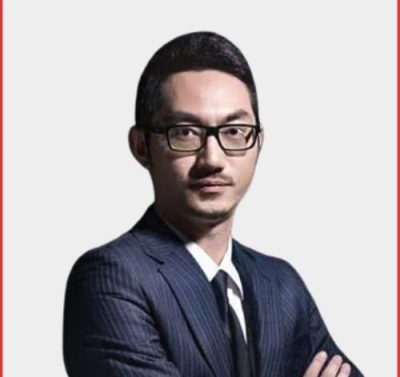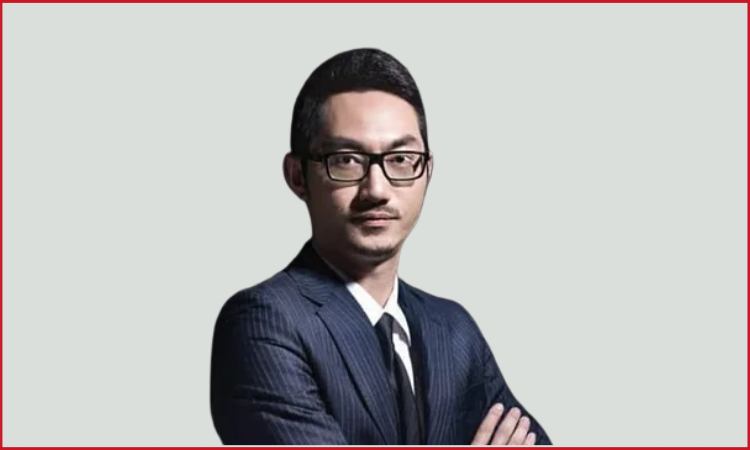
When Liang Wenfeng travelled home to his village in Guangdong for Lunar New Year in early 2025, the residents strung up a red banner across the street. It read, roughly translated, “Warm congratulations for becoming the pride of his hometown.” Bodyguards stood nearby, a detail nobody in that quiet farming community had ever needed before. A few weeks earlier, an app built by a company most of the world had never heard of had knocked ChatGPT off the top of Apple’s US App Store, and roughly $600 billion had been wiped off Nvidia’s market value in a single trading session.
That is the improbable arc behind Liang Wenfeng, DeepSeek founder and the man now described in global business coverage as the reclusive architect of China’s biggest AI upset. Understanding the Liang Wenfeng biography matters for a simple reason: this is not the story of a Silicon Valley-style founder chasing headlines. The Liang Wenfeng career arc is the story of a quant investor who spent nearly a decade quietly building computing muscle before anyone in the West thought to ask his name and it is central to how the wider DeepSeek success story eventually unfolded.
Liang Wenfeng Biography at a Glance
| Full Name | Liang Wenfeng (梁文锋) |
| Born | 1985, Wuchuan/Zhanjiang region, Guangdong Province, China |
| Education | Zhejiang University – Bachelor’s and Master’s degrees in Information and Communication Engineering |
| Profession | Entrepreneur, quantitative investor, AI researcher |
| Known For | Founder of DeepSeek; co-founder of High-Flyer |
| Current Position | Founder and CEO, DeepSeek (Hangzhou DeepSeek Artificial Intelligence Basic Technology Research Co., Ltd.) |
| Earlier Venture | Co-founder, High-Flyer Quantitative Investment Management (2015) |
| DeepSeek Founded | 2023, Hangzhou, Zhejiang, China |
| Estimated Net Worth (2026) | ~US$36 billion (Bloomberg Billionaires Index, July 2026 estimate) |
| Recognition | Forbes 2026 Billionaires List; TIME 100 Most Influential People (2025) |
Early Life and Education
Liang Wenfeng was born in 1985 in Guangdong province, in a family of schoolteachers. By multiple local accounts, he was a straight-A student with an early gift for mathematics, and in the small, human detail that keeps showing up in profiles of him a childhood fondness for comic books and football.
He went on to Zhejiang University, one of China’s most selective science and engineering institutions, where he completed both a bachelor’s and a master’s degree in information and communication engineering. His postgraduate research focused on object-tracking algorithms using low-cost cameras applied engineering work, not finance or AI theory, which makes his later career pivot more striking rather than less.
Liang Wenfeng’s Career: From Quant Trading to Computing Infrastructure
The Liang Wenfeng career story did not begin with artificial intelligence. It began with markets, and this stretch of his professional life is often the least reported part of any Liang Wenfeng biography written after DeepSeek’s rise.
- 2013: He founded an investment firm, applying algorithmic methods to trading rather than following the discretionary, analyst-driven model common in Chinese finance at the time.
- 2015: He co-founded High-Flyer with university classmates, a quantitative hedge fund that leaned on machine learning for stock selection. High-Flyer grew into one of China’s largest quant funds, at one stage managing assets reported at roughly $14 billion.
- 2019 – 2022: Ahead of tightening US export controls on advanced chips, Liang directed a reported $139 million of High-Flyer’s trading profits into the Fire-Flyer supercomputing platform, accumulating more than 10,000 Nvidia A100 GPUs while they were still freely available.
That last decision is the hinge point of the entire DeepSeek success story. Liang was not building AI infrastructure because he foresaw a chatbot boom. He was building faster models for trading. But it gave him, almost by accident, one of the largest privately held GPU clusters in China just as generative AI began to matter the single biggest turning point in the Liang Wenfeng career timeline.
The Birth of DeepSeek AI
In 2023, Liang spun the AI research work out of High-Flyer and founded DeepSeek AI in Hangzhou, reportedly self-funding the initial effort with roughly $1.4 million before it drew any outside capital. The company built its own large language models rather than licensing foundation models from elsewhere, using the compute base Liang had already assembled a founding decision that any accurate Liang Wenfeng biography has to treat as the real starting point of DeepSeek AI, not the 2025 headlines that followed.
DeepSeek released its V2 model in 2024, undercutting rivals on price and triggering what Chinese tech media called an AI price war an early chapter in what would become a much larger DeepSeek success story. Then, in January 2025, DeepSeek’s R1 model went further: it claimed performance comparable to leading Western systems, built despite restricted access to top-tier Nvidia chips, and released at a fraction of the usual training cost. Within days, DeepSeek’s app was the most downloaded free application on the US iOS App Store, ahead of ChatGPT, and US tech stocks Nvidia most visibly suffered one of their sharpest single-day selloffs in years.
Leadership Style and Strategy
- Much of what makes Liang Wenfeng’s career distinct from typical AI-industry leadership is what he has chosen not to do.
- He rarely gives interviews and has largely avoided the conference-circuit visibility common to Western AI founders.
- DeepSeek has favoured a comparatively young, research-heavy team reports describe fresh graduates and PhD candidates over senior industry hires.
- The company released several of its models with open weights, a departure from the closed approach of most frontier-model labs.
- Liang funded early development from High-Flyer’s own trading profits rather than raising venture capital in Silicon Valley style, keeping his ownership stake concentrated external estimates put it at roughly 78 percent even after DeepSeek’s later funding rounds.
What Makes Liang Wenfeng’s Rise Unique
Two things separate his trajectory from most AI-industry founders. First, the sequencing: engineering degree, then quantitative finance, then AI a pivot most peers made in the opposite order or skipped entirely. Second, the scale of impact relative to headcount. DeepSeek reportedly operated with around 160 employees in 2025, a fraction of the workforce at OpenAI or Anthropic, yet produced a model that moved global markets. Liang has since been received by senior Chinese leadership, including a 2025 meeting with President Xi Jinping alongside other technology entrepreneurs a sign of how quickly DeepSeek’s rise has been read as a matter of national, not just corporate, significance.
DeepSeek’s 2026 Momentum and Liang Wenfeng’s Net Worth
DeepSeek’s trajectory has continued into 2026, and it keeps reshaping every estimate of Liang Wenfeng net worth published since. The company closed a funding round of roughly $7.4 billion in June 2026, valuing it at approximately $50–52 billion, and has reportedly begun preparing for an initial public offering on the Chinese mainland, with a filing possible this year and a debut targeted for 2027.
On the back of that valuation jump, the Bloomberg Billionaires Index estimated Liang Wenfeng’s personal net worth at roughly $36 billion in July 2026, up from about $16.7 billion previously a figure that, per Bloomberg’s methodology, makes him the wealthiest founder among companies whose primary business and majority of revenue come directly from AI models, ahead of Anthropic’s Dario Amodei and OpenAI’s Greg Brockman on that specific measure. He also appeared on Forbes’ 2026 Billionaires List, cementing the Liang Wenfeng net worth figure as one of the most closely watched numbers in Chinese tech.
It is worth being precise about what these figures are and are not. DeepSeek is privately held, and neither the company nor Liang has publicly disclosed a fixed salary, performance bonus, or stock-based compensation structure of the kind found in listed-company filings. The widely cited Liang Wenfeng net worth figure of $36 billion is a wealth-index estimate built from DeepSeek’s private-market valuation and Liang’s estimated ownership stake not an officially disclosed compensation package. Readers should treat it as a market estimate, not an audited or company-confirmed number.
Future Outlook
Liang Wenfeng’s next test is less about model performance and more about governance and scale. A planned mainland IPO would pull DeepSeek and by extension Liang himself into a level of public disclosure and scrutiny neither has faced so far. Competition inside China is intensifying too, with rivals such as Moonshot AI drawing serious investor and enterprise interest. And DeepSeek continues to operate inside the broader US-China contest over chip export controls, which shaped its founding advantage in the first place and will keep shaping its cost base going forward.
None of that changes the basic shape of the Liang Wenfeng DeepSeek founder story so far: an engineer-turned-fund-manager who quietly stockpiled computing capacity for one purpose, then redeployed it for another, and in doing so built a company that forced the world’s biggest AI labs and biggest tech investors to recalculate what a frontier model is supposed to cost.
Conclusion
Liang Wenfeng’s path engineering student, quant fund manager, then AI founder does not follow the standard biography of a tech disruptor, and that is precisely the point. He built DeepSeek’s computing edge for a different purpose entirely, years before generative AI became the industry’s centre of gravity, and only then turned it toward a chatbot that rattled global markets. As DeepSeek moves toward a possible 2027 listing and continues to compete at the frontier of AI development, the Liang Wenfeng DeepSeek founder story is likely to keep serving as a reference point for how much of the AI race still comes down to who quietly built the infrastructure first.
FAQs
1. Who is Liang Wenfeng?
Liang Wenfeng is a Chinese entrepreneur, born in 1985 in Guangdong, who co-founded the quantitative hedge fund High-Flyer in 2015 and later founded the AI company DeepSeek in 2023, where he serves as CEO.
2. What company did Liang Wenfeng found?
He founded DeepSeek, an AI research company based in Hangzhou, China, after earlier co-founding the quant fund High-Flyer.
3. What is Liang Wenfeng’s educational background?
He studied information and communication engineering at Zhejiang University, earning both a bachelor’s and a master’s degree there.
4. Is DeepSeek planning to go public?
Reports from mid-2026 indicate DeepSeek is preparing for an initial public offering on the Chinese mainland, with a possible filing in 2026 and a targeted listing in 2027.