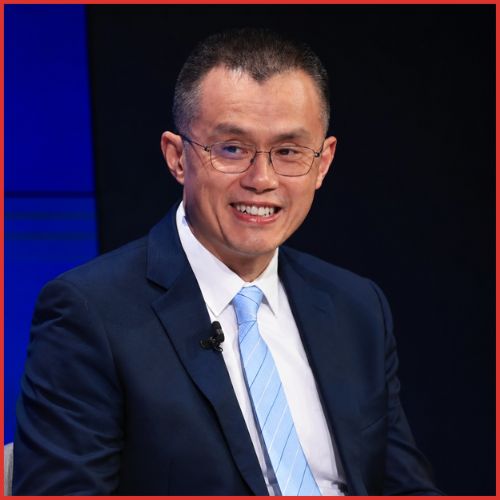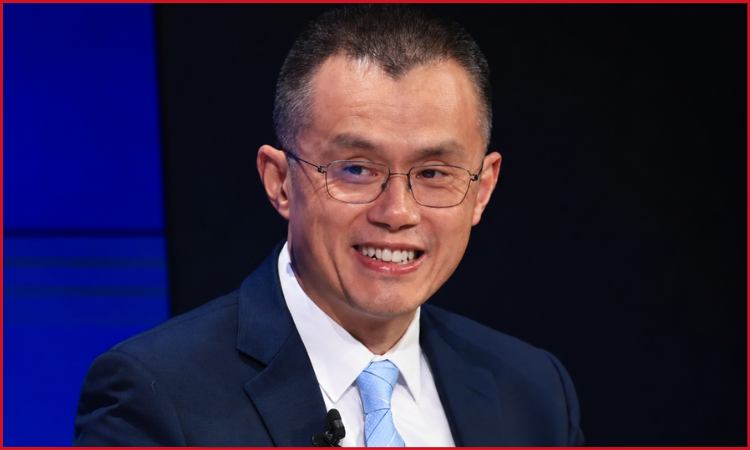
Most billionaire origin stories skip the boring part. Changpeng Zhao’s doesn’t work without it.
Before Binance, before the private jets and the courtroom, there was a teenager who was frying burgers in Vancouver and, later, a coder developing order-matching engines without anyone else knowing it. That sort of prep work turned out to be that unheralded prep work when it came time for him to come out swinging. With that not-so-glamorous prep work, that’s how he was able to move quickly once he got the opportunities.
Zhao’s story isn’t really about catching a lucky wave. It’s about spending close to fifteen years quietly building the surfboard first. Here’s how a systems engineer turned into the most powerful and eventually the most scrutinized figure in crypto, and what founders can actually take from his path.
The Immigrant Kid Who Flipped Burgers In Vancouver
Zhao was born in Jiangsu, China, in 1977, into a family of educators. When his father, an academic pushed out of favor by the government, moved the family to Vancouver in the late 1980s, twelve-year-old Zhao arrived with little money and less English. He worked shifts at McDonald‘s to help the household stay afloat.
People love this detail because it sounds cinematic. The more useful reading is different: early scarcity taught him to optimize relentlessly, a habit that later showed up in how he ran lean teams and obsessed over system efficiency. He studied computer science at McGill University in Montreal, and from there the pattern of his life was set: go where the hardest technical problems live.
From Tokyo Order-Matching To Bloomberg’s Trading Engine
After McGill, Zhao went straight into the machinery of global finance. He built trade-matching systems for the Tokyo Stock Exchange, then moved to New York to develop futures-trading software at Bloomberg’s Tradebook, earning three promotions in under two years.
This decade is the part most “get rich in crypto” content ignores, and it is the part that mattered most. Zhao wasn’t a trader who learned to code or a coder who dabbled in markets. He spent years inside the plumbing of exchanges: latency, matching engines, order books, settlement. So when crypto exchanges began appearing, he already understood, at a hardware level, why most of them would buckle under load.
Why He Quit A Fast-Track Career At 28
In 2005, he left Bloomberg to start Fusion Systems in Shanghai, building some of the fastest high-frequency trading systems for brokers. Walking away from a promotion-heavy corporate track to bootstrap in a new city was a genuine risk. But it gave him something a salary never could: ownership of a hard technical product and proof that he could ship exchange-grade infrastructure on his own terms.
The Poker Night That Changed Everything
In 2013, Zhao learned about Bitcoin over a poker game with Bobby Lee, then head of BTC China, and investor Ron Cao. Lee suggested he put 10% of his money into Bitcoin. Zhao did something more extreme: he sold his apartment in Shanghai and moved most of his net worth into BTC.
That bet is a masterclass in conviction sizing. He didn’t nibble; once he understood the technology, he committed at a level that would genuinely hurt if he was wrong. Then he went to learn the industry from the inside, joining Blockchain.info as an early team member and later serving as CTO at OKCoin. By the time he founded his own company, he had watched crypto exchanges get built and mismanaged from within.
Building Binance: 180 Days To Number One
Zhao launched Binance in July 2017 with co-founder Yi He, funded by an initial coin offering that raised roughly $15 million. Within about 180 days, Binance became the largest cryptocurrency exchange in the world by trading volume, a rise so fast it still reads like a typo.
Speed was the strategy. While competitors debated roadmaps, Binance shipped: low fees, an aggressive pace of new coin listings, a referral program that turned users into a sales force, and multi-language support from day one. Zhao ran the company from his phone and spoke to users directly through blunt, constant posts, building trust like a founder rather than a corporation.
The Real Reason Binance Won
It wasn’t the marketing. It was that Zhao had already solved the problem that crushed rivals: an exchange that stayed fast and online during extreme volume. When competing platforms froze during the 2017 mania, Binance kept matching orders.
Reliability, in a market built on panic, was the ultimate growth hack. Put simply, CZ’s real advantage was never timing the market; it was spending fifteen years building the plumbing before anyone knew they would need it.
The $4.3 Billion Reckoning
Explosive scale outran compliance. In November 2023, Zhao stepped down as CEO and pleaded guilty to failing to maintain an effective anti-money-laundering program. He paid a $50 million personal fine, Binance agreed to a record $4.3 billion settlement with U.S. authorities, and he served four months in a California federal prison, according to the U.S. Department of Justice records and Forbes’ reporting across 2023 and 2024.
This is the mistake worth studying hardest. Binance treated regulation as friction to route around rather than a core system to build. For a company moving billions daily, “move fast and break things” collided with laws that do not bend. The lesson is not that compliance is dull overhead; it is that at scale, ignoring it becomes the single largest liability on your balance sheet.
The Comeback No One Predicted
Here the story breaks the usual arc. In October 2025, President Donald Trump granted Zhao a full pardon. On the 2026 Forbes World’s Billionaires list, Zhao ranked 17th globally with an estimated net worth near $110 billion, ahead of Bill Gates, which placed him among the world’s richest people. That fortune is driven largely by his roughly 90% stake in Binance. He also expanded into new ventures, including Giggle Academy, a free online education project.
Few founders survive a federal prison term with their company and fortune intact. Zhao did, mainly because Binance’s fundamentals and his ownership never depended on his day-to-day title.
What His Journey Actually Teaches Founders
Strip away the crypto headlines, and a repeatable pattern remains.
Stack rare skills
Zhao’s edge came from combining exchange-engineering expertise with early crypto timing an intersection almost nobody else occupied. Find where your uncommon skill overlaps an emerging market, and build there.
Size your convictions honestly
Selling his apartment to buy Bitcoin looked reckless on paper, decisive in hindsight. The point is, he acted in proportion to his belief, rather than hedging into irrelevance.
Don’t wait for perfect conditions
Binance shipped in weeks, not quarters.
Don’t treat compliance as someone else’s problem once you scale
That blind spot cost billions. Bake compliance in the moment real money flows through your product, not after regulators come knocking.
Career Timeline at a Glance
| Year | Milestone |
| 1977 | Born in Jiangsu, China |
| Late 1980s | Family emigrates to Vancouver |
| – | Studies CS at McGill; builds systems for Tokyo Stock Exchange and Bloomberg’s Tradebook |
| 2005 | Leaves Bloomberg to found Fusion Systems in Shanghai |
| 2013 | Discovers Bitcoin; sells his apartment to invest |
| 2013 – 2017 | Early team member at Blockchain.info; later CTO at OKCoin |
| July 2017 | Co-founds Binance with Yi He, backed by a ~$15M ICO |
| ~180 days later | Binance becomes the world’s largest crypto exchange by volume |
| Nov 2023 | Steps down as CEO; pleads guilty to AML violations; $4.3B settlement |
| 2024 | Serves four months in federal prison |
| Oct 23, 2025 | Receives a full presidential pardon |
| March 2026 | Ranked 17th on Forbes’ Billionaires list (~$110B) |
Changpeng Zhao Net Worth
As of 2026, Changpeng Zhao’s net worth is estimated at around $108 billion, making him one of the richest entrepreneurs in the world. Much of his wealth comes from his significant ownership stake in Binance, the world’s largest cryptocurrency exchange, along with his investments in blockchain and Web3 ventures. Despite facing legal and regulatory challenges in recent years, Zhao remains one of the most influential figures in the global crypto industry, and his fortune continues to reflect the long-term growth of digital assets.
Conclusion
Fifteen years of invisible infrastructure work, one high-conviction bet, and a company that refused to fall over under pressure: that is the real engine behind the headlines. Tracking the Binance founder’s net worth is tempting, but the transferable lesson sits earlier, in the years of hard technical craft that made the fortune possible at all.
Zhao’s path is not a shortcut to getting rich; it is a case study in earning the right to move fast. If you are building something ambitious, start doing the boring, difficult work now so you can be dangerous when your moment finally arrives, and explore more founder success stories to keep sharpening that edge.
FAQs
Q1. How did Changpeng Zhao make most of his money?
Ans. Mostly his estimated 90% stake in Binance, plus Bitcoin and BNB holdings. Forbes valued him near $110 billion on its 2026 list, though Zhao disputes that figure.
Q2. Did Changpeng Zhao go to prison?
Ans. Yes, He pleaded guilty to the AML charges in 2023, paid a $50 million fine, and was imprisoned for four months in a U.S. federal prison. He was completely released from his family’s sins on October 23, 2025.
Q3. What did Changpeng Zhao do before crypto?
Ans. He built trading systems for the Tokyo Stock Exchange and Bloomberg’s Tradebook, then founded Fusion Systems before moving into crypto in 2013.
Q4. When did Changpeng Zhao found Binance?
Ans. July 2017, with co-founder Yi He. Backed by a ~$15 million ICO, it became the world’s largest exchange by volume within roughly 180 days.
Q5. Is Changpeng Zhao richer than Bill Gates?
Ans. On Forbes’ 2026 list, yes, $110 billion versus Gates’ figure, ranking Zhao 17th globally. Crypto wealth is volatile, so that can shift fast, and Zhao himself has questioned the estimate.