Back in late 2023, somewhere in Pune, a talented software engineer made a quiet but bold move. She’d had enough of the corporate grind. No dramatic meltdown, no big handshake from investors—just her laptop, some solid Wi-Fi, and a feeling that local small businesses were getting blindsided by cyber threats they didn’t even recognize. Fast forward two years: she’s running her own cybersecurity consultancy, quietly protecting over forty local clients. No investor cash, no flashy office—just consistent problem-solving and a stack of trust that keeps growing. And honestly, stories like hers pop up more often than you’d guess.
Small IT businesses all over India—and really, everywhere—are building their own ground in today’s digital-first economy. Tech’s baked into almost every part of business now, and the tools are easier to use and cheaper than ever. The real demand? It’s for practical, trusted help that doesn’t cost a fortune. And if you focus, keep things lean, and know your stuff, there’s still a ton of room for new folks in this game. After talking with dozens of founders and freelancers, I stand by that.
So, let’s cut to what matters.
Why Are Small IT Businesses Booming in 2026?
The world’s IT services market is huge—and it keeps getting bigger. Most reports on managed services and cloud tech point out something many miss: small and medium-sized businesses are scrambling to catch up. They need to get online, secure their data, and actually look like they exist to the digital world. Many used to ignore all that. Now, ignoring it just isn’t an option.
Big IT companies? They’re usually too expensive, too slow, or too far away for most small companies. That’s the opening for solo consultants and focused boutique teams. They move faster, pay attention, and don’t cause sticker shock. In 2026, that mix gives the little guy a real advantage.
It helps that the government’s also pushing things forward. Startup India has registered over 150,000 startups since it launched, and Digital India continues to bring internet access to smaller towns. The 2024-25 Union Budget set aside over ₹10,000 crore for the IndiaAI Mission. That’s clear direction for where the market’s heading. DPIIT is also making tech-driven entrepreneurship a real priority now, not just an afterthought.
Alright—let’s talk about what’s actually working.
Small IT Business Ideas That Are Winning Right Now
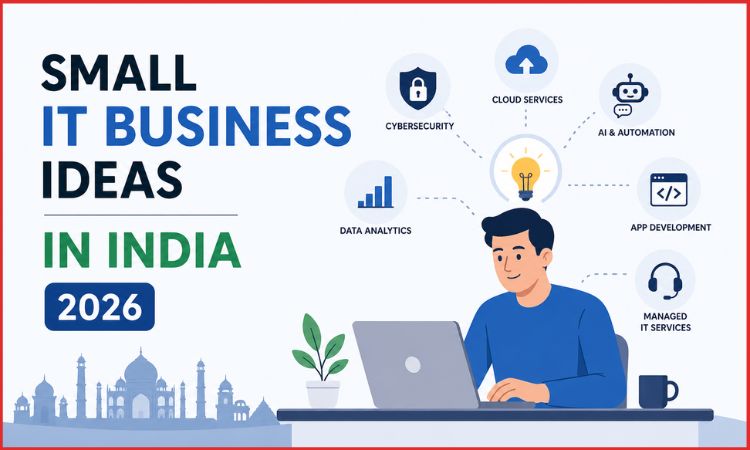
1. Cybersecurity Consulting for Small Businesses
Ransomware and hacking aren’t just for big corporations. The latest numbers say small businesses take 40–60% of cyberattacks—often more. Most owners don’t have a plan, a security team, or even basic protection. They’re flying blind.
A cybersecurity consultant steps right in. This work can be as simple (and crucial) as running vulnerability scans, training a team to spot sketchy emails, setting up a proper firewall, and doing regular check-ins—all for a steady monthly fee. Certs like CompTIA Security+, CEH, or CISSP add instant credibility. And a retainer model turns single jobs into a steady income. Build trust in your area, and soon enough, the referrals start doing the heavy lifting.
Like Kevin Mitnick said, companies buy fancy tech but often forget people are the weak link. For small businesses, skipping the basics is the real problem—and solving that is valuable.
2. AI Integration and Automation Services
In 2022, most businesses thought “AI” meant robots and sci-fi. By 2026, it’s an everyday need. But knowing you need AI and actually using it—those are worlds apart.
Here’s where you help. Maybe you set up chatbots for support, automate inventory, connect natural language queries to daily tools, or build small custom workflows using OpenAI, Vertex AI, or Azure. These platforms get more user-friendly every year, and clients will pay for real, working solutions because people who can do this are still uncommon. The IndiaAI Mission is only making AI even more important.
If you’re the person who bridges the gap between what AI can do and what a company actually needs (without the buzzwords), you’ll be in demand for a long time.
3. Cloud Migration and Management
A lot of businesses still run on old servers and out-of-date setups. Moving to AWS, Azure, or Google Cloud sounds exciting—but most owners don’t even know where to start. So, they don’t.
That’s the opening. As a cloud migration consultant, you don’t just lift-and-shift: you help optimize costs, manage backups, fine-tune performance, and handle routine monitoring. One project often turns into a lasting relationship. Get certified on a major cloud platform (the training’s out there and affordable). Owners get it, and they trust credentials.
This market isn’t crowded yet—especially outside the big cities. There’s plenty of room to become “the cloud person” in your region.
4. Managed IT Services (MSP Model)
MSPs have been around forever, and with good reason. A client pays a monthly fee. You handle technology support, updates, network security, and helpdesk stuff. No surprise bills, no stress. You get stable, predictable money.
All you need is a few remote monitoring tools—ConnectWise, NinjaRMM, that sort of thing. A handful of law firms, clinics, shops, or small manufacturers as clients can cover your costs and then some. These businesses don’t want an in-house IT hire—they want someone who responds fast and talks straight.
It’s not a flashy business, but it builds real long-term value. Don’t ignore it.
5. No-Code and Low-Code App Development
No- and low-code app builders like Bubble, Webflow, and Glide have completely changed the game. You don’t need to be a full-on coder to give businesses the custom apps and dashboards they want. These tools open the door wide, and businesses really want their own apps these days (without breaking the bank for custom development).
If you know these platforms, you can spin up practical apps faster and cheaper than most developers. Honestly, the learning curve’s pretty gentle. And the payoff—clear tools that solve real problems—clients recognize that value right away. In 2026, this is still an underserved area, especially in retail, education, logistics, and local services.
6. Data Analytics and Reporting Consulting
Most businesses are swimming in data but can’t really use it. Owners glance at spreadsheets, feel bad, and just go with their gut anyway. But a good analytics consultant turns that raw data into clear, direct decisions. Whether it’s Power BI, Google Analytics, or basic Python/R analysis, your job is to make it simple and actionable—not just pretty charts.
If you actually dig working with data, this is a strong place to build a business. Owners are happy to pay for clarity and useful direction, not just more “insights.”
How to Actually Start (and Grow) a Small IT Business in 2026
The basics haven’t changed. Execution is everything. Focus on one area you’re genuinely good at, not everything under the sun—it keeps you sharp and memorable. Start small: land your first clients, get them real results, and let word-of-mouth do its work. A couple of certifications go a long way in making people trust your expertise. And charge based on results, not just the hours.
Digital marketing helps—polish your website, keep your LinkedIn updated. But almost every small IT business gets its first clients from friends, family, and hustle, not ads. Once you’ve built a solid reputation, clients will come to you.
And let’s be honest—the tech is rarely what stops people. It’s the tough stuff: being seen, pricing yourself fairly, and sticking to a niche. If you push past those, you’ll figure out the rest.
Frequently Asked Questions
What’s the most profitable small IT business in 2026?
Right now, cybersecurity consulting and AI integration top the list—both go after ongoing, high-stakes problems. Managed IT services also work because clients stick around and pay monthly. Any of these, done well by someone who communicates and executes, can become profitable without huge upfront costs.
How much capital do you actually need to start?
Surprisingly little. Most people start consulting or MSPs for under ₹1 lakh (about $2,000)—enough for a few certifications, some key software, and an online presence. No need for a physical office, either.
Do you need a computer science degree?
Nope. Technical skill matters, but how you get it doesn’t. Many top people in this space are self-taught or built up with certifications. Owners care about results, not a diploma. Certifications help break the ice, but they’re not a must-have.
Where should you start if you have limited experience?
No-code/low-code app development is a solid entry—user-friendly platforms, quick projects, and real demand. Data analytics consulting (Power BI, Google Looker, etc.) is also great if you’re comfortable with numbers and explaining trends simply. Both give fast feedback and help build your portfolio.