Imagine this: a founder sitting in a small apartment in 2012, looking at a retail system that seemed designed to frustrate everyone — brands, buyers, and everyone in between. No marketing money. No distributor. Just an idea and a website. That is where India’s D2C story actually begins.
D2C stands for Direct-to-Consumer. It simply means a brand sells straight to the buyer, cutting out the middleman. No mall. No distributor. The company talks to the customer directly, which sounds simple but changes everything — pricing, packaging, data, trust.
Today, India has over 800 D2C brands. But only a handful have truly made it. The ones that did share something in common — they treated customers like people worth keeping, not just orders to fulfil. This article looks at the ten brands that got that right.
What Makes a D2C Brand Actually Work?
Brands that survive long enough to matter tend to get a few basics right. They pick a specific enough identity that customers instantly understand what the brand stands for. They invest in content before they need sales. They focus on the second purchase, not just the first. And they only open physical stores after the online side is already working.
The biggest differentiator? Community. Brands that built real audiences early — people who followed them before they even needed to buy — consistently outgrew those that spent everything on paid ads.
“The brands that win don’t just sell — they build audiences who show up before they need to buy.”
Top 10 Most Successful D2C Brands in India
1. Nykaa — Beauty & Personal Care
In 2012, nobody was waiting for another beauty website. But Falguni Nayar saw something others missed: women wanted real beauty advice, not just product listings. So Nykaa became a content platform first and a store second. Tutorials, honest reviews, influencer tie-ups that read like editorial content rather than ads — that was the engine.
When Nykaa opened physical stores, the industry was confused. Why would an online brand go offline? Because the customers were already there in trust. The stores just made it easier to reach them. Today, Nykaa is one of India’s biggest omnichannel beauty platforms, with private-label products that deliver stronger margins and complete control over the customer journey.
Key takeaway: Content built the trust. Offline stores deepened it. By the time competitors tried to copy the model, Nykaa’s head start was already impossible to close.
2. boAt — Consumer Electronics
Going up against Sony, JBL, and Bose sounds like a bad business plan. But Aman Gupta and Sameer Ashiani did not try to beat those brands at their own game. They ignored the spec sheet competition entirely and asked a different question: what if earphones were a lifestyle statement, not a technical product?
A ₹1,500 boAt earbud came with cricketers, musicians, and gym personalities endorsing it. The product did not need to be the best on paper — it needed to feel right for the person buying it. Revenue crossed ₹3,000 crores. The global brands never quite understood what happened.
Key takeaway: boAt won by selling identity, not audio quality. That’s a strategy most Indian brands are still learning to replicate.
3. Mamaearth — Beauty & Personal Care
Around 2016, something changed quietly in Indian kitchens and bathrooms. People started reading the back of their shampoo bottles. Ingredient lists. Parabens. Sulphates. Suddenly the question was not “Does this smell nice?” but “Is this actually safe?”
Mamaearth was already there. Founders Varun and Ghazal Alagh had planted a flag on toxin-free beauty before most Indian consumers even knew to ask for it. Strong SEO, consistent content, and a clear message — safe ingredients for the whole family — meant Mamaearth did not need to spend as much on ads as its competitors. It became one of India’s first D2C unicorns and crossed nearly ₹2,000 crores in revenue.
Key takeaway: Mamaearth did not create the clean beauty movement. They showed up just before it exploded, with a clear answer already ready.
4. Lenskart — Eyewear
For most people, buying glasses is something you do reluctantly, once every few years, at whichever optical store is nearby. Lenskart looked at that experience and decided it was broken. Virtual try-on, AI-powered recommendations, easy home delivery — the tech was real and actually useful, not just a press release.
But what built Lenskart wasn’t the app feature. It was 1,000-plus physical stores, consistent pricing, and service that didn’t fall apart after the first purchase. Premium experience, accessible prices. That’s a combination most brands quietly give up on.
Key takeaway: Technology brought people in. Reliable service made them stay.
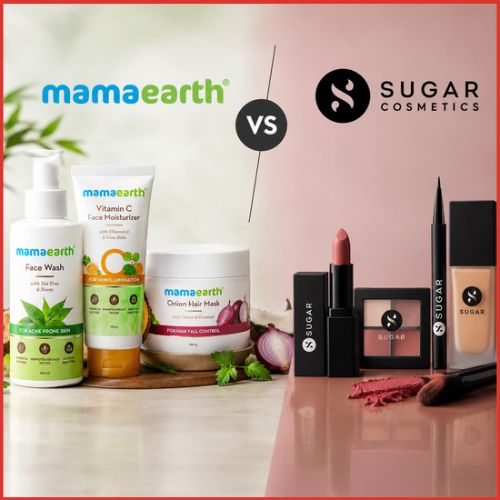
5. Sugar Cosmetics — Beauty
Vineeta Singh noticed something the big cosmetics companies had missed: women in Tier 2 and Tier 3 cities did not want drugstore basics. They wanted real brands, real shades, real quality — at prices that did not require a special occasion to justify. The established players were too focused on Delhi and Mumbai to look.
Key takeaway: Sugar didn’t out-spend the incumbents. It out-located them. Showing up in cities where nobody else had bothered is still one of the most underrated strategies in Indian retail.
6. Wakefit — Home & Furniture
Buying a mattress online sounds risky. You can’t try it in a store. You don’t know how it will feel in a week. Wakefit understood this concern completely — and answered it with a 100-day trial policy. Return it if you don’t love it. No questions.
Key takeaway: The trial was a bet that the product was genuinely good enough to win on honesty. Cutting out distributors kept prices low, and quality kept customers from returning. Both bets paid off.
7. Bewakoof — Fashion
Most fashion brands try to look aspirational. Bewakoof tried to be funny. Irreverent t-shirts, social media that felt like a friend talking — not a marketing team — and prices that made buying two or three pieces easy. The brand built a loyal customer base not on glamour, but on personality.
Key takeaway: Tone is a real strategy. Being consistently funny and affordable is harder to copy than any product feature.
8. Licious — Food & Meat Delivery
Fresh meat delivery is possibly the hardest D2C category to get right. Cold chain logistics, last-mile delivery, consistent hygiene — one weak link ruins everything. Licious controlled the entire process from sourcing to your doorstep. No third-party handoffs. Subscriptions turned a sporadic purchase into a weekly habit.
Key takeaway: If you can make fresh meat work as D2C, you’ve solved one of the hardest logistics problems in Indian retail. Licious did.
9. Vahdam India — Food & Beverages
India grows some of the finest tea in the world. For decades, Western buyers paid premium prices for it, with the margins going to importers and distributors — not to India. Vahdam flipped that. Direct international sales, origin storytelling, sustainability credentials — the brand turned Indian heritage into an export advantage.
Key takeaway: Vahdam treated Indian origin as a selling point for global buyers, not a limitation to hide. Most Indian brands are still catching up to that thinking.
10. Meesho — Social Commerce
Meesho is a strange entry on this list because it isn’t really a D2C brand. It’s the infrastructure that lets thousands of small sellers become D2C brands overnight. Women in smaller cities — with no inventory, no capital, no technical knowledge — started selling through WhatsApp and Facebook, earning from referrals. Peer-to-peer trust networks formed organically.
Key takeaway: Meesho isn’t a brand story — it’s a distribution revolution. It answered the question: what happens when anyone can sell directly to anyone?
“The real D2C advantage isn’t margins. It’s the data — and what you build with it over time.”
Lessons If You Are Building a D2C Brand
Not every lesson from these ten brands will work in today’s market. Some of what Nykaa or boAt achieved relied on timing and conditions that don’t exist the same way now. But a few things hold regardless of when you start.
- Pick a niche narrow enough to fully own. Broad positioning is a luxury reserved for brands with ₹100 crore marketing budgets.
- Build content before you need it to pay off. Brands that seem to ‘go viral’ usually spent two quiet years building first.
- Design for the second purchase, not just the first. The first sale is marketing; the second sale is actual business.
Frequently Asked Questions
What exactly is a D2C brand?
D2C means Direct-to-Consumer — the brand sells straight to the buyer without going through a retailer, distributor, or marketplace. The company controls its pricing, the packaging experience, and the customer relationship.
Why has D2C grown so fast in India?
Several things came together at the right time — cheap mobile data, UPI making digital payments easy, millions of first-time online shoppers, and improving logistics across smaller cities. It did not happen overnight. It just felt that way.
Which D2C brand is the most successful in India?
Nykaa and boAt are the names that come up most often, and fairly so — both crossed revenue thresholds very few Indian consumer brands ever reach. But it depends on what you measure. Lenskart’s store footprint is extraordinary. Vahdam’s international brand equity is something most Indian companies are still figuring out how to build. There is no single answer.
Is D2C actually profitable, or is it all funded by venture capital?
Both exist. The difference almost always comes down to one number: how much does it cost to get a customer vs. how much does that customer spend over time? Brands that retain customers well tend to get to profitability eventually. Brands built entirely on paid ads often do not.
Which categories work best for D2C in India?
Beauty, personal care, electronics accessories, fashion, food, and home products have produced the biggest successes so far.