Image Source: Business Today
In the rapidly evolving landscape of global defence, the recent partnership between India and France has sent ripples through the stock market and strategic circles alike. For Bharat Electronics Limited (BEL), a Navratna defence PSU, this is not just another contract; it’s a move that could redefine its market position for years to come.
Here is an analysis of how this landmark deal is set to transform India’s defence ecosystem and why investors are closely watching BEL.
The BEL-Safran Pact: How the India-France Missile Deal is Powering Defence Stocks
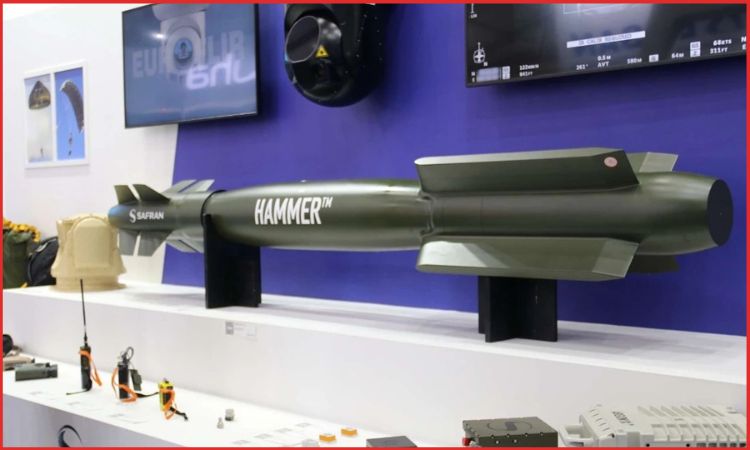
The Indian defence sector is currently witnessing a “super-cycle,” and at the heart of this momentum is Bharat Electronics Limited (BEL). Following the 6th India-France Annual Defence Dialogue in Bengaluru, BEL has entered a strategic Joint Venture (JV) with France’s Safran Electronics & Defence to manufacture the highly acclaimed HAMMER missiles right here on Indian soil.
This is not just a win for “Make in India”; it’s a massive signal to the markets that Indian defence PSUs are moving up the value chain from mere assemblers to high-tech manufacturers.
Why the HAMMER Missile Deal is a Game-Changer
The HAMMER (Highly Agile Modular Munition Extended Range) is a precision-guided, all-weather weapon system. Originally French, these “smart bombs” are the teeth of the IAF’s Rafale fleet.
By establishing a Centre of Excellence in Pune, the BEL-Safran JV will handle everything from manufacturing and supply to the maintenance and repair of these guidance kits. For the first time, India won’t just be buying these missiles; we will be building and sustaining them.
Why BEL is the “Stock in Focus”
The market reaction to the BEL-Safran news has been palpable. But beyond the immediate “green” on the charts, here’s why this matters for long-term stakeholders:
- Revenue Visibility: With the Indian Air Force and Navy as primary end-users, the order book for HAMMER kits is expected to be robust.
- Technological Leap: Partnering with a global giant like Safran allows BEL to absorb “niche technology,” particularly in guidance and navigation systems, which can be pivoted to other indigenous missile programs.
- The “Rafale” Multiplier: As India nears the acquisition of 114 more Rafale fighters, the demand for locally produced HAMMER missiles will scale exponentially.
India-France Relations: A “Special Global Strategic Partnership”
The timing of this deal coincides with Prime Minister Narendra Modi and President Emmanuel Macron elevating bilateral ties to a Special Global Strategic Partnership. This geopolitical alignment ensures that technology transfers, which are often the biggest hurdle in defence deals, will be smoother and more comprehensive.
For Business Outreach Magazine readers, the message is clear: The Indo-French corridor is no longer just about buying planes; it’s about co-developing the future of warfare.
The Bottom Line for Investors
As the BEL share price continues to reflect the company’s growing order book, currently estimated at over ₹73,450 crore, strategic partnerships like the one with Safran act as a “moat.” They protect the company from competition and ensure it remains the preferred partner for the Ministry of Defence.
In the world of defence manufacturing, precision is everything. With the HAMMER deal, BEL has just hit the bullseye.