India’s Most Diversified Conglomerate and Multi-Segment Business Model
Source: Business Park Center
ITC Limited is one of India’s most iconic and diversified multi-segment businesses. An enterprise that has successfully evolved from a mere tobacco-focused company into a multi-business powerhouse, covering FMCG, agriculture, packaging, paper, technology, etc., with its broad portfolio of brands and touching millions of Indian households with a corporate strategy focused on long-term value creation, ITC provides one of the most compelling examples of how strategic diversification can drive long-term resilience and growth.
Background of ITC Business
The Indian Tobacco Company Limited was founded in 1910 and is registered in Kolkata. It has experienced substantial transformation over the past century. While its product ‘tobacco’ remains a core driver for ITC’s revenue, the company has now evolved into a multi-segment business with a presence across both consumer and industrial segments.
Today, the ITC Business Model is recognised among India’s largest private-sector companies, with a gross revenue of ₹73,465 crores and EBITDA of ₹24,025 crores as of FY25. (Source: ITC Portal)
Initially, ITC was incorporated as the ‘Imperial Tobacco Company of India Limited,’ under a British-based tobacco manufacturer. Later in 1970, the company changed its name to ‘India Tobacco Company Limited’ and then to ‘I.T.C. Limited’ in 1974.
The corporate strategy builds a robust distribution framework, a strong product range, and supply chain organisations to support multiple business operations. This multi-segment model reduces sector-specific risks while enabling growth across categories and markets.
ITC Business Model
Source: Startup Talky
ITC operates across several core segments, which are not only revenue-focused but also strategic growth drivers.
Highlights
- Name: ITC
- Headquarters: Kolkata, India
- Sector: Conglomerate
- Founded in: 1910
| Business Model | Key Focus Area | Role |
| FMCG Cigarettes | Tobacco products | High margins and market share |
| FMCG (Non-Cigarettes) | Packaged foods, personal care, stationery, matches, and agarbattis | Growth engine with expanding presence |
| Agri-Business | Procurement and marketing of agricultural commodities | Integration with supply chains and exports |
| Paperboards and Packaging | Paper, boards, and packaging solutions | Industrial and sustainability-oriented |
| IT and Digital | ITC Infotech and tech services | Global tech services provider |
Cigarettes: The Core Revenue
The cigarette business remains the top contributor to revenue and profit. Brands such as Gold Flake, Classic, and Wills Navy Cut hold an estimated 75%-80% market share in India’s tobacco sector. This sector gives it pricing power and cash-flow strength to fund expansion in other units. Despite tobacco’s stringent regulations and rising taxes, its high profits were used to fund new ventures, business expansion, and brand-building efforts across the ITC business portfolio.
FMCG (Fast Moving Consumer Goods)
ITC’s ambitious diversification of products into fast-moving consumer goods aims to build long-term growth beyond cigarettes. The business model includes:
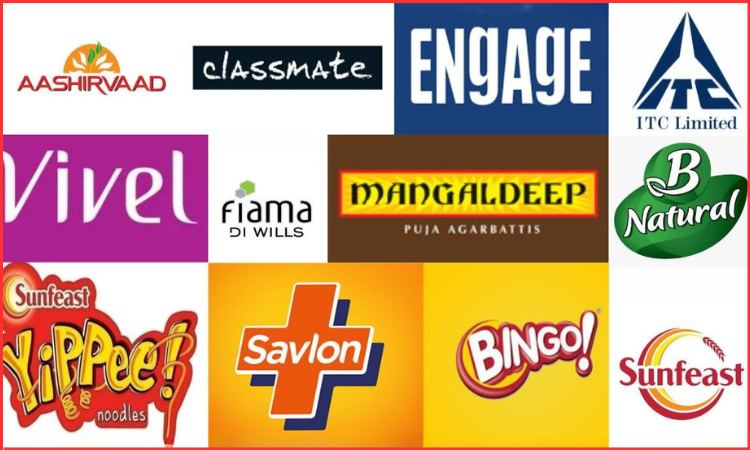
- Packaged Foods like Aashirvaad, Sunfeast, Yippee, and frozen food products.
- Personal Care, such as Fiama, Vivel, and Savlon.
- Stationery and Lifestyle, for example- Classmate and Paperkraft.
- Matches and Agarbattis: Growing distribution networks.
Despite heavy upfront marketing and intense competition, this segment has shown steady revenue growth, accounting for over a quarter of ITC’s revenue.
Agri-Business: Supply Chain and Rural Connect
- Sourcing commodities for internal use and resale of wheat, rice, soy, spices, and tobacco leaf.
- Robust rural supply systems that increase farmers’ income through various initiatives like e-Choupal, a digital network that connects both farmers and the market.
This segment increases margin control, reduces dependence on intermediaries, and supports both FMCG and tobacco businesses.
Paperboards, Papers and Packaging
Paperboard and packaging operations are among India’s most significant operations. It serves FMCG clients and industrial partners with eco-friendly materials. The business benefits from vertical integration, which includes pulp production and recycling initiatives.
IT Services
ITC Infotech offers IT solutions globally and serves clients across various sectors like banking, healthcare, and manufacturing. This adds a consistent tech services income stream while advancing the group’s digital transformation agenda.
Sanjiv Puri: Managing Director of ITC
Source: India CSR
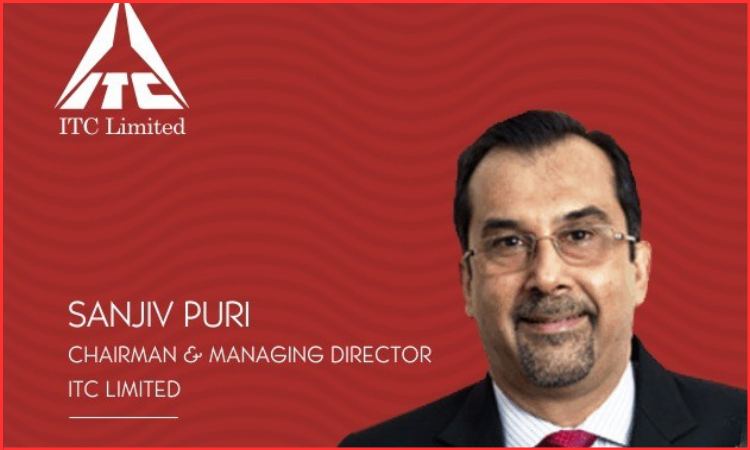
Sanjiv Puri is renowned as the Chairman and Managing Director of ITC Limited. He was appointed as a Director on the ITC Board on December 06, 2015. Later, in February 2017, he assumed the Chief Executive Officer position, and in 2018, the Managing Director position. He was appointed as ITC Chairman on May 13, 2019.
Under Sanjiv Puri’s leadership, ITC accelerated its FMCG expansion, strengthened ESG initiatives, and repositioned itself as a future-ready consumer conglomerate.
Education and Recognition
He holds degrees from the Indian Institute of Technology in Kanpur and the Wharton School of Business in the US. He served as Chairman of the Expert Group established by the 15th Finance Commission of the Government of India to promote agri-exports. He also participated in the NITI Aayog’s Farm to a Table discussion group on Technology.
- Recently, the XIM University in Bhubaneshwar awarded Sanjiv Puri an honorary doctorate.
- In 2018, he received the Indian Institute of Technology, Kanpur’s “Distinguished Alumnus Award.”
- Another award he received was the “IMPACT Person of the Year, 2020.”
ITC Business Mission & Vision
The primary objective is to maintain its ranking as one of India’s most valuable companies by performing at an international level and contributing to the Indian economy. ITC’s core mission is “to increase the wealth-generating capability of the business in an expansive environment, delivering superior and sustainable stakeholder value.”
ITC Multiple Businesses Revenue Contribution
Analysis and Insights
| Business Model | Approx Revenue Contribution |
| FMCG Cigarettes | 38% to 44% |
| FMCG (Non-cigarettes) | 26% to 27% |
| Agri-Business | 6% to 20% |
| Paperboards and Packaging | 10% to 12% |
| Hotels and Others | 3% to 5% |
ITC’s diversified revenue base highlights its reduced dependence on any single segment. Revenue contribution varies annually due to regulatory changes in tobacco, FMCG margin expansion, and the recent hotel business demerger.
The shares vary based on fiscal reporting and business scope adjustments following the hotel demerger. (Source: Business Upturn)
Challenges Faced by the ITC Business Model
Despite its strong strategy, ITC faces many significant challenges, such as:
Products:
- Regulatory pressure and high taxes, especially on tobacco, affect profitability and encourage a shift toward cheaper, alternative products.
- The competitive FMCG landscape is dominated by major players such as Nestle and HUL. Securing limited retail shelf space is a significant hurdle.
- Input cost inflation is putting pressure on margins in the paper and food businesses.
- Brand-building costs, especially in FMCG and other models.
- High capital investment in hotels and slow to scale. Though shifting towards light-asset management models helps them reduce risks and improve margins.
- Agri-businesses are vulnerable to the climate, especially the monsoon. Rising input prices, low profit margins, and a need to diversify into value-added products.
Strategic:
- The diverse product portfolio makes it difficult for investors to accurately value the company, often leading to valuation discounts.
- Diversification of products sometimes dilutes focus, making it hard to compete with other sector players in the market.
Strengths of ITC Multi-Segment Businesses
- Business diversification helps shield against recurring risk. Operating in FMCG, paperboards and packaging, IT services, agri-business, etc., provides resilience against downturns in any single sector and reduces overall business risk.
- Strong cash-flow engine and growth from cigarette funds. The company maintains a strong financial system and a debt-free status, which allows substantial investment in R&D, new manufacturing facilities, and strategic acquisitions to support future growth.
- Deep rural network provides supply chain advantages, such as the large agri-business model, which enables backward integration efficiently to source high-quality raw materials, such as wheat, potatoes, and spices, for its FMCG products, enhancing supply chain stability and quality.
- The brand portfolio spans fast-growing consumer categories. ITC has built over 25 world-class Indian brands with significant consumer trust and loyalty.
Future Outlook of the ITC Business Model
With ITC Hotels separated into a discrete list, ITC Limited has shifted its focus to its major segments and products, especially in high-growth FMCG sectors. The digital expansion and strategic acquisitions of e-commerce and seamless commerce sales are expected to strengthen its consumer reach and profitability further.
Conclusion
ITC’s business model sets a benchmark and shows how a century-old company can become a multi-segment business from a single-product organisation by strengthening strategic product portfolio management. With its strong legacy brands, robust distribution networks, and a balanced risk profile across FMCG and agribusiness, ITC will continue to shape the future of India’s business. Its ongoing innovation and focus on growing sectors will define its growth.
As regulatory pressures on tobacco persist, ITC’s future growth will increasingly be driven by non-cigarette FMCG, digital commerce, sustainable packaging, and agri-value chains, positioning the company as a long-term compounder rather than a legacy conglomerate.
FAQs
Q1. How does ITC make money via its multi-business model?
A: ITC earns money from its diversified segments, such as cigarettes, FMCG consumer goods, agri-commodity, paper and packaging products, and IT services globally.
Q2. What is the role of FMCG tobacco in the revenue of ITC?
A: Among all the products, tobacco remains the most prominent revenue collector of ITC because of its substantial market share and pricing structure.
Q3. Why did ITC separate its ITC Hotel business?
A: The separation allows ITC to focus on primary, faster-growing areas like FMCG (Fast Moving Consumer Goods) and product packaging.
Q4. What competitive advantages does ITC have?
A: The range of diversified product portfolio, strong distribution of network, high brand recall, unified supply chain, and sustainable initiatives to invest in support of India’s future are key advantages of ITC.
Q5. How significant is the Non-tobacco FMCG sector?
A: The non-tobacco FMCG sector includes foods, personal care, and stationery. This sector has become a massive growth engine, accounting for roughly a quarter of total revenue.