(Image Source: Bloomberg)
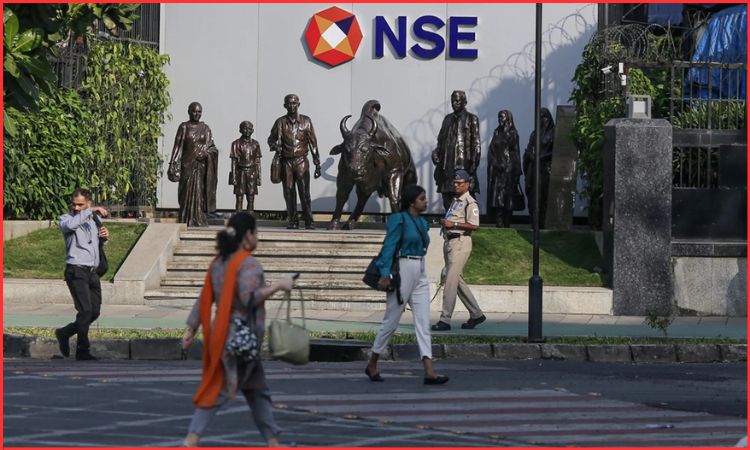
India’s capital markets are firing on all cylinders this fiscal year. According to a report released by the National Stock Exchange, 83 companies have collectively raised Rs 1.3 lakh crore till November in FY26, showcasing sustained investor appetite despite global uncertainty. The fundraising momentum reflects the deepening of India’s primary market and growing participation from both retail and institutional investors.
The mainboard IPOs and fundraising activity have been buoyed by several marquee initial public offerings that debuted during the period. Of the Rs 1.3 lakh crore raised, 41 percent came from fresh equity issuances while 59 percent came through Offers for Sale. This split highlights how companies are leveraging the primary market for capital expansion while existing shareholders are using the platform to partially or fully exit their positions.
IPO Fundraising Breakdown: Fresh Equity vs Offers for Sale
Fresh equity issues involve companies creating and selling new shares to the public, with all proceeds going directly to the firm for business expansion, new projects, and debt reduction. In contrast, Offers for Sale transactions allow existing shareholders, such as promoters and early investors, to sell their current holdings to the public. The strong 59 percent OFS contribution underscores continued liquidity events for early-stage investors in Indian startups and growth companies.
The newly listed companies now command a combined market capitalisation of over Rs 10 lakh crore, reflecting both the scale and momentum of recent listings. This valuation base demonstrates the growing depth of India’s capital markets and the ability to absorb large issuances across multiple sectors.
Retail Investor Participation in Primary Market Offerings
Investor participation patterns have shown interesting shifts during this period:
- Retail investor participation strengthened to 25 percent, signalling growing interest from individual investors in primary market offerings
- Qualified Institutional Buyers share moderated during the period, indicating a rebalancing in investor participation
- Domestic flows continue to support fundraising activity despite global macro uncertainties
- High-net-worth individuals and salaried professionals are driving incremental retail demand
This surge in retail participation reflects the rise of digital investment platforms and growing financial awareness among individual investors. The increase from 20 percent to 25 percent participation showcases how retail investors are becoming increasingly comfortable with IPO allocations.
SME Listings and Emerge Platform Growth
The NSE report highlighted sustained momentum in the SME segment through its Emerge platform. During FY26 so far, 80 companies have been listed on Emerge, raising a total of Rs 3,911 crore. Notably, 95 percent of this amount was mobilised through fresh equity, underscoring the platform’s critical role in providing growth capital to small and medium enterprises.
The Emerge platform has emerged as a game-changer for SMEs seeking capital without the stringent requirements of mainboard listings. This segment is expected to remain strong as the government pushes for easier access to capital markets for India’s backbone—the SME sector.
Regulatory Measures Strengthening India’s Listing Ecosystem
Recent regulatory measures by SEBI have further strengthened India’s listing ecosystem and investor protection mechanisms:
- Reduction in the minimum public offering requirement
- Extension of timelines for achieving minimum public shareholding for large entities
- Streamlining of migration criteria for SME companies moving from the Emerge platform to the mainboard
- Enhanced disclosure norms and risk factor communication
- Improved scrutiny on pricing and use of IPO proceeds
These regulatory reforms have created a more investor-friendly and transparent environment for both issuers and buyers. The combination of lower regulatory hurdles and greater disclosure protection is driving sustained primary market activity.
Future Outlook for Capital Raising in FY26
With over 100 companies still awaiting regulatory clearance to launch IPOs and another 88 already receiving SEBI approval, the pipeline for FY26 and beyond remains robust. Analysts expect fundraising momentum to continue, supported by consistent retail and institutional domestic participation, provided market volatility does not spike sharply.
The NSE concluded that robust fundraising activity, rising retail participation, and supportive regulatory reforms continue to reinforce the role of India’s capital markets in driving long-term economic growth and corporate expansion. For companies and investors alike, the primary market has proven to be a reliable channel for capital formation even during uncertain global times.