(Image Source: PTI)
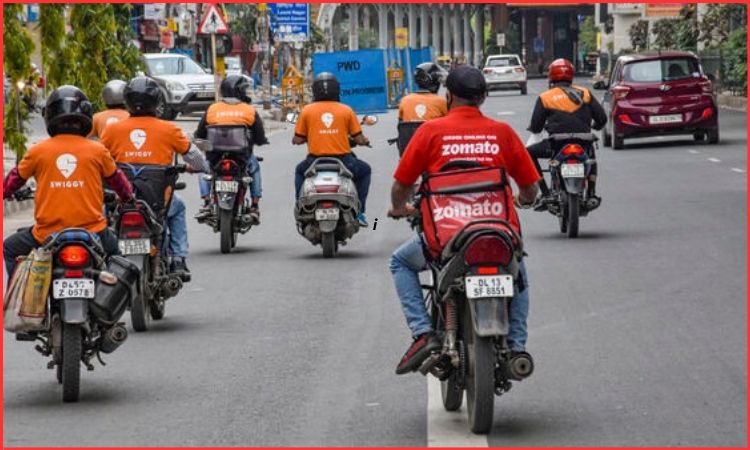
India’s food delivery platforms generated Rs 1.2 lakh crore in gross output during FY24, expanding faster than the overall economy. That’s the headline from a new study by the National Council of Applied Economic Research in partnership with Prosus, the global technology investor behind Swiggy.
The numbers are impressive. But what do they actually tell us about the sector’s health, employment impact and future direction?
The Scale Is Real
Rs 1.2 lakh crore is a staggering amount of economic output from platforms that didn’t exist 15 years ago. For context, that’s equivalent to the annual GDP of a mid-sized state. The sector has grown from nothing to becoming a measurable, consequential part of India’s services economy.
Employment in the sector grew at a compound annual growth rate of 12.3 percent between FY22 and FY24, compared to the all-India average of 7.9 percent. That means food delivery jobs are being created faster than most other job categories in the country. The sector directly employed 1.37 million workers in FY24, up from 1.08 million in FY22.Those are numbers worth paying attention to when unemployment and underemployment remain key concerns for policymakers.
The Multiplier Effect Is Significant
Here’s where the story gets more interesting. The NCAER study calculates something called the “employment multiplier.” For every direct job created in food delivery, the sector supports an additional 2.7 jobs elsewhere in the economy. That’s one of the highest multipliers in India’s services sector.
What does that mean practically? When a delivery partner earns Rs 1,000, that money gets spent on food, rent, transport and other goods and services. Shop owners, landlords and vendors all benefit indirectly. The study quantifies this: for every Rs 1 million of production in food delivery platforms, it generates Rs 2.48 million in the entire economy in income terms.
Put differently, the Rs 1.2 lakh crore in direct platform output ripples through the economy to create far more value in total.
Restaurants Are Getting Transformed
The study surveyed 640 restaurants across 28 cities and found something important: platform participation is forcing restaurants to formalize. Nearly 59 percent of restaurant owners reported expanded reach to new customers after joining platforms. Fifty percent experienced overall customer growth.
More than half added new menu items specifically to cater to platform demand. The share of restaurant revenue coming from platforms jumped from 22 percent in 2019 to 29 percent in FY24. For small restaurants and home-based kitchens, platforms have become a critical sales channel.
Beyond sales, platforms provide operational capabilities that many small restaurants never had before: accounting tools, menu optimization, advertising and onboarding support. For informal food businesses entering the formal economy, this is genuinely transformative.
The Tax Story
The study found that for every Rs 1 million of production in food delivery platforms, Rs 40,000 in taxes gets generated in the economy. That might sound small, but across Rs 1.2 lakh crore of platform production, it adds up significantly. Growing formalization through digital platforms increases tax collection, which governments can use for infrastructure and social programmes.
What About Profitability?
The study doesn’t directly address whether Zomato and Swiggy are actually profitable. The Rs 1.2 lakh crore represents gross output, not net profit. Zomato turned profitable in food delivery, but the sector as a whole still has players burning cash.
What the NCAER study does is make a case for the sector’s economic relevance beyond just whether individual companies make money. It’s creating jobs, enabling restaurant growth and generating tax revenue at a pace faster than the overall economy.
The Policy Question
The study highlights an opportunity for balanced regulation and improved worker protections in the platform economy. With 1.37 million workers and a multiplier effect of 2.7, policy decisions about gig worker benefits and rights have economy-wide implications.
For investors and entrepreneurs, the report validates what they’ve long believed: food delivery in India isn’t a temporary phenomenon. It’s an economic engine that’s reshaping how restaurants operate and how millions of people earn their livelihoods.