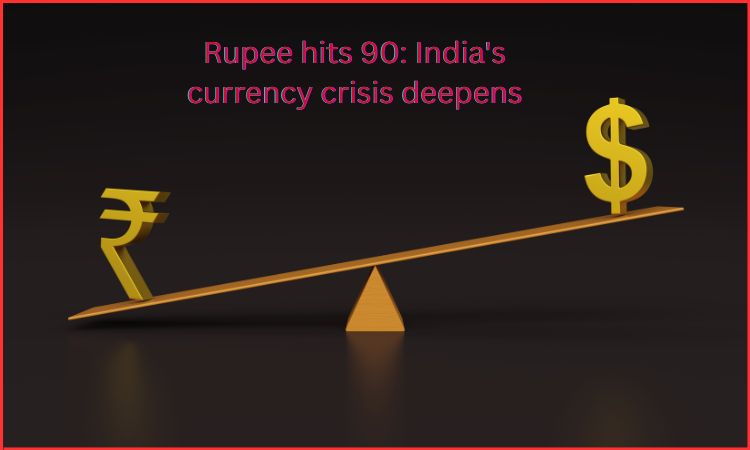
The Indian rupee finally broke through what traders had been calling the “line in the sand.” On December 2nd and 3rd, it slipped past 90 per U.S. dollar for the first time. The currency touched 90.13, meaning anyone converting rupees to dollars suddenly needed about 90 of them instead of 88 or 89. It’s the kind of threshold that sounds less dramatic to regular people than it does to economists and traders, but the implications are real enough.
What’s happening here isn’t random. The rupee has been getting hammered all year, and it’s not because Indians suddenly stopped being good at business. The real story involves three messy problems that have piled up at once.
What’s Happening
First, there’s India’s trade situation, and it’s turned genuinely ugly. October saw a trade deficit of $41.68 billion, which is basically a record. India imported $76 billion worth of goods that month while exporting only $34 billion. Part of that spike came from gold imports during the wedding and festival season, but the real worry is that exports actually fell by 12 percent compared to last year. A lot of that drop is because of American tariffs. The U.S. slapped a 50 percent tariff on Indian goods back in August, making it much harder for Indian companies to sell to their biggest overseas customer.
Think about what this means on the ground. An Indian exporter trying to sell to America suddenly can’t compete because their prices got hit with tariffs that businesses in Vietnam or Bangladesh don’t face. So they either lose sales or cut their prices so much they barely make money. Either way, they need fewer U.S. dollars than before, and that reduces demand for the currency.
Second, foreign investors have been pulling money out of Indian stock markets at an alarming rate. By November, they’d withdrawn around $16 billion, and we might hit $20 billion by year’s end. That’s serious capital flight. Why are they leaving? Indian stocks haven’t performed well this year compared to American ones. The tariff situation makes Indian companies’ earnings look shaky. And frankly, money is finding better returns elsewhere.
When you’ve got tens of thousands of foreign investors converting rupees back into dollars to pull their money out, that puts enormous pressure on the currency. It’s just basic supply and demand.
Third, there’s the unresolved trade deal with Washington. When Trump’s administration imposed those 50 percent tariffs, there was talk that this might be negotiating theater, that some deal would be done. We’re in December and that deal still hasn’t materialized. Every day it doesn’t happen, traders become more convinced the tariffs are here to stay, which means the export problem and capital flight problem are here to stay too.
The Reserve Bank of India has been fighting back, spending over $30 billion in foreign exchange reserves to try to support the rupee. At one point in October they really dug in around the 88.80 level. But lately they’ve pulled back a bit, possibly to preserve their remaining reserves and because they realize throwing money at the problem only delays it.
Traders’ Perspective
Here’s what traders are now watching out for. Some think the rupee might stabilize around 90. Others reckon it could slide further to 91 or beyond if the trade situation doesn’t improve. Technically, once you lose a psychological level like 90, the psychology itself becomes the problem. People who hedged against rupee weakness at 90 now need to decide whether to cut their losses or bet on further weakness. Sell orders tend to pile up, creating a snowball effect downward.
For ordinary Indians, this means imported goods will cost more. For Indian companies earning in rupees but with dollar liabilities, it creates real pressure. For the government, it signals that external accounts have weakened noticeably and that the current account deficit is widening.
Nobody expected the rupee to stabilize at these levels this quickly. The trade war with America has real teeth, and until something changes there, the rupee is likely to stay under severe pressure. The question now is whether it holds at 90 or tests 91. Right now, nobody seems confident which way it goes.