Ever notice how stress builds up even when nothing seems wrong? That’s your mind and body holding on to tension. Yoga offers a way to let that go naturally. Through simple movements, steady breathing, and mindful pauses, yoga quiets the noise in your head and brings your focus back to the present.
Yoga poses for relaxation work by activating the body’s natural calming response. They lower stress hormones, relax tight muscles, and ease racing thoughts. Over time, this creates space for clarity, steady energy, and emotional balance.
The best part is you don’t need to be flexible or experienced to benefit from it. Whether you are just starting or already familiar with the practice, these 10 yoga poses for inner peace can help you slow down, breathe deeply, and find calm within yourself.
The Top 10 Yoga Poses for Relaxation and Inner Peace are:
1. Savasana [Corpse Pose]
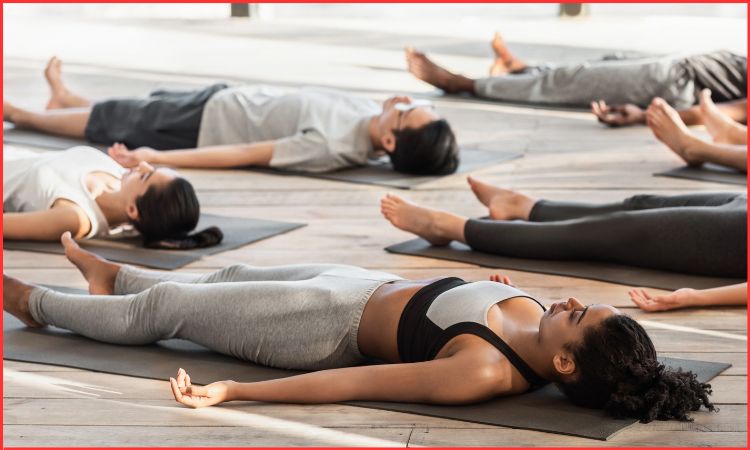
Savasana is a restorative yoga posture where you lie on your back with your arms and legs relaxed to promote deep rest and mental stillness at the end of a yoga session. It is usually performed at the end of the session to calm the mind, reduce stress and anxiety, and allow the body to process the benefits from the practice.
Benefits: Restorative effect and physical and mental relaxation.
2. Viparita Karani [Legs-Up-the-Wall Pose]
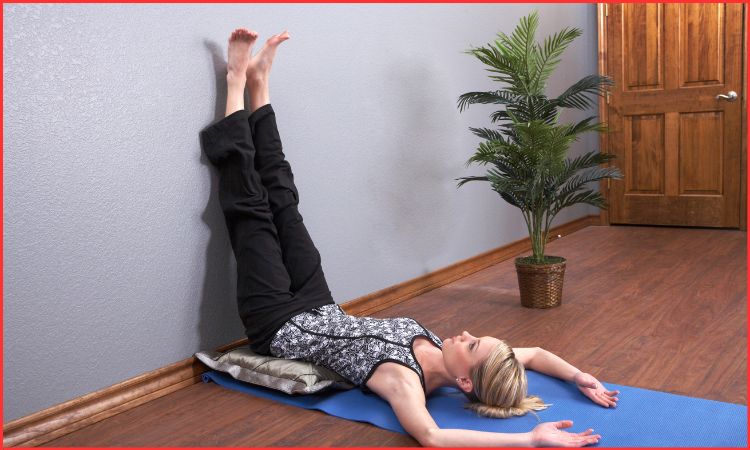
Viparita Karani is a calming, restorative yoga pose where you lie on your back with your legs extended up against a wall. It is widely practised to improve blood circulation, relieve stress, reduce anxiety, and promote restful sleep by bringing blood flow back towards the torso and heart.
Benefits: Reduces stress and anxiety, improves circulation, relieves fatigue, and enhances energy flow.
3. Balasana [Child’s Pose]
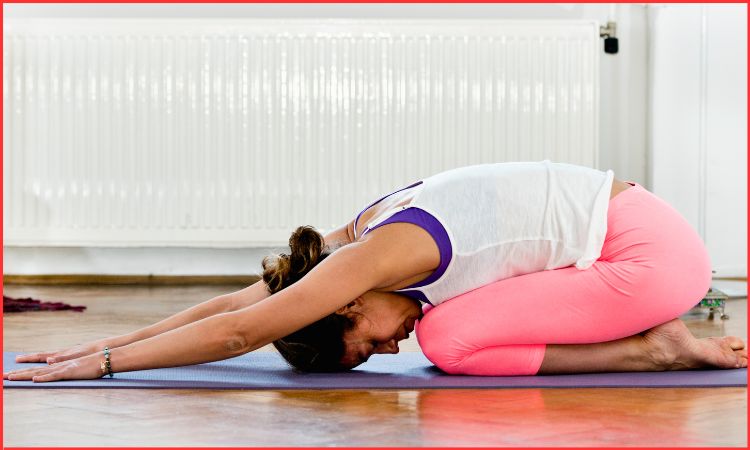
Balasana is a fundamental yoga asana that involves resting on the knees with the torso forward onto the thighs, stretching the back, hips, and ankles. It provides deep relaxation and a sense of peace. In yoga, this pose is used to calm the mind and body.
Benefits: Stress & fatigue relief, physical stretching, digestive support, mindfulness, and improved sleep.
4. Supta Baddha Konasana [Reclining Bound Angle Pose]

Supta Baddha Konasana is a supine yoga pose that involves lying on your back with the soles of your feet together and knees open to the sides. It is one of the restorative poses that gently opens the hips and inner thighs, calms the mind, reduces stress, and stimulates the abdominal organs.
Benefits: Calms the mind, stimulates organs, improves circulation and flexibility, and provides a sense of relief.
5. Sukhasana [Easy Pose]
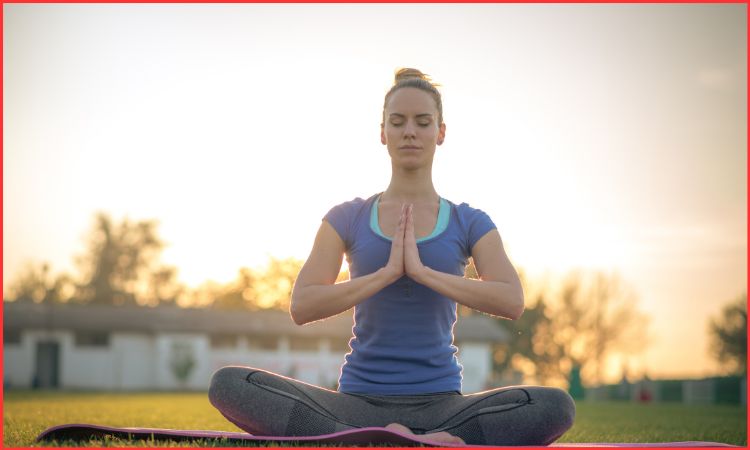
Sukhasana is a fundamental cross-legged yoga posture used for meditation and pranayama. It promotes relaxation, focus, and emotional balance. This simple pose is one of the most commonly practised to increase focus.
Benefits: Reduces stress, provides a sense of comfort and grounding, and improves concentration.
6. Makarasana [Crocodile Pose]

Makarasana is a simple yet powerful restorative posture. You lie on your stomach with your hands folded under your head, allowing the chest and belly to soften into the mat. This position encourages slow, natural breathing, releases tension in the lower back, and helps the body drop into a state of ease. Therefore, it is often used at the end of a sequence to let the nervous system unwind.
Benefits: Relaxes the lower back, calms the nervous system, improves breathing and relieves fatigue.
7. Supta Matsyendrasana [Supine Spinal Twist]

Supta Matsyendrasana is a gentle reclining twist where one leg crosses over the body while the shoulders stay grounded. The pose allows the spine to release stored tension and encourages a soft massage through the abdominal organs, which helps digestion and calms the mind. It is a great way to end a stressful day and ease into stillness.
Benefits: Soothes the spine, aids digestion, reduces stress, and improves circulation.
8. Supported Supta Virasana [Reclined Hero Pose with Bolster]
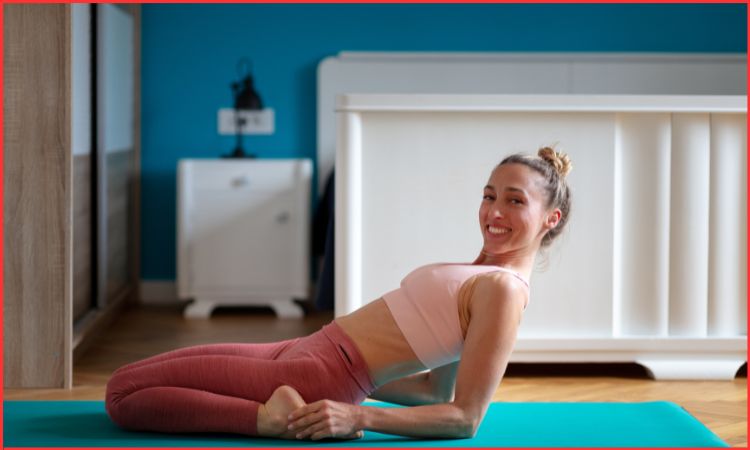
Supported Supta Virasana is a deeply restorative backbend. With a bolster or cushion supporting the spine, this pose gently opens the chest, lengthens the front body, and allows the breath to flow freely. It is especially helpful for people who carry stress in their chest and shoulders.
Benefits: Opens the chest, improves posture, calms the mind, and enhances breathing capacity.
9. Pawanmuktasana [Wind-Relieving Pose]

Source: Fitsri Yoga
Pawanmuktasana involves lying on your back and gently hugging one or both knees toward the chest. It is a simple movement, but it creates a sense of comfort and lightness in the lower back and abdomen. The steady pressure on the belly helps stimulate digestion and lets the body relax deeply.
Benefits: Relieves abdominal tension, relaxes the lower back, aids digestion, and calms the nervous system.
10. Shashankasana [Hare Pose]
Source: Yogasmic
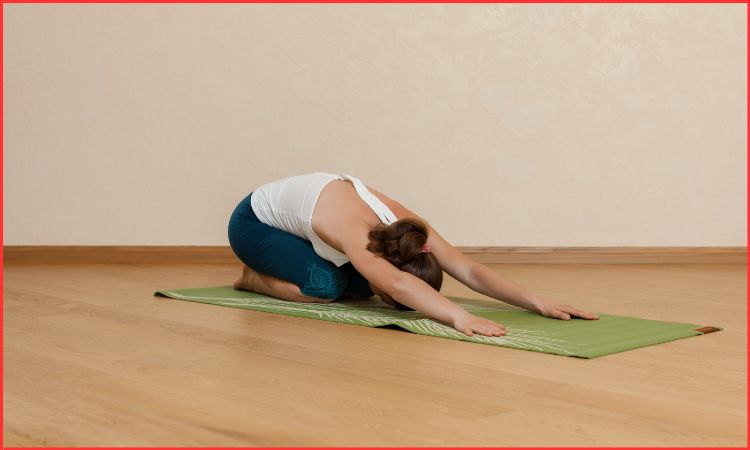
Shashankasana is a gentle forward-folding pose where you rest the torso over the thighs and stretch the arms forward. It is similar to Child’s Pose, but with a longer extension that encourages deeper breathing. This posture quiets the mind, soothes the spine, and gives an immediate sense of calm and grounding.
Benefits: Reduces stress and fatigue, lengthens the spine, encourages mindful breathing, and calms the mind.
Safety Note: Move slowly and listen to your body. None of these poses should cause pain or strain. Use pillows, bolsters, or folded blankets for support, especially under your knees, hips, or back. If you feel discomfort, ease out of the posture or adjust your position. Breathe naturally and never force a stretch.
Benefits of Yoga for Relaxation
Apart from improving physical health, yoga also deeply influences the mind and emotions. The Benefits of Yoga for Relaxation go beyond flexibility—they nurture calmness, emotional balance, and self-awareness.
- Stress Reduction: Yoga activates the body’s relaxation response, lowering cortisol levels and easing muscle tension. Simple postures combined with mindful breathing will help shift the body out of fight-or-flight mode and into a calmer state.
- Better Sleep: Gentle and mindful yoga before bedtime helps slow racing thoughts and prepares the body for rest. By releasing the built-up stress and relaxing the nervous system, these poses can lead to deeper, more restorative sleep.
- Improved Emotional Balance: Yoga offers tools to pause, breathe, and respond instead of react. Over time, this steadiness on the mat carries into daily life, which helps you manage emotions such as frustration, worry, or feeling overwhelmed with greater ease.
- Mind-Body Connection: Each of the yoga poses encourages you to observe sensations, breath, and posture. This awareness builds a stronger connection between mind and body, grounding you in the present moment rather than getting lost in distractions.
Common Mistakes to Avoid
- Holding the Breath: Many beginners unconsciously hold their breath while stretching. If you hold your breath, your body tenses up, and you lose the relaxation effect. Try to keep the breath slow and steady, inhale as you lengthen, exhale as you release.
- Moving too fast: The purpose of these poses is to slow the mind and body. If you rush from one pose to another, your nervous system does not get enough time to settle. So, stay in each posture long enough to feel your muscles soften and your breath calm down.
- Forcing the body: Relaxation yoga is not about pushing yourself into deep stretches. If you strain or ignore your comfort level, the body resists instead of letting go. Props like pillows, bolsters, or blankets help you stay comfortable so your body can truly relax.
Conclusion
Relaxation and inner peace are no longer optional; they are necessary for a balanced life. Yoga gives us a practical way to achieve both by combining gentle movement, mindful breathing, and awareness. The 10 poses you have just explored are not about perfect form or flexibility; they are about creating space for the body to release tension and for the mind to slow down. Even if you set aside just 10 to 15 minutes a day, these practices can help you feel calmer, sleep better, and approach daily challenges with more clarity. Inner peace is not something you have to search for; it is something you can cultivate within, one breath and one pose at a time.
FAQs
Q-1 How long should I stay in each pose?
Stay at least 1-3 minutes in gentle poses. For deeply relaxing postures like Viparita Karani and Savasana, you can hold them for 5-10 minutes if it feels comfortable.
Q-2 Which yoga poses should I do before going to sleep?
Poses like Balasana and Viparita Karani are especially calming in the evening. Hence, you can practice these yoga poses before sleeping.
Q-3 Do I need special equipment to start yoga?
A yoga mat is helpful, but not mandatory. While pillows, blankets, or cushions can be used at home to support your practice.