Source: eurospintos
Founded in 1866, Nestlé is a longstanding brand in the food and beverage industry. Starting in Switzerland as a small milk-based company, Nestlé has expanded to become much larger in terms of product assortment, size of business, and scale of operations in over 190 countries globally. Product innovation, high quality, and consumer centricity have been the mainstay of Nestlé’s mission of sustainable growth. Nestlé is an example of how a legacy brand can deliver long-term shareholder value through product innovation, measured growth, and an expanding global business.
This article will explore Nestlé’s beginnings, business model, global strategies/considerations, product innovations, selected financial performance metrics, challenges faced along the way, and the company’s presence and prospects in the future.
Origin Story and Early Innovation
Founding Vision of Henri Nestlé
Founded by Henri Nestlé, the company launched the first successful infant food formula, an enormous advancement that helped combat malnutrition across Europe. The dramatic shift in health correlated to infant food formula was transformational in reducing infant mortality and solidified Nestlé as a nutrition-based organization.
Nestlé’s original mission was always very simple and straightforward: to build trust and health through nutrition.
Evolution from Milk Formula to Global Food Brand
Nestlé has, over the years, expanded its portfolio from infant food to chocolate, coffee, dairy, bottled water, and packaged food. Its steadfast commitment to quality, research, and innovation enabled the company to become a global leader in many categories while still keeping health and wellness at the forefront.
Business Model and Revenue Segments
Nestlé operates on a diversified business model that promises resilience and profitability across global markets.
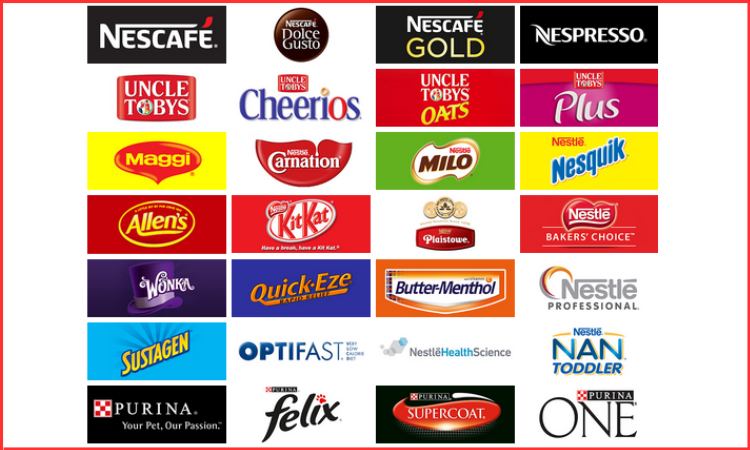
Source: Nestlé
Major Product Categories and Revenue Contribution
| Business Segment | Products/Services | Contribution to Revenue |
| Powdered & Liquid Beverages | Coffee (Nescafé, Nespresso), Milo | ~30% |
| Nutrition & Health Science | Infant formula, medical nutrition | ~15% |
| Milk & Dairy Products | Milk, yogurt, creamers, cheese | ~10% |
| Prepared Dishes & Cooking Aids | Maggi, frozen meals, sauces | ~15% |
| Confectionery & Ice Cream | KitKat, Nestlé Ice Cream | ~10% |
| Water & Other Beverages | Nestlé Pure Life, Perrier | ~10% |
| PetCare | Purina, Friskies | ~10% |
This balanced portfolio reduces dependency on any single category and supports steady long-term growth.
Core Business Strategies
Product Innovation and Brand Diversification
Nestlé’s approach to product innovation places the priority on pure, healthy, and convenient food products. Nestlé even expanded its product innovation to include meals from plants, fortified foods, and functional beverages, which are in response to changing consumer behavior.
Acquisitions and Partnerships
Nestlé’s acquisition of Pfizer Nutrition, along with its acquisition of Blue Bottle Coffee andNestlé’s ownership of the Starbucks coffee business, are also critical components to Nestlé’s ability to build its position in high-growth nutrition and premium coffee markets.
Geographic Expansion
Nestlé’s geographical footprint Nestlé operates in more than 190 countries, allowing Nestlé to tailor its portfolio of products to the preferences and tastes of consumers across the globe. This deep market penetration creates brand loyalty and a loyal consumer following.
Sustainability and Responsible Sourcing
Nestlé has the goal of carbon neutrality, and it has continued to emphasize sustainability and responsible sourcing in its commitment to capitalism with a conscience for the long term.
Innovation and Research and Development
Global Research and Development Network
Nestlé operates over 30 R&D sites around the world, making it one of the most research-focused food companies in the world.
These sites work together to develop products that will provide nutrition that is sustainable and affordable.
Focus Areas of Research
- Specific R&D investment takes place in the following areas:
- Plant-based and vegan food
- Functional and fortified drinks
- Health and personalized nutrition solutions
- Sustainable and recyclable packaging
Global Expansion & Market Presence
| Region | Market Approach | Notable Products & Strategies |
| Europe | Strong presence in Switzerland, Germany, and the UK | Maggi, Nescafé, Nestlé Pure Life |
| North America | Product diversification & acquisitions | Coffee, frozen foods, Purina |
| Asia-Pacific | Local adaptation & partnerships | Maggi noodles, KitKat variants |
| Latin America | Focus on affordability & distribution | Nescafé, bottled water |
| Middle East & Africa | Nutritional products & infant formula | NAN infant formula, Maggi |
Financial Performance 2024-2025
Nestlé exhibits a continued and solid trend of financial performance and diversification of both portfolio and across the globe. By 2024:
- Revenue: Over $100 Billion Worldwide
- Net Profit: At least $13 Billion
- Employees: More than 270,000 Employees Worldwide
- Market Capitalization: Projected at $350 billion – 2025
These key metrics and figures indicate Nestlé’s capacity for sustainable growth in a variety of segments across the market.
Challenges Faced
- Health and Nutrition shifts: Consumers desire plant-based organic options and reduced- or no-sugar alternatives. Nestlé is consistently introducing numerous product options to fulfill this consumer need.
- Sustainability and Environmental concerns: The company is under increasing pressure to innovate less carbon emissions, water use, and plastic to reduce its supply chain environment.
- Competition & Regulatory Risk: Nestlé continues to face competition from other companies, including Unilever, PepsiCo, Coca-Cola, and Mondelez, and the regulatory challenges of food safety and trade tariffs.
Future Outlook & Strategic Directions
Source: europawire
Investing in Plant-Based and Sustainable Products
Nestlé is actively and intentionally broadening its plant-based food, alternative protein, and vegan products portfolios to meet anticipated greater consumer demand for ethical, healthy, and responsibly sourced subcategories of nutrition products in the convenience food category.
Digital Transformation and E-Commerce Growth
Nestlé is in the process of altering its distribution and marketing by broadening a mix of channels that includes, but is not limited to, direct-to-consumer and e-commerce models.
Commitment to Responsible Sourcing
Nestlé is providing continued emphasis on sustainability in ongoing dialogue related to fair trade, responsible sourcing, and appropriate transparency to consumers related to food product sourcing and within the food supply chain.
Functional and Health-Focused Innovation
Innovation in convenience food is expected to prioritize extending food and beverages to nutrition supplements and/or functional supplements in support of healthy and wellness-centered consumption.
Conclusion – Nestlé’s Global Leadership in the Food and Beverage Industry
Nestlé’s journey exemplifies innovation, strategic expansion, and the ability to adapt globally. By prioritizing consumer needs, research and development, sustainable development, and a global footprint, Nestlé has built a solid diversity. This transformational ability to adapt to changing consumer trends while staying connected to a core mission of nutrition assured Nestlé’s continued relevance as a leader in the food and beverage sector for years to come.
FAQs
Q1. What is Nestlé’s overarching purpose?
Nutrition, health, and wellness products across several food and beverage businesses.
Q2. How does Nestlé innovate and develop products?
Nestlé conducts research and development in global research and development centers on the needs of consumers, as well as analyzing food trends to create healthier and sustainable options.
Q3. Where are Nestlé’s key markets located?
Europe, North America, Asia-Pacific, Latin America, and the Middle East & Africa.
Q4. What is Nestlé doing to engage in sustainability?
Reduce emissions, sustainable sourcing, water conservation, and environmentally friendly packaging.
Q5. What are Nestlé’s most recognized brands?
Maggi, Nescafé, KitKat, Purina, NAN infant formula, and Nestlé Pure Life water.