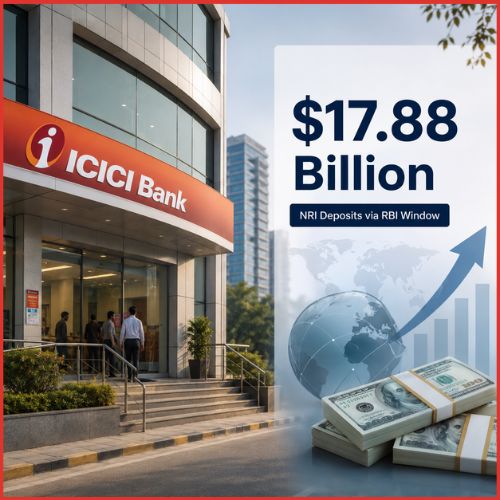
In the constantly evolving Indian banking industry, one institution continues to shine above the rest – ICICI Bank. Indian banking was dominated for decades by public sector banks. However, with the economic reforms of the 1990s, a new dawn arose whereby private banks within India were allowed to be established.
ICICI Bank was a leader in this new wave that transformed its identity from a development financial institution into a powerful commercial banking institution. ICICI Bank’s growth journey has become the yardstick for private banks. It is not only a story of growth in scale but rather the success behind operating a lean, technology-enabled business model that offers its customers value.
How did ICICI Bank become India’s Leading Private Sector Bank? The answer lies in its strategic ICICI Bank business model, its focus on retail and corporate banking, and its proactive role in adopting digital banking within India. This article will take a look at the ICICI Bank history by reviewing the major ICICI Bank milestones and achievements in its path toward leadership.
Origins: The History of ICICI Bank
The story of ICICI Bank’s past is an amazing story of evolution. It began life in 1955 as the Industrial Credit and Investment Corporation of India (ICICI), a developmental financial institution with the core purpose of providing long-term project financing to Indian industries. This established a strong foundation for their corporate banking depth experience.
The ICICI Bank success story began with India’s economic liberalization in the 1990s. With this backdrop, IMCI realised that ICICI needed to become a commercial bank, so in 1994, ICICI established ICICI Bank. This was a huge turning point for ICICI, as it entered retail banking for the first time, and could now service individual clients.
The Great Transformation: From DFI to Universal Bank
The reverse merger of ICICI and ICICI Bank in 2002 was a pivotal moment for ICICI Bank. This strategic decision led to a consolidated financial institution, which became a universal bank. This transformation of ICICI Bank empowered a wide spectrum of financial services in India – banking, insurance, asset management, etc., from a single entity.
It was a wise decision to combine the bank’s retail banking market share with the parent company’s substantial corporate banking portfolio. It allowed ICICI Bank to cater to a full spectrum of customers from the largest corporations to individuals saving. By using long-standing institutional expertise for this market expansion, bank management has shown visionary strength.
A Digital First Approach: The Engine of ICICI Bank’s Growth Journey
ICICI Bank’s growth journey has been closely intertwined with its technology adoption in banking. The bank was one of the early digital banking pioneers and was responsible for many innovations that transformed the banking sector in India. The bank was an early provider of internet banking and was also one of the first in mobile banking with its iMobile application.
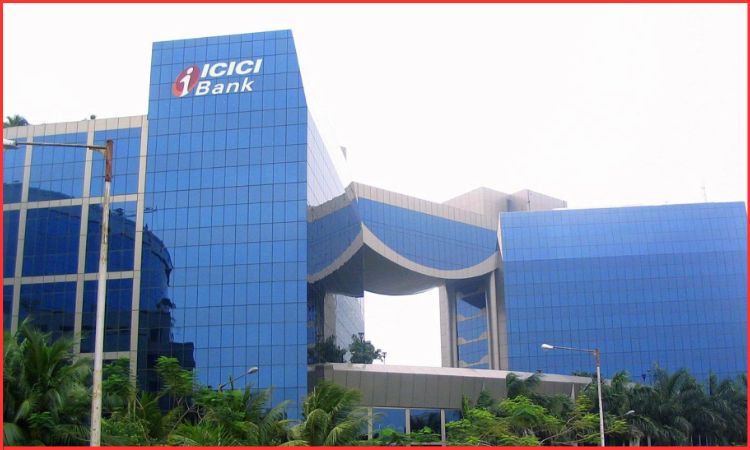
One of the primary enablers of digital adoption among customers has been the bank’s ICICI STACK- a suite of digital products. The ICICI STACK suite of products offers financial solutions to customers over digital platforms and provides a seamless banking experience, which in turn has facilitated greater growth.
One of its transformational initiatives that can be used through the ICICI STACK is rationalizing the entire loan underwriting process and conducting instant approvals, which has made banking and borrowing more accessible to customers. ICICI Bank is a great example of a bank that leverages technology in the banking sector to vastly improve its competitive advantage.
ICICI Bank Business Model
ICICI Bank’s approach combines elements of traditional banking with a technology-first approach to create profitable growth. The bank takes a 360-degree customer-centric view of serving customers across their “financial journey.”
The Bank’s Business Model is Composed of 3 Key Pillars:
- Diversified Portfolio – ICICI Bank has operations in both retail and corporate banking. The Bank’s retail banking business offers granular retail products such as loans and credit cards to individuals, while the corporate segment of the Bank has a full range of services for businesses of all sizes, with a focus on Small to Medium Sized enterprises (SMEs) and Large Corporations.
- Digital Transformation – ICICI Bank has introduced a “Bank-Tech” model and uses digital platforms such as the ICICI STACK and iMobile pay app to serve customers with a paperless banking experience. The Bank’s omni-channel strategy focuses on using physical branches while also delivering digital enhancements, which ultimately improve customer experience and productivity.
- Sound Risk Management Framework – The bank has a risk management framework that is nimble and real-time, which works to ensure that growth in the bank’s overall portfolio of assets is appropriately managed and sustainable while focusing on profitability and controlling risk, and maintaining a healthy balance sheet.
Sources of Revenue
The Company’s revenues come primarily from two sources:
First, Net Interest Income (NII), which is the difference between interest earned on loans and interest cost incurred on deposits.
Second, Non-Interest Income, which is made up of fees for various services and revenues from the bank’s subsidiaries, including ICICI Prudential Life Insurance.
Key Milestones of ICICI
| Year | Milestone |
| 1955 | The Industrial Credit and Investment Corporation of India (ICICI) was formed. |
| 1994 | ICICI Bank is incorporated as a subsidiary of ICICI Ltd. |
| 1999 | Becomes the first Indian company to list on the New York Stock Exchange (NYSE). |
| 2001 | Acquires Bank of Madura. |
| 2002 | The reverse merger of ICICI Ltd. with ICICI Bank is completed. |
| 2004 | Launches its mobile banking services, iMobile. |
| 2010 | Acquires the Bank of Rajasthan. |
| 2016 | Adopts blockchain technology for transactions. |
| 2020 | Launches ‘ICICI Stack’, a comprehensive digital platform. |
| 2024 | Becomes the sixth Indian company to cross a $100 billion market cap. |
The Function of ICICI Bank Leadership
The leadership at ICICI Bank has played a pivotal role in the bank’s achievements. Leaders, with a vision, provided a blank slate model of the bank, from being a state-sponsored institution to the development of a private bank based on market-driven banking principles. The leaders’ own ability to see trends in the market and invest in the future became a hallmark of ICICI Bank throughout the phases of development for the institution.
Through a commitment to establishing a nimble institution based on innovation and customer-centricity, the leaders helped ensure that ICICI Bank was able to respond quickly and effectively. The leaders have also maintained a commitment to the continuous training of their employees‘ skill sets and building organizational capabilities.
The leaders also emphasized the Agile Risk Management approach. They believe that risk management must be dynamic, data-driven, and future-oriented to navigate the ever-evolving landscape. They emphasize their ability to identify and manage risk proactively, in order to ensure solvency and continued success.
The importance of capital preservation and the prudence of risk-taking among its borrowers is one of the features of ICICI Bank leadership. They espouse their notion of ‘Return of Capital is Paramount’. This concept of expanding the loan book in granular capacity emphasizes potential reward to risk, an important premise of the ICICI Bank business model.
ICICI Bank expansion and Market penetration
The expansion strategy of ICICI Bank has been diverse. The bank continued to add to its physical network of branches, while also trying to penetrate new markets by utilizing digital channels. For instance, the merger with Bank of Madura in 2001 allowed the bank to substantially grow the size of its branch network and customer base, particularly in South India.
They have also merged their retail and rural business units to take advantage of the growing opportunities in non-metro locations. This consolidation indicates the bank’s desire to expand its business in order to reach a greater set of customers.
By March 2024, the bank’s rural portfolio had increased to ₹1,024.46 billion, indicating a year-on-year growth of 17.2%. This increase shows its success in serving the range of requirements in rural India. The bank has provided a multitude of products tailored for farmers, dealers, and micro-entrepreneurs.
This focus on urban, as well as rural, markets allows ICICI Bank to serve a wide variety of the population. The large scope of their market penetration is an important factor in ICICI Bank’s status as a leading private sector bank in India.
Strategic partnerships and collaboration have also facilitated the ICICI Bank expansion efforts.
Conclusion
As we consider the future, ICICI Bank is surely on the pathway of growth. The bank is still investing in the future technological enhancement of the banking sector by designing banking relevance with artificial intelligence and data analytics, with the aim of customizing banking solutions for the customer. The emphasis of rural markets is also core to the bank’s strategy for increased relevance.
ICICI Bank’s innovation and advancement are core to the strategy. The bank is continuously developing new innovative products in digital lending, wealth management, and insurance. By focusing on growth to stay advanced and ahead in the banking sector of India.
The story of ICICI Bank is a compelling example that proves success does not equate to size, relevance, trust, and continuous innovation. The success of the ICICI Bank serves as a valuable plus viable benchmark for other financial institutions. Based on ICICI Bank’s strong foundation and trajectory towards continuous improvement and success, ICICI Bank is not just participating but leading the future of financial services in India.
FAQs
1. Who is ICICI Bank’s present CEO?
The Managing Director and CEO of ICICI Bank is Sandeep Bakhshi.
2. Is ICICI Bank operating internationally?
ICICI Bank has offices across the world with branches, subsidiaries, and representative offices.
3. What is ICICI Bank’s latest Net Interest Margin (NIM)?
In FY 2025, the consolidated NIM was recorded at 4.32%.
4. ICICI Bank’s recent digital offerings?
Recent offerings include SmartLock, iFinance, and UPI for NRIs.
5. What is one of ICICI Bank’s recent awards?
ICICI Bank was named “Best Retail Bank in India” this year by Euromoney.
Also read- Top Banks in India by Market Caps