With over 30 crore active policies and assets exceeding ₹54 lakh crore, today, LIC has become a billion-dollar insurance empire. What started in 1956 as a nationalised life insurance corporation, LIC, has grown into a trusted household name by offering financial security to millions of Indians. From pioneering rural outreach to integrating digital innovation, LIC has consistently adapted to changing times while maintaining its core mission: making life insurance accessible and reliable for every Indian. Explore this article to trace back LIC’s remarkable, successful journey along with its CSR initiatives and future outlook.
LIC’s Business Profile
| Founded | 1 September 1956 |
| Industry | Financial Services |
| Headquaters | Mumbai, Maharashtra |
| CEO | R. Doraiswamy |
| Market Cap (October 8, 2025) | ₹5,77,251 crore (According to Groww) |
Early History

Source: Outlook Money
Insurance in India began in the 19th century, catering to European commodities and lives, while excluding Indians. Over time, Indian reformers pushed for fairer or equal treatment, which gave rise to Indian companies like the Bombay Mutual Life Assurance Society that initiated insuring Indian lives at normal rates. By the 1930s, insurance in India had expanded rapidly, with hundreds of companies operating across the country.
Establishment of LIC
In 1912, the Life Insurance Companies Act and the Provident Fund Act were passed. But the act discriminates between foreign and Indian companies on many accounts, putting the Indian companies at a disadvantage. Therefore, the demand for nationalisation of the life insurance industry was repeatedly made. It gathered momentum in 1944 when a bill to amend the Life Insurance Act 1938 was introduced in the Legislative Assembly. Finally, much later, on 19 January 1956, after independence, the life insurance in India was nationalised.
At that time, over 200 insurance entities were active. Nationalisation of the LIC happened in two phases: first, taking over management, and then ownership. On 19 June 1956, the Parliament of India passed the Life Insurance Corporation Act, and thus, on 1 September, the Life Insurance Corporation of India [LIC] was created.
The LIC was created to spread life insurance much more widely, and in particular to the rural areas, with a view to reaching all insurable persons in the country by providing them with adequate financial cover at a reasonable cost. They began with a strong nationwide presence and quickly planned expansion to reach every district.
LIC’s Growth Journey
Source: Business Standard
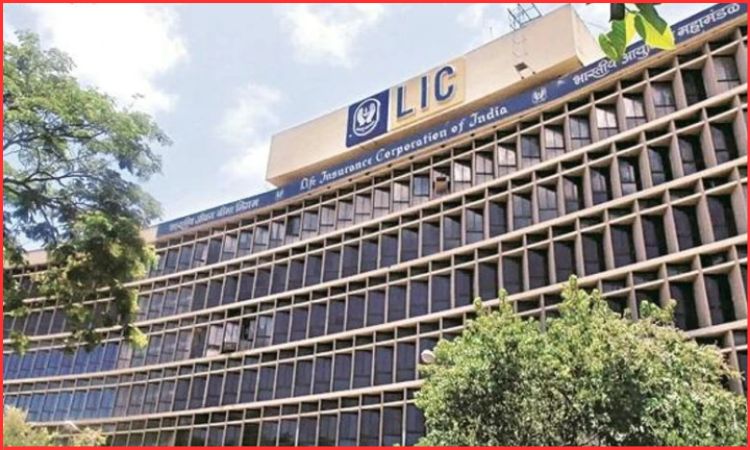
Reorganisation of Life Insurance Corporation took place, and large numbers of new branch offices were opened. As a result of reorganisation, servicing functions were transferred to the branches, and branches were made accounting units. Within two decades, their new business grew from ₹200 crore to over ₹2000 crore. By the mid-1980s, LIC crossed the ₹7000 crore sum assured on new policies.
In 2005, LIC issued over one crore new policies that marked a historic milestone in its journey. The milestone deepened their dominance when private and foreign players began entering the aggressive insurance industry. While companies like ICICI Prudential and HDFC Standard Life started gaining urban customers, they maintained their lead with unmatched rural reach and trust built over decades. By 2010, they had held more than 70% of India’s life insurance market share.
Digital Transformation & Innovative Products
Source: Life Insurance International
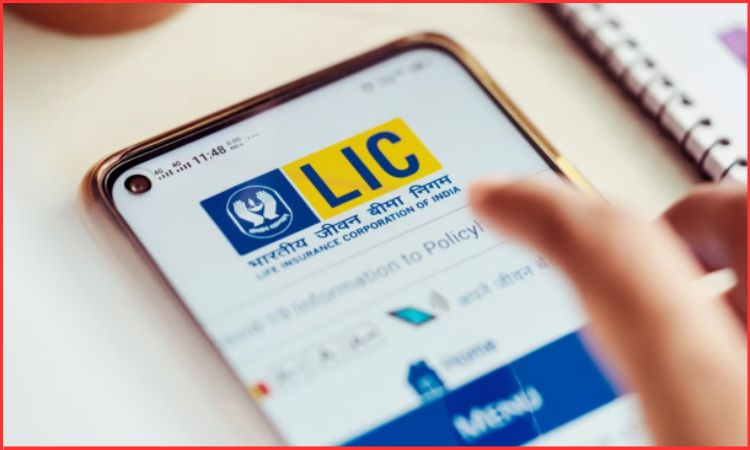
Between 2011 and 2015, they started adopting digital tools to enable online premium payments and banking tie-ups to improve customer convenience. To bring services closer to people, they launched satellite offices, IVRS and digital initiatives such as ECS and ATM facilities that made policy servicing faster and more accessible.
In 2016, LIC crossed the landmark of 30 crore active policies. They also introduced innovative schemes like Jeevan Pragati and Jeevan Umang for long-term savings with protection. By 2017, they functioned with 2048 fully computerised branch offices, 113 divisional offices, 8 zonal offices, 1381 satellite offices and the corporate office.
During the pandemic, LIC played a crucial role by offering uninterrupted services through online channels and claim settlements for COVID-related deaths. Their performance in the crucial time reinforced public trust in them.
LIC issues IPO
Source: Business Today
One of LIC’s biggest turning points came in May 2022, when they launched India’s largest Initial Public Offering [IPO], raising ₹21,000 crore. This made LIC more accountable and transparent while still being majorly owned by the Government of India. With growing, intensified competition, LIC maintained its leadership by focusing on digital service, rural penetration, and customer-first policies. As of 2025, they continue to issue over 1 crore new policies annually and are growing with scale, trust, and accessibility, with their strongest assets of ₹54.52 lakh crore [March 2025].
On 20 January 2025, LIC was credited with a Guinness World Record for the campaign ‘Mad Million Day’ by selling the most life insurance policies in a single day. The achievement highlighted the productivity of the agent and their mission to offer financial protection.
Financials
In Q1 FY26, LIC earned a profit after tax of ₹10,986 crore, an increase of 5.02%. Their Asset Under Management [AUM] grew to ₹57.05 lakh crore by 6.47% growth. Their solvency also improved from 1.99 in Q1FY25 to 2.17 in Q1FY26.
However, their claim settlement ratio fell to 94.59% and individual policy sales fell to ~15%. The rapid decline is also observed in their sales from bacassurance and the alternate channel by 59.11%. The decline highlights the weakness in newer distribution formats, and also when competitors are expanding efficiently.
LIC’s CSR [Corporate Social Responsibility] Initiatives
- LIC runs scholarship programs, such as the LIC Golden Jubilee, for underprivileged students, while also supporting schools and educational institutions through infrastructural facilities. They also sponsor vocational training programs to enhance efficiency in employment.
- In healthcare, they have contributed to medical research, hospital infrastructure, and organised health camps across rural and urban areas through the LIC Golden Jubilee Foundation.
- They have implemented initiatives to encourage financial literacy among women, promote entrepreneurship, and support the career growth of female employees within the organisation.
- During the natural disasters and emergencies, they have stepped in with financial aid, relief materials, and rehabilitation support.
Recent Awards & Recognition [2023-25]
- In 2024, LIC was recognised as India’s Leading Life Insurance Company by Dun & Bradstreet.
- In 2024, they were also credited with the Excellence in Women Empowerment and the Best Performance in Claims Settlement by Navabharat.
- In 2023, FICCI recognised them with the FICCI Special Jury Award for their immense contribution to the industry and society.
- In 2022, they were recognised with the Digital Transformation Award, the Customer Service Excellence Award and the Insurance Company of the Year in the life insurance category at the National Awards in BFSI.
- In 2024, LIC was credited with the One Decade Excellence in CSR Award at the Indian CSR Excellence Awards.
- The Team Marksmen Daily credited them with the Most Preferred Workplace for 2024-25.
- Their innovative product, ‘Jeevan Utsav,’ was recognised at the 13th Edition of Finnoviti Conclave Awards 2024 by Banking Frontier.
- Quoraverse have recognised them with the Honour Roll for Most Impactful Campaign.
- Veve also recognised them with the Great Indian BFSI Mobile Campaign Award of 2024.
Future Outlook
Today, LIC is actively integrating technology to improve customer experience, streamline operations, and introduce innovative insurance products. However, the industry is becoming competitive day by day, so to stay ahead, they are focusing on niche segments, customised products for millennials and younger customers, while expanding globally. For this, they are targeting strategic partnerships, customer-centric campaigns and diversification into health and pension products.
Conclusion
Over nearly seven decades, LIC’s journey has evolved from a government-managed insurance monopoly into a dynamic, customer-centric organisation that embraces technology and innovation while staying true to its social mission. Their unmatched rural reach, robust CSR programs, and continuous product innovation have solidified their position as India’s life insurance leader. Hence, with their clear focus, LIC continues to offer financial security to millions of policyholders.
FAQs
Q-1 When was LIC founded?
LIC was founded on 1 September 1956 after the nationalisation of the insurance sector in India.
Q-2 How many policies does LIC currently have?
LIC has over 30 crore active polices across India.
Q-3. How did LIC become so successful?
LIC became successful by focusing on trust, strong rural outreach, affordable insurance plans, and continuous innovation in customer service and digital transformation.
Q-4. What makes LIC different from other insurance companies?
LIC stands out for its wide rural presence, high claim settlement ratio, customer trust, and innovative products designed for every income group.