Today, IndiGo is recognised as the dominant leader in India’s aviation industry, holding the largest market share of around 64% as of April 2025. What began as a bold idea in 2005 has now grown into the country’s largest airline, widely known for its affordability, reliability, and relentless expansion. IndiGo stunned the industry by ordering 100 Airbus A320S before flying its first flight. In a few years, it became the first Indian airline to carry over 100 million passengers in a single year. Hence, their journey is nothing short of remarkable. Read this article to explore the growth story of IndiGo from the beginning as a startup to the market leader, with its financials and achievements.
IndiGo Airlines’ Business Profile
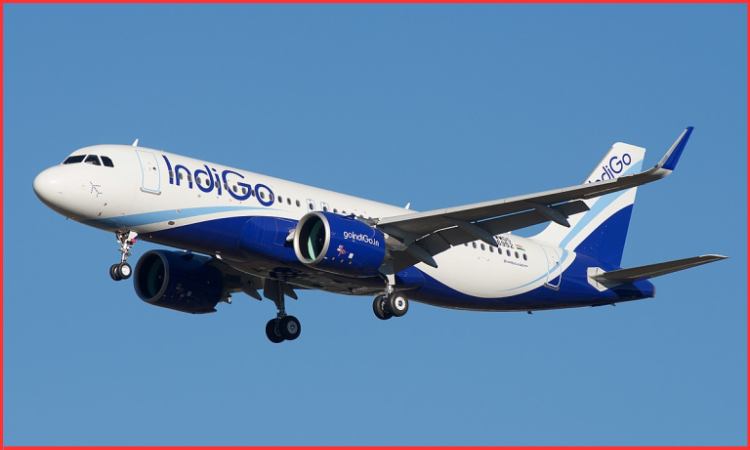
| Founded | 2005 |
| Headquarters | DLF Corporate Park, Gurgaon |
| Industry | Aviation Industry |
| CEO | Pieter Elbers |
| Parent Company | InterGlobe Aviation |
Establishment of IndiGo Airlines
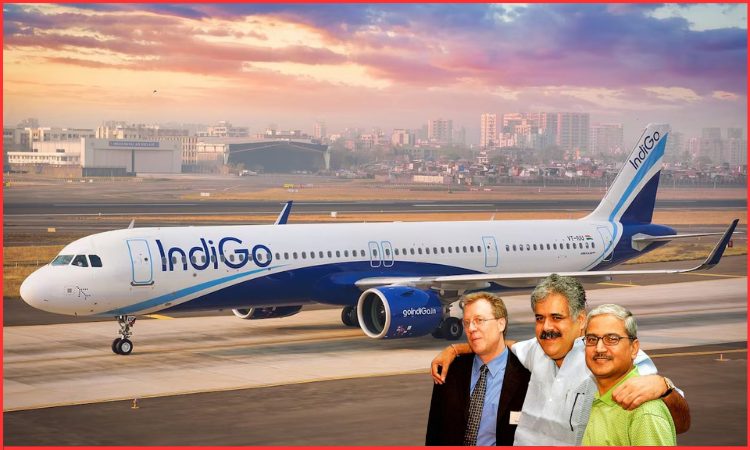
In 2005, Rahul Bhatia, head of InterGlobe Enterprises and Rakesh Gangwal, a US-based expatriate Indian, founded IndiGo as a private company. They established this airline to create a dependable, budget-friendly, and on-time airline in India’s aviation market.
InterGlobe had a 51.12% stake in IndiGo, while Rakesh’s Virginia-based company, Caelum Investments, held a 47.88% stake. In June 2005, they placed a firm order for 100 Airbus A320-200 aircraft. On 4 August 2006, they commenced operations with a service from New Delhi to Imphal via Guwahati.
Early Growth & Rapid Expansion
In April 2007, IndiGo carried its first million passengers. By April 2009, the number had grown to over 10 million. In the same year, they received the delivery of their 25th aircraft. In 2010, they surpassed Air India and became the third largest airline in India with a passenger market share of 17.3%, after Kingfisher Airlines and Jet Airways.
In 2011, they ordered 180 Airbus A320S for $15 billion. That year also marked their fifth anniversary, which made them eligible to launch international flights. On 1 September 2011, their first international service was launched between New Delhi and Dubai. In February 2012, they received delivery of their 50th aircraft. For the quarter ending March 2012, IndiGo became the most profitable airline in India and the second largest airline in India in terms of passenger market share.
Finally, in August 2012, they became the largest airline in India, surpassing Jet Airways in terms of passenger market share. By December 2012, they crossed the 50 million-passenger mark.
Market Leadership & Fleet Growth
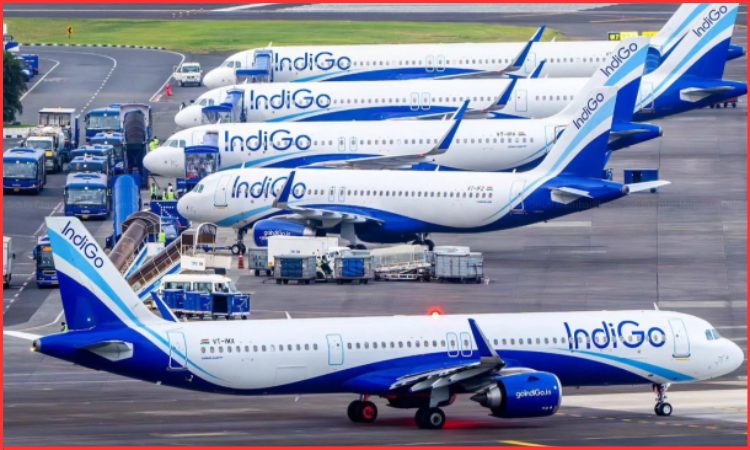
Source: Aviation A2Z
At the start of 2013, they were the second fastest-growing budget airline in Asia, behind Indonesia’s Lion Air. However, in February 2013, the Civil Aviation Ministry announced that it would allow IndiGo to take delivery of only five aircraft that year. Hence, they planned to introduce low-cost regional flights by setting up a subsidiary.
However, they took permission from the ministry to acquire four more aircraft. They got a total delivery of nine aircraft in 2013. In November 2014, they received their 100th aircraft. This completed IndiGo’s initial 100 aircraft order, placed in 2005. By March 2015, they had flown a total of 100 million passengers since inception. In August, they placed another order for 250 Airbus A320neo aircraft worth $26.5 billion, which made it the largest single order in Airbus history.
On 27 October 2015, they opened their IPO worth ₹3,018 crore. Later in 2019, they placed an order for 300 Airbus A320neo aircraft worth ₹2.3 lakh crore, again breaking their record.
In December, they became the first Indian airline to operate 1500 daily flights. They also became the only Indian airline with a fleet exceeding 250 aircraft. In 2020, their fleet increased to 262 aircraft and over 75 million passengers were carried by them. In January 2023, they became the first Indian airline to have a fleet of more than 300 aircraft.
In 2023, they inducted their first wide-body aircraft, a wet-leased Boeing 777-300ER. That same year, they placed an order for 500 Airbus A320neo family jets, setting another record for Airbus orders. They also carried more than 100 million passengers in just one calendar year, making them the first Indian airline.
Global Partnerships
In 2024, they officially entered the wide-body space by placing an order of 30 A350-900s for $5 billion, which is expected to commence by 2027. To meet rising demand and offset supply-chain delays, they entered wet-lease agreements: Six Boeing 787s from Norse Atlantic, Boeing 737 MAX aircraft from Qatar Airways and Corendon Airlines, and additional planes from Smartlynx and Freebird.
As of 2025, around 41,000 employees are working in IndiGo, and they operate a fleet of 434 aircraft. They have carried over 118 million passengers with more than 2300 daily flights operating. They operate to 127 destinations, 91 in India and 36 abroad.
Penalities & Operational Incidents
In July 2023, the Directorate General of Civil Aviation imposed a ₹30 lakh fine on them for certain systemic deficiencies concerning documentation of operations, training, and engineering procedures.
In March 2025, the Income Tax Department imposed a penalty of ₹944.20 crore on its parent company, InterGlobe Aviation, for the assessment year 2021-22.
On 21 May 2025, their flight 6E2142 from Delhi to Srinagar encountered turbulence when a sudden hailstorm struck it mid-air, causing panic among those on board. Thus, the pilot declared an emergency and landed the aircraft at the Srinagar International Airport without any reported injuries. However, the aircraft suffered visible damage and was declared Aircraft On Ground for urgent repairs.
Financials of IndiGo Airlines
The FY25 received a total income of ₹840,982 million with EBITDA reaching ₹212,520 million. The Profit After Tax [PAT] stood at ₹72,584 million despite higher expenses.
The Q1 of FY26 delivered total income of ₹215,426 million, while their expenses were recorded at ₹192,319 million. Hence, EBITDA was calculated at ₹57,386 million with a 28% margin. However, the PAT stood at ₹21,763 million with a margin of 10.6%.
How did IndiGo become a market leader?
- Low-cost Model: All aircraft of IndiGo are of the Airbus A320 family. They sign bulk deals with Airbus to reduce unit costs. They target a 20-minute turnaround so each aircraft can stay in the air for about 12 hours daily. Hence, they use these strategies to reduce their expenses.
- Focus on Cost Efficiency: Operating the same type of aircraft has resulted in reduced training, maintenance, and spare parts costs. High aircraft utilisation and fuel-efficient models have pushed IndiGo to achieve lower unit costs than its competitors.
- Operational Reliability: IndiGo was established to operate on-time flights. For business travellers, on-time flights have mattered more than in-flight luxuries. Thus, this reliability and operational efficiency have turned into trust and loyalty.
- Financial Discipline: IndiGo has consistently focused on profitability. Even when fuel costs spike or competition gets intense, they prioritise maintaining profit margins and avoid further expansion into unprofitable segments.
- Smart International Expansion: IndiGo began building its international presence in the Middle East and Southern Asia. They placed an order for A321XLRs for longer-range aircraft to remain a low-cost player globally.
Recent Awards & Achievements
- In November 2023, IndiGo received the Asia Environmental Sustainability Airline Award by CAPA.
- For the 3rd consecutive year, they were awarded the World’s Youngest Aircraft Fleet in the 100+ aircraft category by ch-aviation.
- In 2024, they were recognised as the Airline of the Year at the Air Transport Awards in Greece as well as by CAPA at the Global Aviation Awards for Excellence.
- In June 2025, they ranked #3 among the World’s Best Low-Cost Airlines and also won the Best Airline in South Asia at the Skytrax World Airline Awards.
Future Plans of IndiGo
IndiGo is targeting 10 new international destinations in FY26 to reach a total of 50 international cities. They are increasing the number of wide-body aircraft to support long-haul flights to Europe, North America, and Australia. They are also planning to introduce business class on key domestic routes by the end of 2025.
Conclusion
IndiGo’s growth story proves that consistency beats chaos in the aviation business. While many of their competitors struggled with costs, regulations, and over-expansion, IndiGo became the market leader with a simple formula: keep costs low, stay on time, and scale smartly. Today, with a fleet of over 430 aircraft and recognition as one of the world’s top low-cost airlines, IndiGo has carved a strong position in global aviation.
FAQs
Q-1 Who is the current CEO of IndiGo Airlines?
As of 2025, Pieter Elbers is the CEO of IndiGo Airlines.
Q-2 How many flights does IndiGo operate daily?
IndiGo operates more than 2300 daily flights.
Q-3 What makes IndiGo the market leader in India?
Low-cost model, operational efficiency, disciplined financial strategy, and aggressive fleet expansion make IndiGo the market leader in India.