Source: Mint
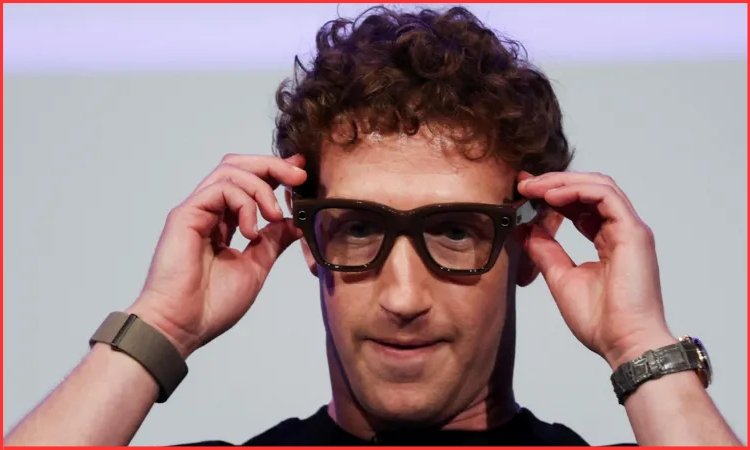
Meta has rolled out a new collection of smart glasses in a push to help bring artificial intelligence into everyday use. This past September 17, at its Connect 2025 event, CEO Mark Zuckerberg introduced the $799 Ray-Ban Display ‘Hypernova’ glasses along with a neural wristband that enables users to manipulate the augmented reality glasses using small hand movements.
Various snippets of the demo that were unsuccessful became widely circulated online, and now many are questioning if the problem experienced in the demo was really a connection issue. Some people posting on social media posts also expressed that there are privacy issues with these types of devices.
A Security Flaw
The major announcement was not without its bumps. During the live demo, Zuckerberg demonstrated the wristband’s capability to send a message based on gentle finger movements. This part went as planned. However, in his attempt to start a video call through hand gestures, he struggled with the system failing to recognize his gestures multiple times, even prompting his colleague, Meta’s CTO Andrew Bosworth to join the stage and joking about the WiFi.
Online, clips from the unsuccessful demonstration spread quickly, with many wondering aloud if it was truly just an issue with the internet connection. Others on social media raised potential privacy concerns regarding the device.
Another demonstration did not go so well, either. Food creator Jack Mancuso asked the AI assistant to help him make a Korean-inspired steak sauce. Instead of providing step-by-step instructions, the AI assistant decided to fast-forward the cooking process, telling Mancuso that he had already mixed one item and that he should add some more. Mancuso asked several times what he should add first, but the AI assistant continued ambivalently instructing him on what he should do another time.
What Testers Found Favorable
Even with the glitches, early testers were impressed with the glasses in some areas:
The display was reported to be bright and vivid, even in daylight.
The brain-computer wristband impressed testers, who indicated gesture controls felt fresh and functional.
Whisper-function voice commands and no light leakage, added to the glasses’ polished feel and social acceptability.
The Boundaries
The glasses are obviously limited in a few clear ways:
The display is 2D at its best and only shows up in one eye, instead of offering a fully immersive 3D or holographic experience.
Initially, glasses will only work with simple applications like messaging, maps, music, and photography/videography.
Some early users mentioned it was too similar to Google Glass (2013) since Meta’s design was better, more intuitive and used AI, but the experience still felt shallow.
The Conclusions: The new smart glasses and neural wristband from Meta illustrate developments in wearable technology. The design is attractive, the display performs well, and gesture controls feel like a new feature.
The challenges encountered on stage, the lack of advanced apps, and limited display means the glasses aren’t capable of replacing smartphones yet. As some of the testers said, these glasses seem like “what Google Glass promised—but not quite there yet.”