Source: Bernard Marr
Nowadays, customers expect faster, smarter, and more personalised interactions from businesses. One of the biggest reasons behind this shift is artificial intelligence in business. AI has transformed how industries connect with their customers, solve problems, and even predict future needs. From simple queries to predictive support, businesses are now using AI to create meaningful experiences rather than just routine interactions.
This article explores how AI is shaping customer experience, its advantages, how different industries are applying it, and real-world examples of companies leading the way.
What is the use of AI in Customer Experience?
Source: Business Insider
AI is used to enhance customer experiences with businesses, making them smoother, faster, and more personalized. Previously, customers had to wait for a support agent. But today, AI tools like chatbots and virtual assistants solve their queries instantly. Companies also use AI to determine what customers want and tailor content according to each individual.
AI has to analyse a huge amount of data, including purchase history, customer feedback, and browsing behaviour of customers to generate interactive insights. These insights help businesses to tackle their pain points, improve efficiency, and predict problems before they happen. Thus, AI has shifted the practice of responsive customer support to proactive customer engagement.
Advantages of using AI-powered Solutions

Source: Conversely AI
Personalisation for Scale
The level of personalisation has increased with the help of AI. AI recommends exactly what a customer wants by learning from their past experiences, which would take a lot of time for humans to do for millions of people. Businesses use the AI-powered personalisation to improve customer satisfaction and scale through it.
Speed and Efficiency
With automated chatbots and voice assistants, customer wait times have been drastically reduced. AI-powered systems are helpful in industries like healthcare, gathering patient data for doctors and scheduling appointments. This has resulted in reduced time spent on admin tasks.
Consistency
The efficiency of human agents keeps on varying. Some days, they perform their best, and other days, they just have a bad day. On the other hand, AI delivers the outcome with the same efficiency and reliability every day. This results in fewer errors and an enhanced brand image.
24/7 availability
Customers browse and buy products at any time. AI systems are used to respond instantly if they have any queries. Global businesses use chatbots and virtual assistant to be available for their customers from different time zones. It offers flexibility and support to customers 24/7.
Cost Savings
Hiring, training, and managing large customer service teams is getting expensive and complex day by day. AI reduces this burden by automating repetitive and low-value tasks. Companies like telecom are using AI to handle 60% of repetitive billing queries and human agents to manage complex cases.
Actionable Insights
AI can be used to process both structured and unstructured data, to interpret solutions or conclusions. It also provides various insights that can be used to increase the efficiency of a business or scale the business. Many companies use these insights to prepare contingency or quarterly plans for the business.
How AI is improving Customer Experiences

Source: Damco Solutions
Predictive Customer Service
Many businesses have started using AI-powered predictive models to detect problems before the customer notices them. This helps businesses to respond in advance and execute the solutions promptly.
Example: Many telecom companies like Vodafone and Jio use AI to predict when a customer’s network might hit capacity. Thus, they start sending messages or pop-ups related to data top-up packages.
Smart Recommendations
Currently, AI recommendation engines are among the most used tools to improve customer experiences. These systems are smart enough to analyse browsing history, preferences, and purchases to suggest what the customer is most likely to want.
Example: Netflix uses AI to analyse what you watch, when you watch, and even how long you spend browsing before clicking. Thus, offering personalised movie and show recommendations to engage viewers for a longer time.
Natural Conversations
Today, AI assistants can understand human context, slang, and even emotions in any language. These modern AI models are helping businesses to make interactions with customers more natural and, of course, useful.
Example: Apple’s Siri and Google’s Assistant are responding beyond scripted answers. They understand majorly every Indian language and human emotions. Moreover, they can even pick up on tone and intent.
Omnichannel Support
Customers might use the business’s website, help centre, or e-commerce platform to purchase services or products. AI helps to maintain continuity across channels so customers do not need to repeat themselves.
Example: Emirates Airlines’ AI-driven support ensures that whether a customer books through the app, calls the support centre, or uses the airport kiosk, the system has a unified view of the journey.
Emotion and Sentiment Analysis
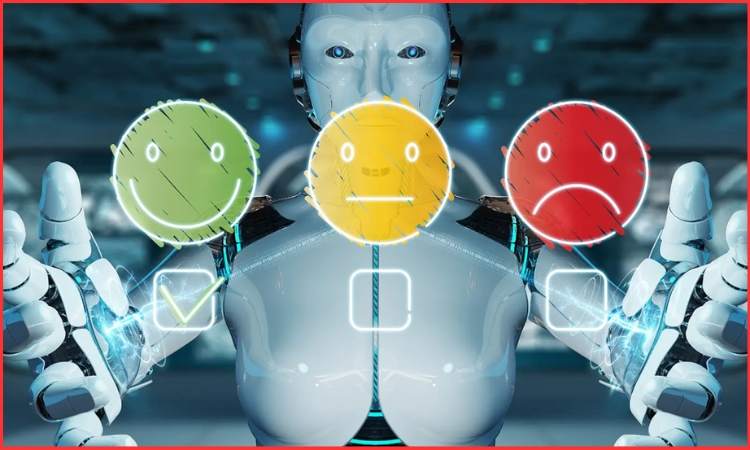
Today, modern AI models can detect tone, choice of words, or even voice pitch to understand whether a customer is satisfied, angry, or confused. After analysing, it provides solutions that businesses can use, or they might send a human agent to solve the customer queries.
Example: Companies use Watson’s sentiment analysis to monitor live chats and social media mentions. If a customer’s messages indicate frustration, the issue is escalated to a senior support agent immediately.
Why Companies are Investing in AI for Customer Experience?
Higher Customer Retention
When AI-powered personalisation makes customers feel more interactive and effortless, then customers are less likely to switch to their competitors. Therefore, AI helps businesses to anticipate needs and solve problems quickly, which increases loyalty and customer retention rates.
Increased Revenue
AI helps businesses to increase their sales. It suggests relevant products and services at the right moment to the customers. With this, businesses benefit from higher conversions, bigger order values, and more repeat purchases. Hence, businesses’ revenue increases.
Better Operational Efficiency
Today, every business uses AI for repetitive support tasks. It handles routine queries at scale, freeing employees to focus on complex or creative challenges. Thus, this balance makes companies more productive without increasing inputs at a large level.
Improved Decision-making
AI makes structured and unstructured data into meaningful insight. It also highlights trends, predicts behaviour, and identifies pain points. This helps business leaders to adjust strategies in real time rather than relying on guesswork. Hence, there is an increase in the efficiency of decision-making.
Scalability
Today, with technology, businesses are growing at high speed. Interactions with customers are increasing and getting complex, ultimately losing quality. Thus, AI makes scaling smooth by offering accurate responses consistently, no matter how many customers there are to manage.
Brand loyalty and trust
With AI responses, customers feel understood and valued, which builds trust naturally. Many positive experiences are repeatedly created through AI, which, over time, strengthens the emotional bond between a brand and its audience. Thus, with AI models, businesses experience the advantage of brand loyalty and trust.
Examples of Businesses using AI in customer experience
Amazon
In the retail industry, Amazon’s recommendation engine is known as one of the most powerful engines. It studies browsing patterns and purchase history of customers and suggests what other customers bought with the same product, and offers recommendations. This leads customers to add more items to their carts, and thus, Amazon gets advantages with higher sales volumes.
Netflix:
Netflix’s algorithm analyzes when you watch, what genres you skip, and how long you spend browsing before watching, instead of suggesting just popular shows. By offering its customers what they are most likely to watch, Netflix minimises the scroll fatigue problem. Thus, Netflix experiences higher customer satisfaction and fewer cancellations for subscriptions.
Starbucks:
Starbucks loyalty app uses AI to deliver hyper-personalised offers by analysing customer purchase history, time of day, and even local weather to recommend drinks. For example, a customer in Mumbai might get a suggestion for cold coffee during a hot afternoon, while someone in London might see a recommendation of a white latte. Thus, Starbucks enjoys an increase in customer retention rate.
HDFC Bank
HDFC’s AI chatbot, Eva, has transformed how customers handle everyday banking queries. Instead of customers waiting in a queue for the helpline number, they now get instant answers to queries about account balances, transactions, or loan processes. Hence, digital banking becomes more accessible by using AI chatbots and HDFC gets to cater larger number of customers.
Sephora
Sephora is offering virtual try-on makeup using augmented reality combined with AI recommendations. The AI system studies skin tone, preferences, and past purchases to suggest the right shades. Thus, using AI Sephora is bridging the gap between online and offline shopping and increasing its sales.
Airbnb
Airbnb’s AI recommendation system helps travellers find listings tailored to their preferences. It also highlights potential fraudulent activity in bookings. This helps Arbinb to build trust by offering smoother journeys for both hosts and guests. Thus, with the help of AI, Airbnb improves guest experiences and ensures safety.
Conclusion
AI is no longer optional; it has become an integral part of modern business. By replacing long wait times with instant, consistent, and personalised interactions, AI helps companies achieve efficiency, cost savings, and stronger customer loyalty. Customers, on the other hand, enjoy smoother, more enjoyable journeys.
As artificial intelligence in business continues to evolve, companies that embrace it to anticipate customer needs and deliver value will remain ahead in this AI-driven era.
FAQs
Q-1 Is AI in customer experience only for large companies?
No, AI’s adoption among small and mid-sized businesses is increasing with AI tools like chatbots, CRM integrations, and recommendation engines to improve customer experience.
Q-2 How is AI different from traditional customer support systems?
Traditional systems rely on human agents and scripted responses, while AI adapts in real time by learning from data. AI can handle millions of requests simultaneously without compromising quality.
Q-3 What industries benefit the most from AI in customer experience?
Retail, banking, healthcare, travel, and entertainment are the leading industries benefiting the most from AI in customer experience.