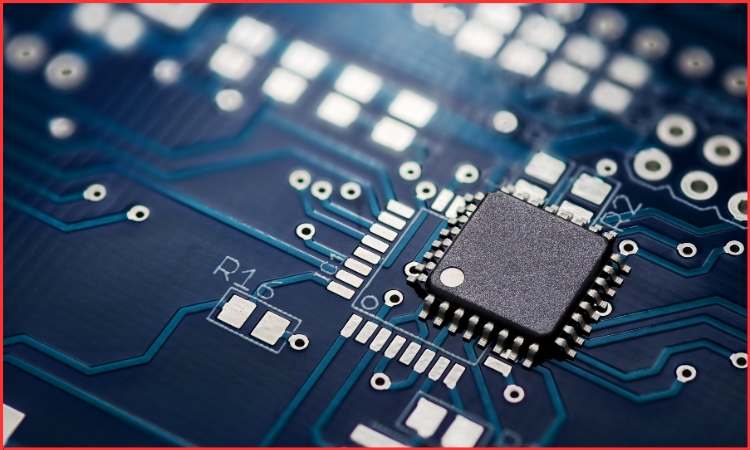
We cannot imagine a world without smartphones, laptops, or home appliances, can we? Behind all these devices lies an invisible hero, the semiconductor. This tiny chip controls how we live, work, and connect. From being a small component in radios and calculators, semiconductors have now become the brain of innovative technologies.
This article explores what semiconductors are, how they are made, why they power the modern world, and how the India semiconductor industry is shaping up to play a global role.
“ Semiconductors are the backbone of modern electronics, enabling technologies that were once unthinkable.”- Donald A. Neamen.
What is a Semiconductor?
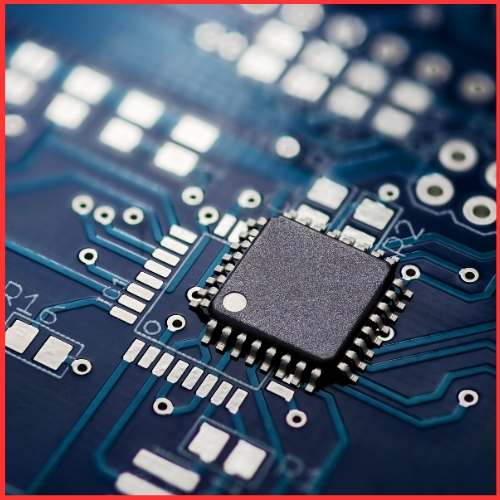
In simple terms, a semiconductor is a special material that lies between a conductor and an insulator. It can either allow or block the flow of electricity, which makes it essential for creating chips used in phones, computers, cars, and almost every electronic device.
The most common one is the silicon chip, often called the brain of modern electronics. These chips are found in smartphones, laptops, automobiles, healthcare devices, energy systems, and countless other applications.
How is a Semiconductor made?
Source: Sharretts Plating
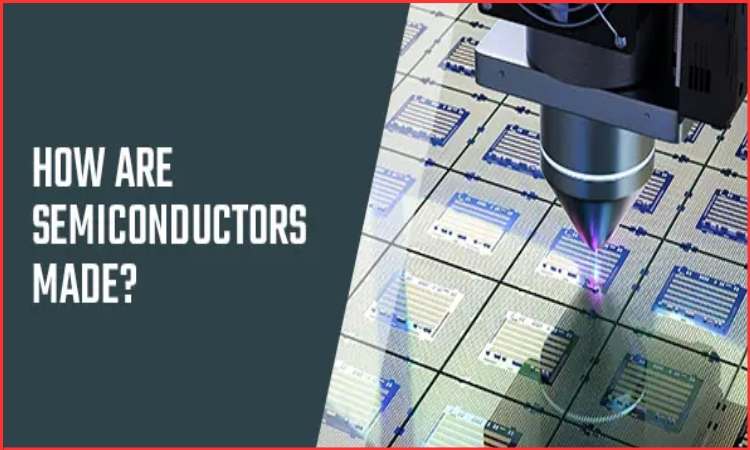
The process of semiconductor manufacturing is one of the most complex engineering feats ever developed. It involves several key steps:
- Wafers – Pure silicon is melted, shaped into crystals, and sliced into ultra-thin circular wafers.
- Photolithography – Ultraviolet light and light-sensitive chemicals are used to print circuit patterns onto the wafer. These patterns decide the transistor paths.
- Doping – Small amounts of materials like phosphorus or boron are added to control which parts of the wafer conduct electricity.
- Etching & Deposition – Unwanted parts are carved away (etching), and metals like copper are layered (deposition) to form connections.
- Repetition – The process is repeated many times to stack layers of circuits. The wafer is then cut into hundreds of chips.
- Testing & Packaging – Each chip is tested for performance and packaged with protective casings and connectors.
The whole manufacturing process of turning raw silicon into a functioning chip is one of the most complex engineering processes ever developed.
Types of Semiconductors
Semiconductors come in different forms:
- Intrinsic Semiconductors – Pure forms like silicon or germanium.
- Extrinsic Semiconductors – Doped to enhance conductivity, classified into n-type (extra electrons) and p-type (electron holes).
- Compound Semiconductors – Made from materials like gallium arsenide (GaAs) or silicon carbide (SiC), used in 5G, electric vehicles, and satellites.
Why are Semiconductors powering the Modern World?

Source: Al Majalla
Semiconductors can be referred to as the heart of every electronic device in modern technology. The smartphones, laptops, and cars we use, and even satellites or any medical equipment, would simply not work.
Despite being the tiniest thing, they incredibly control the flow of electricity. They can even act as tiny switches and can store data, process it, and enable communication at lightning speed. Today, a Transistor, a single chip, can hold billions of these microscopic switches.
Today, they are the foundation of most innovative technologies like AI, 5G networks, renewable energy systems, and defence technologies. Even further innovations in computing and automation are made advanced by these semiconductors.
Hence, semiconductors are the foundation of the digital economy. They are the invisible fuel for innovation and powering the modern world. The nations that lead in the semiconductor industry will effectively hold the future of technologies.
Global Trends in Semiconductors
Shift towards Smaller & Smarter Chips
In 2023, TSMC and Samsung began producing 3nm chips at the mass production level. On the other hand, IBM showcased a 2nm chip prototype that has the capacity of fitting 50 billion transistors on a fingernail. Apple’s iPhone 15 Pro is built with a 3nm A17 Pro chip.
Specialised Chips
NVIDIA’s H100 GPU is the specialised chip for AI training models like ChatGPT. Similarly, Google’s Tensor Processing Units (TPUs) are custom chips to advance AI workloads used at Google’s data centres.
Global Race for Chips
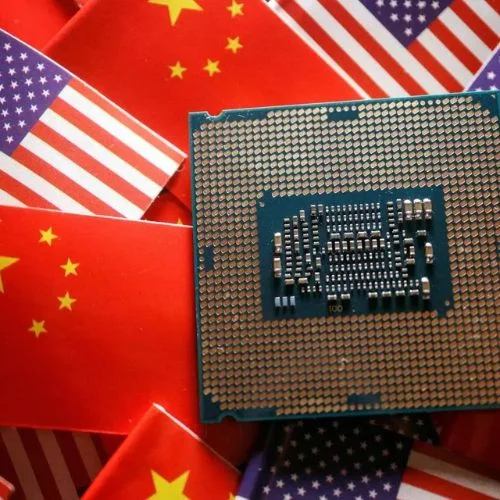
In 2022, the US passed the CHIPS and Science Act with an investment of $52 billion to accelerate domestic semiconductor manufacturing. The European Union launched the EU Chips Act in 2023, with investments of €43 billion. China is investing billions in national champion SMIC to compete with Taiwan’s TSMC and South Korea’s Samsung.
Energy-efficient Semiconductors
Tesla has shifted to silicon carbide [SiC] semiconductors to extend battery life and make cars more energy-efficient. Similarly, brands like Apple and Anker have adopted the use of Gallium Nitride [GaN] chips that are used in fast chargers to reduce power loss.
Increase in Chip Fabs across the World
TSMC is focusing on building a $40 billion chip fab in the USA. In Germany, Intel is investing €30 billion in building advanced fabs. India has also approved the establishment of various chip manufacturing plants.
Investments in R&D
Companies like Infineon and Wolfspeed of Germany and the US are leading in SiC chips for EVs and renewable energy by exploring new materials beyond silicon. Samsung is also working on quantum-dot semiconductor technology for next-generation displays.
Adoption in Everyday Life
Fitbit and Apple Watches use chips to monitor heart rate and oxygen levels. Amazon Alexa and Google Nest use semiconductors to connect and process data. Even washing machines and refrigerators are designed with IoT-enabled chips.
India’s Role in the Semiconductor Industry
Source: IBEF
After establishing itself as a software powerhouse, India is now laying the foundation for a strong presence in the semiconductor industry. While Taiwan, South Korea, and the US dominate chip fabs, India’s strength lies in chip design. Companies like Intel, Qualcomm, AMD, and Nvidia already run large R&D centres in Bengaluru, Hyderabad, and Noida.
India’s Blueprint for Chip Revolution
- Central Strategy – On Independence Day 2025, PM Narendra Modi announced a mission for ‘Made-in-India’ chips, with six semiconductor projects in progress. Four of them have already received cabinet approval.
- State-Level Projects –
- Uttar Pradesh: HCL-Foxconn JV is developing a fab near Jewar, producing ~36 million display driver chips monthly by 2027.
- Assam: Tata Electronics is setting up India’s first indigenous ATMP facility worth ₹27,000 crore, targeting ~48 million chips by 2025.
- Gujarat: Micron Technology has invested $2.75 billion in a large chip packaging unit. Other companies like CG Powers, Renesas, and Kaynes Semicon are setting up fabs with ₹10,000+ crore investments.
- Facilities are also being planned in Odisha, Punjab, and Andhra Pradesh.
- Modernisation – The Semiconductor Laboratory (SCL) in Mohali is being upgraded with a $2 billion investment, and IIT Madras is planning the Bharat Semiconductor Research Centre (BSRC) as a national R&D hub.
- Inter-State Competition – States like Gujarat, Karnataka, and Tamil Nadu are competing to attract investments. Karnataka currently leads in chip design.
- Global Partnerships – The India-US iCET initiative is enabling collaborations in semiconductors, AI, and quantum technologies.
- Government Support – The India Semiconductor Mission (ISM) and Design Linked Incentive (DLI) scheme provide funding, incentives, and design support to boost the sector.
Future of Semiconductors
Source: Glomore Electro-tech
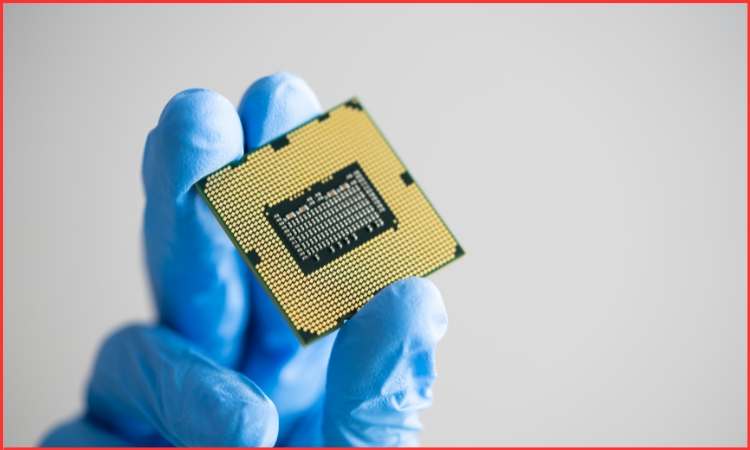
Globally, the demand for faster, smaller, and efficient chips is going to increase with the development of technologies like AI, quantum computing, self-driving vehicles, and 6G networks. Thus, semiconductors will redefine the next era of human progress. This presents India with an opportunity to lead the digital economy. India, with initiatives like ISM and incentives for establishing fab plants, has become an evolving competitor in the global chip race.
Conclusion
Though microscopic, semiconductors have a gigantic impact. They are at the heart of national security, economic growth, and technological progress. Countries that lead in semiconductor research, design, and manufacturing will shape the future of innovation.
India, with its semiconductor mission, new fabs, global collaborations, and strong design ecosystem, is moving toward becoming a powerful hub. The future belongs to smaller, faster, and smarter chips, and the India semiconductor industry is gearing up to play a vital role in this global revolution.
FAQs
Q-1. Which countries lead the semiconductor industry?
Taiwan, China and the US are currently dominating the semiconductor industry.
Q-2 Why are semiconductors so important in the modern economy?
As semiconductors control electricity, store data, and enable communication processes, they have become the backbone of the modern economy.
Q-3 Why is India focusing on semiconductors now?
Chips are a crucial part of national security, digital growth, and self-reliance. With an opportunity to position India as a design and manufacturing hub and with increasing global demand for chips, India is focusing on semiconductors now.